
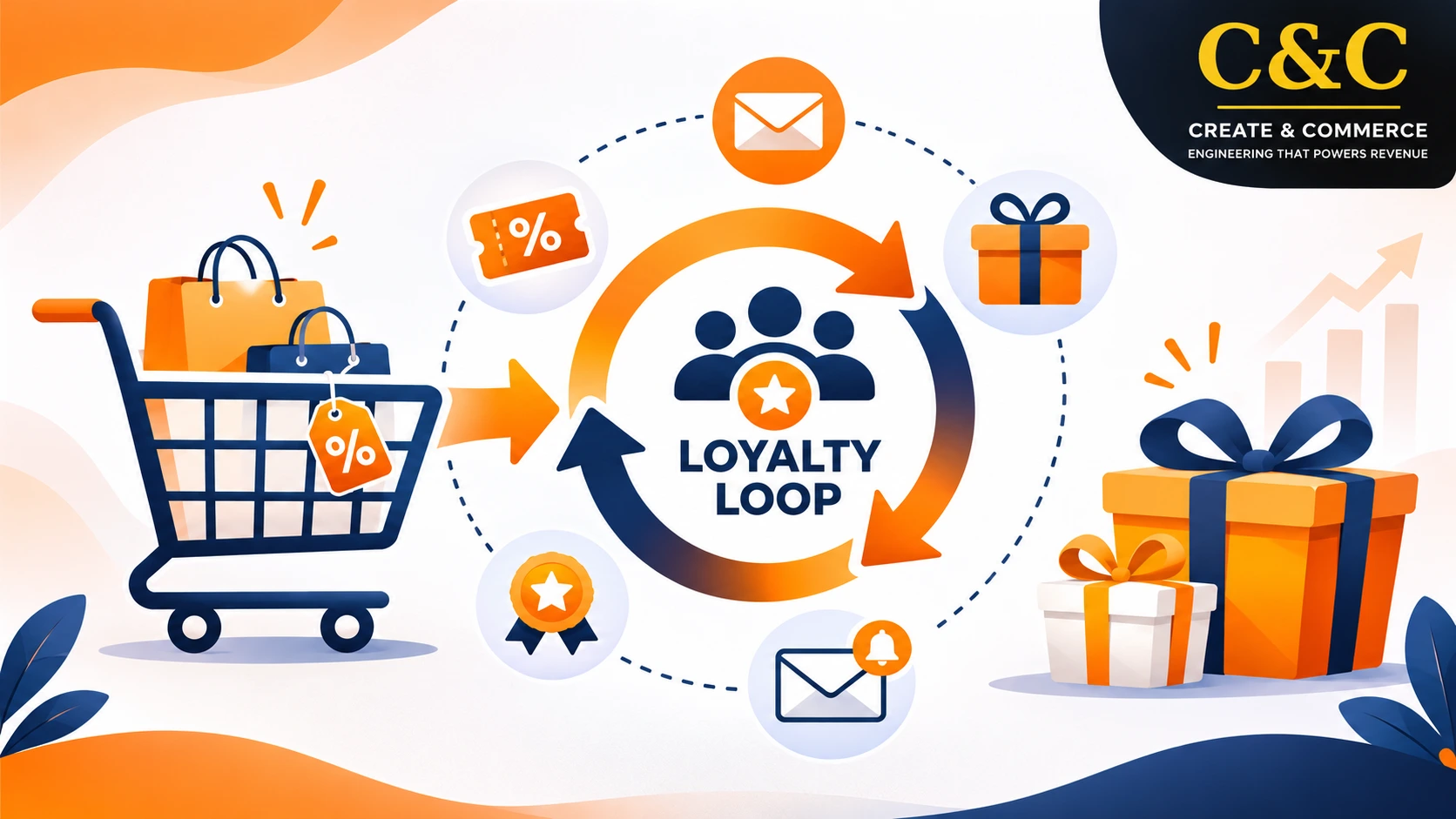
Black Friday fills carts fast, but the real profit begins when one-time deal hunters become repeat eCommerce customers. Discount-driven buyers often vanish once the sale ends, which leaves stores with high acquisition costs and thin margins. A structured plan covering data, speed, communication, and platform choice turns a seasonal spike into steady revenue all year.
Quick Answer: Black Friday buyers become repeat eCommerce customers when the post-purchase experience is fast, personalized, and rewarding. That requires clean customer data, a quick storefront, timely follow-up, loyalty incentives, and a platform able to support all of it.
Why Black Friday Buyers Rarely Return
Most Black Friday shoppers arrive for price, not brand loyalty. Without a reason to come back, the relationship ends at checkout. Weak onboarding, slow pages, generic emails, and poor product recommendations widen the gap between a single sale and repeat eCommerce customers.
Acquisition during peak season is also expensive. Ad costs climb, margins shrink under discounts, and the first order rarely covers the full cost of winning the buyer. Profit appears only when a second and third order follow.
Quick Answer: Buyers drop off after Black Friday because the purchase was driven by discounts alone. Personalization and a smooth post-purchase journey supply a different reason to return.
Build a Strong Ecommerce Backend for Repeat eCommerce Customers
A reliable ecommerce backend controls inventory sync, order status, customer profiles, and returns. Errors in any of those areas damage trust quickly. A late shipment or a wrong stock count during a sale rarely produces a second order.
Strong backend practices include:
- Real-time inventory updates across every sales channel
- Unified customer profiles linking orders, support tickets, and browsing history
- Automated order status messages
- Clear return workflows that reduce friction
Stores running on Magento, Shopify, WooCommerce, BigCommerce, or Adobe Commerce all benefit from a backend designed around the customer record, not just the order record.
Quick Answer: A dependable ecommerce backend keeps stock, orders, and customer data accurate, which protects trust during and after a sale.
Speed Decides Whether Buyers Come Back
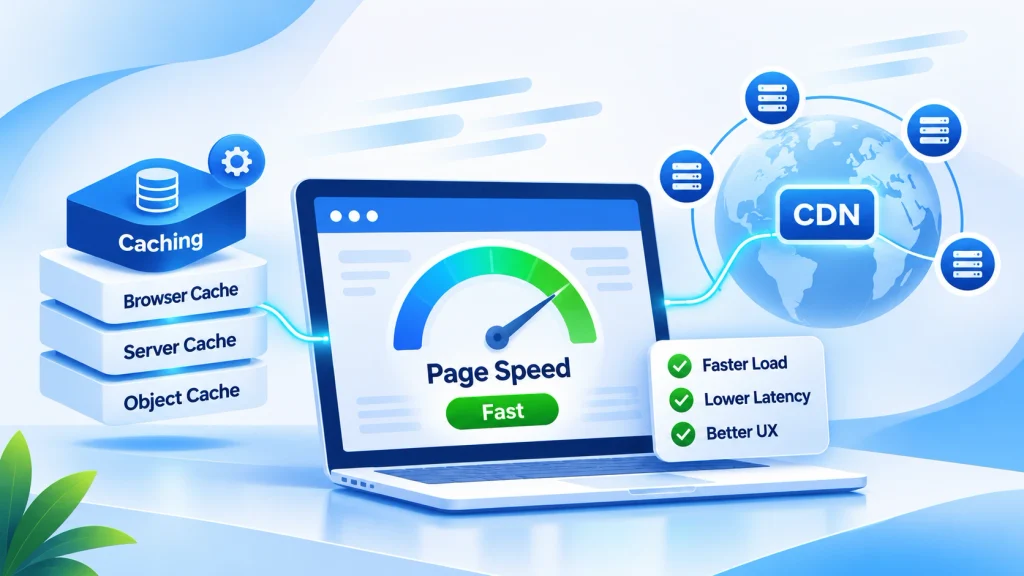
Slow stores lose sales during a promotion and lose repeat visits afterward. Ecommerce performance optimization covers image compression, caching, lean scripts, and efficient databases. Google’s Core Web Vitals guidance outlines the loading, interactivity, and stability benchmarks worth tracking.
Magento 2 Performance Optimization for Peak Traffic
Stores built on Magento benefit from Magento 2 performance optimization, which includes full-page caching, Varnish, Redis, database indexing, and CDN configuration. Each layer lowers server load during traffic surges. Fast category pages and quick checkouts raise the odds that a first-time buyer returns in January instead of never.
Quick Answer: Faster pages improve the shopping experience, and a good experience is the first step toward repeat eCommerce customers.
Use AI Product Data Enrichment to Personalize the Next Purchase
AI product data enrichment adds missing attributes, tags, categories, and descriptions to catalog items automatically. Richer product data powers better search, filters, bundles, and recommendations. When a shopper buys a jacket on Black Friday, enriched data makes it easy to suggest matching accessories two weeks later.
Clean catalog data also supports Google’s ecommerce search guidance, which covers how product pages earn visibility. Search engines and AI assistants read structured data as well. Following Google’s Product structured data documentation helps catalog pages appear accurately in search features and AI-generated answers.
Quick Answer: AI product data enrichment improves recommendations, which raises the chance of a second order.
Post-Purchase Communication That Creates Repeat eCommerce Customers
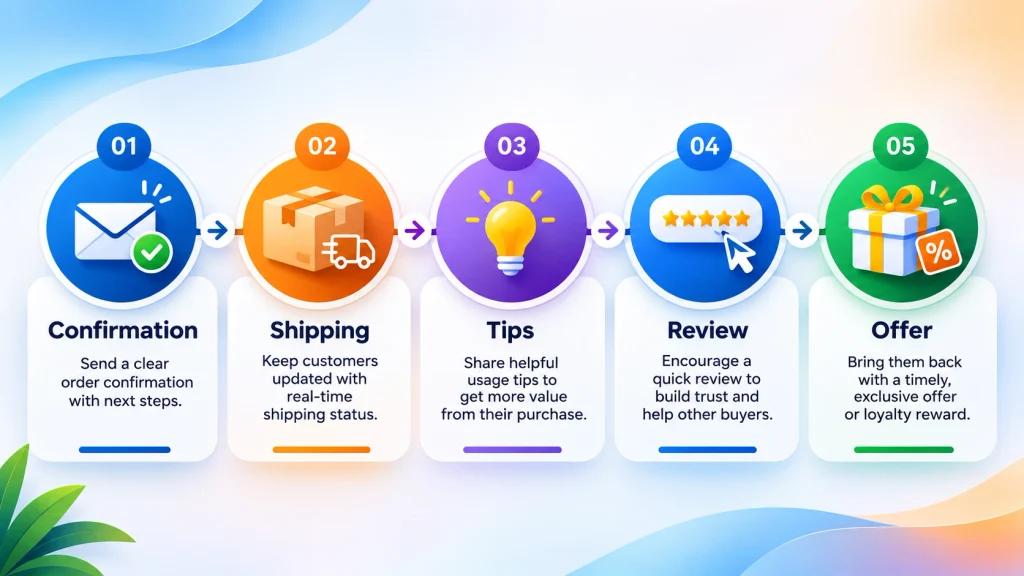
The hours after checkout shape long-term loyalty. A practical sequence:
- Order confirmation: instant, branded, and clear
- Shipping updates: short messages with tracking links
- Usage tips: helpful content tied to the purchased product
- Review request: sent after delivery, not before
- Second-order offer: timed to the natural replenishment or upgrade window
Segmentation matters. A first-time buyer, a discount-only buyer, and a high-value customer each need different messaging. Email platforms such as Klaviyo can run behavior-triggered flows based on purchase activity. Strong ecommerce api integration services connect the store, email platform, CRM, and loyalty software through Adobe Commerce APIs or similar endpoints, creating one data stream.
Loyalty Programs That Convert Deal Hunters into Repeat Ecommerce Customers
Points, tiered rewards, early access to sales, and free shipping thresholds all encourage a second purchase. Rewards tied to value, such as exclusive products or members-only previews, outperform deeper discounts because margins stay protected. Targeted customer segments make sure loyalty offers reach the right buyers.
Quick Answer: Loyalty rewards work best when they offer value beyond a discount, such as early access, exclusive items, or free shipping.
Choosing the Right eCommerce Platform 2026
Picking the right eCommerce platform 2026 affects how easily repeat eCommerce customers can be nurtured. Each option carries distinct strengths:
- Shopify: fast launch, simple management, large app ecosystem
- WooCommerce: flexible WordPress-based control for content-led stores
- BigCommerce: strong built-in B2B and multi-channel features
- Magento and Adobe Commerce: deep customization for complex catalogs, pricing rules, multi-store setups, and enhanced storefront experiences
- Custom commerce website: full control over experience, suited to unique business models
Stores with large catalogs or complicated customer logic often lean toward Magento ecommerce development or Magento enterprise development, which allow advanced segmentation, B2B pricing, and workflow control.
Quick Answer: The right platform is the one matching catalog size, team skills, integration needs, and growth plans for the next three years.
Magento 2 vs Adobe Commerce Cloud
The Magento 2 vs Adobe Commerce Cloud decision comes down to hosting, support, and built-in tools. Magento Open Source offers flexibility and lower licensing cost, with hosting and maintenance handled in-house or by a partner. Adobe Commerce adds B2B modules, advanced customer segmentation, and Adobe ecosystem integration. The Magento 2 commerce cloud model adds managed infrastructure, automated scaling, and built-in CI/CD, which suits sales events with unpredictable traffic. Details are available in Adobe’s Commerce on Cloud documentation.
Teams exploring the route often rely on Adobe Commerce development services for custom modules, upgrades, and migrations, guided by Adobe’s official developer documentation.
Quick Answer: Magento 2 suits teams wanting flexibility and control. Adobe Commerce Cloud suits businesses needing managed hosting, scaling, and enterprise features.
Headless vs Traditional Commerce for Retention
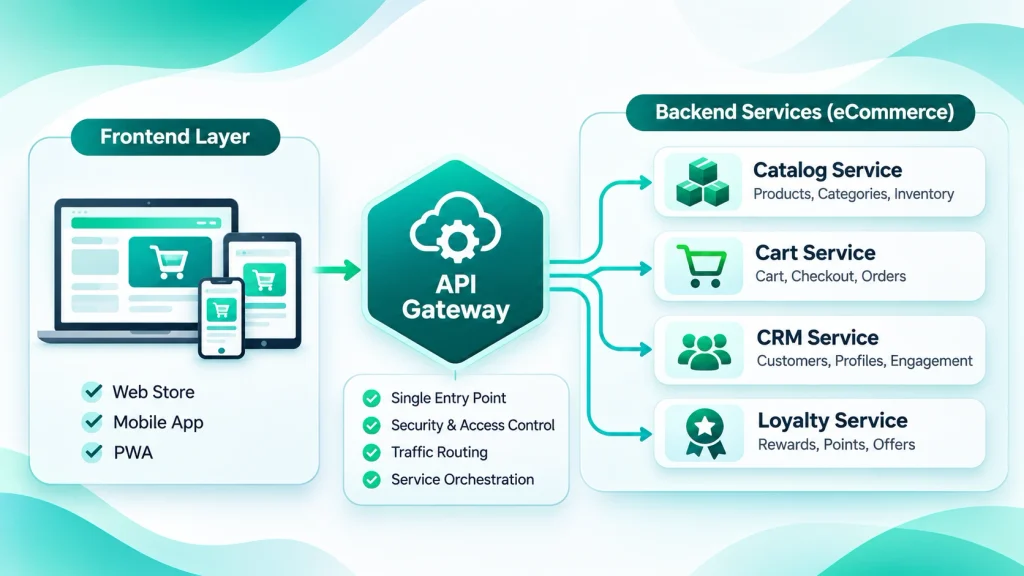
Growing brands frequently compare headless vs traditional commerce when choosing an eCommerce platform. Traditional solutions combine the storefront and backend into one system. By contrast, headless setups separate these layers, allowing developers to build frontends with React, Next.js, or Vue and connect them through APIs.
Headless eCommerce Architecture Explained
A flexible presentation layer sits on top of commerce services in headless eCommerce architecture. These services include catalog management, cart, checkout, and customer data. Additionally, APIs connect content, search, payment, and personalization tools. Teams exploring this approach can also review the MACH Alliance’s open principles for composable commerce.
Benefits for retention include:
- Faster, app-like storefront experiences
- Personalized content across web, mobile, and in-store screens
- Easier testing of new loyalty features
- Freedom to swap tools without rebuilding the full store
Headless ecommerce development takes more planning and a skilled team, so smaller stores may be better served by a traditional build until volume justifies the move. Shopify’s Hydrogen framework documentation shows one practical path, and Adobe Commerce and BigCommerce also support headless storefronts.
Quick Answer: Headless commerce separates the frontend from the backend for speed and flexibility. Traditional commerce is simpler and quicker to launch.
Data and Analytics That Reveal Repeat eCommerce Customers
Retention improves when decisions rest on numbers. Metrics worth tracking:
- Repeat purchase rate
- Customer lifetime value
- Time between first and second order
- Churn rate by acquisition channel
- Revenue from loyalty members versus non-members
Cohort reports expose which Black Friday offers attract buyers who return and which attract buyers who vanish. Spending can then shift toward the channels and products that produce loyal customers. Baymard Institute’s cart abandonment research offers further insight into friction points that hurt first impressions.
Quick Answer: Repeat purchase rate, customer lifetime value, and time between orders are the clearest signals of retention health.
A 30-Day Plan to Convert Black Friday Buyers
- Customer Segmentation (Days 1–3): Group buyers according to order value, product category, and discount usage.
- Customer Engagement (Days 4–10): Maintain interest through shipping notifications, helpful product tips, and review requests.
- Loyalty Building (Days 11–20): Introduce loyalty programs and personalized product recommendations to strengthen customer relationships.
- Repeat Purchases (Days 21–30): Encourage another purchase with a targeted incentive based on the customer’s original order.
Consistency across email, SMS, and on-site messaging keeps the brand familiar and the offer relevant.
Quick Answer: A 30-day sequence of onboarding, education, loyalty enrollment, and a targeted second offer gives the best chance of creating repeat eCommerce customers.
Frequently Asked Questions About Repeat eCommerce Customers
How can Black Friday buyers become repeat eCommerce customers?
Fast delivery, personalized follow-up, loyalty rewards, and relevant product recommendations encourage a second purchase within 30 to 60 days.
What is the best platform for retention in 2026?
No single winner exists. Shopify, WooCommerce, BigCommerce, Magento, and Adobe Commerce all support retention strategies when paired with strong integrations and clean customer data.
Is headless commerce worth it for repeat sales?
Headless commerce suits brands needing custom experiences and rapid testing. Smaller stores often achieve strong results with a well-optimized traditional setup.
How does AI product data enrichment help retention?
Complete product attributes improve search, filtering, and recommendations, which makes follow-up offers more relevant.
What is the difference between Magento 2 and Adobe Commerce Cloud?
Magento 2 is the flexible open-source foundation. Adobe Commerce Cloud adds managed hosting, scaling, and enterprise features.
When should the second-order offer be sent?
Timing depends on the product, but the window between delivery and the natural replenishment or upgrade point usually performs best.
Why does performance matter for loyalty?
Slow stores frustrate shoppers, and frustrated shoppers rarely return. Ecommerce performance optimization protects both conversions and repeat visits.
Conclusion
Black Friday delivers traffic, but loyalty delivers profit. Repeat eCommerce customers come from a fast store, accurate data, timely follow-up, and rewards that offer more than a discount. A dependable ecommerce backend, AI-enriched product data, and strong ecommerce api integration services keep every follow-up message relevant. The right platform, whether Shopify, WooCommerce, BigCommerce, Magento ecommerce development, or headless ecommerce development, supports that growth for years.
Quick Answer: Black Friday buyers turn into repeat eCommerce customers through speed, personalization, loyalty rewards, and connected systems.
Brands ready to turn the next holiday spike into year-round revenue can contact the eCommerce development team for a store audit and a retention roadmap.