
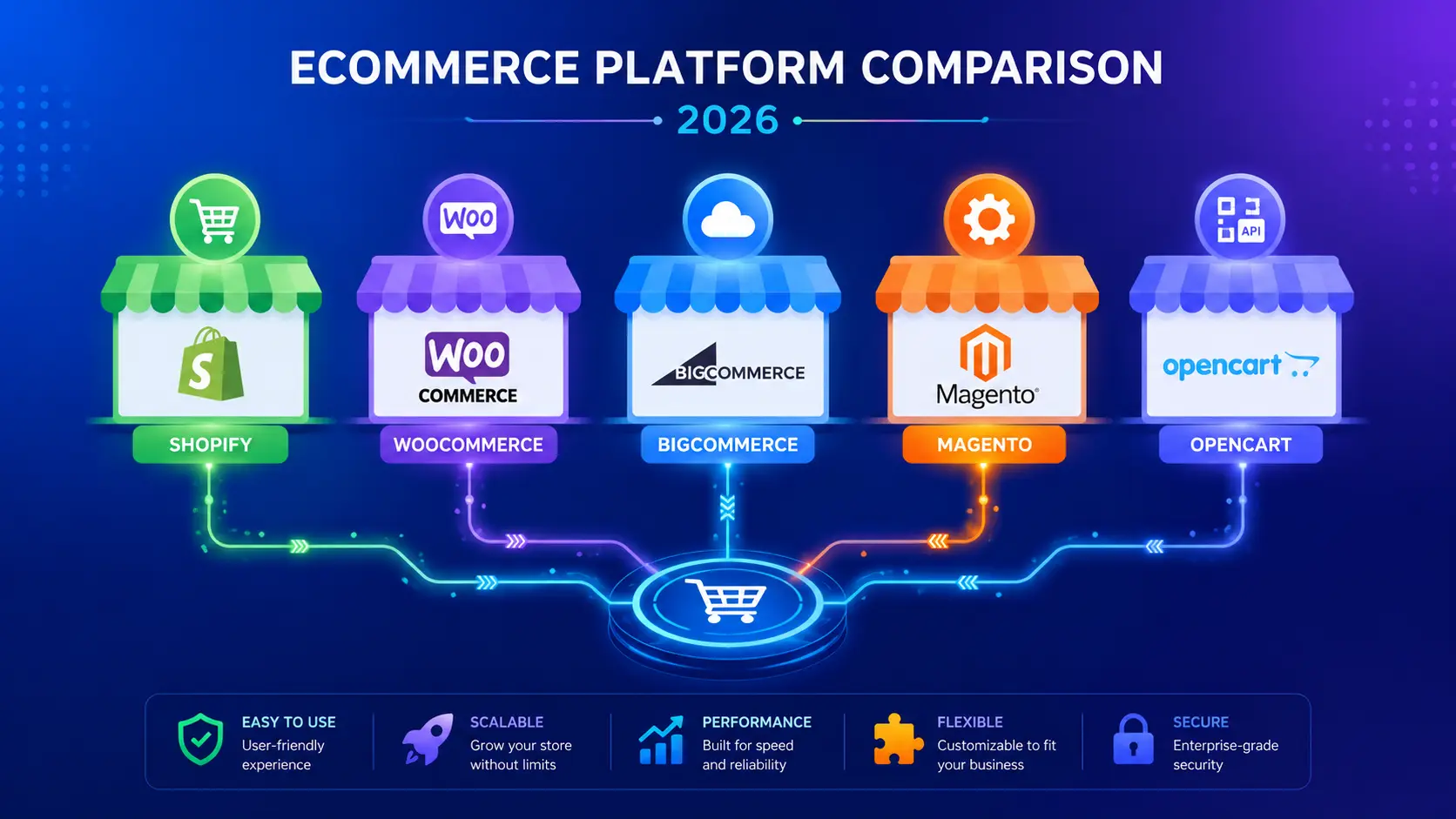
Choosing the right ecommerce platform is an important decision for any growing online business. In 2026, customers expect fast websites, smooth checkout experiences, and personalized product recommendations. As a result, your ecommerce platform can affect sales, customer satisfaction, and long-term growth.
This guide compares Shopify, WooCommerce, Magento, Adobe Commerce, BigCommerce, and headless commerce. It explains their key features, benefits, and limitations. You will also learn how to choose a platform that fits your budget, business needs, and future goals.
The Growing Importance of the Right Ecommerce Platform in 2026
Ecommerce websites now do much more than display products. Customers expect fast page loads, easy navigation, and simple checkout processes. They also want a consistent shopping experience across websites, mobile apps, and social media channels.
A platform that cannot meet these expectations may create problems for customers and business owners. Slow pages, difficult checkout steps, and poor integrations can reduce conversions and increase operating costs.
Choosing the right ecommerce platform is therefore both a technical and a business decision. The right choice can help your team manage products, improve customer experiences, and support business growth.
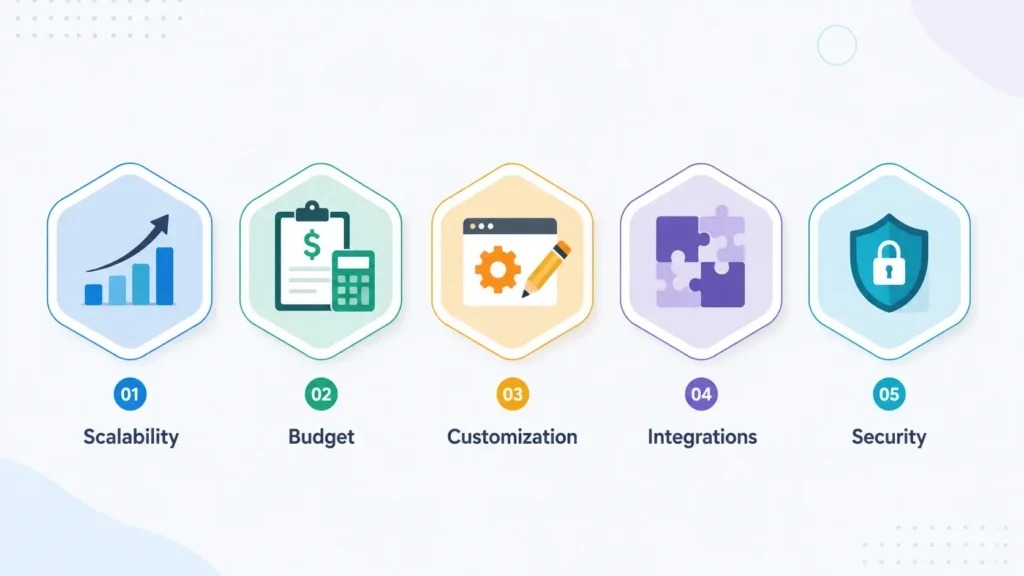
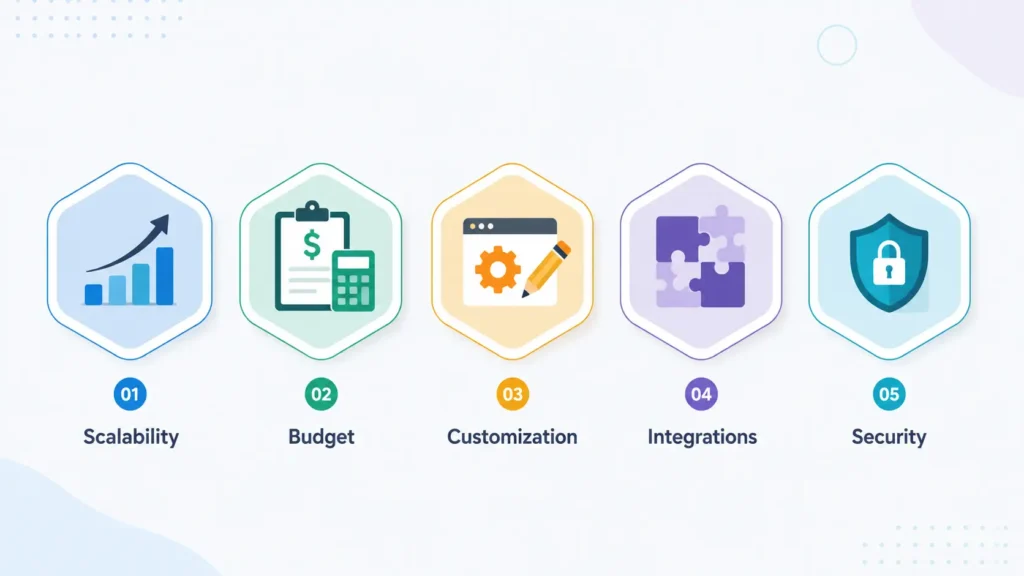
Key Factors to Consider Before Choosing the Right Ecommerce Platform
Before comparing platforms, identify what your business needs. Consider your current requirements, available budget, technical resources, and future plans.
Scalability
Your ecommerce platform should support growth in website traffic, product catalog size, and order volume. It should also handle seasonal sales and promotional campaigns without major performance problems.
Choose a platform that can support your expected growth without requiring frequent, expensive changes to your infrastructure.
Budget Planning and Long-Term Platform Costs
The initial platform fee is only one part of the total cost. You may also need to pay for hosting, applications, extensions, development, and ongoing maintenance.
A platform that looks affordable at first can become expensive as your business grows. Compare the total cost of ownership before making your decision.
Customization and Flexibility of the Right Ecommerce Platform
Every business has different requirements. Some stores need simple product pages, while others require custom checkout processes, product configurators, or special B2B pricing rules.
Evaluate how easily each platform supports these features. Consider whether you can use built-in tools, extensions, integrations, or custom development.
Third-Party Integrations
Your ecommerce platform may need to connect with payment gateways, shipping providers, inventory systems, CRM tools, and marketing platforms.
Reliable integrations help these systems exchange information correctly. They can also reduce manual work and make daily operations easier to manage.
Security and Compliance
Security is essential for every online store. Your platform should support appropriate access controls, secure payment processing, software updates, and data protection.
Before choosing a platform, understand which security tasks the provider manages and which responsibilities remain with your team. Also check the compliance requirements that apply to your business.
Top Right Ecommerce Platform Options Compared for 2026
Each ecommerce platform offers different advantages. The best option depends on your business size, technical resources, budget, and required features.
Shopify
Shopify is a hosted ecommerce platform that makes it easier to launch and manage an online store. It handles much of the underlying infrastructure, so businesses can focus more on products, marketing, and customer service.
Shopify Plus offers additional capabilities for larger businesses with more advanced commerce requirements. However, some custom features may require paid applications or development work.
Shopify is a good option for businesses that want a managed platform and a relatively straightforward setup. Explore Shopify and Shopify Plus development services to evaluate your implementation needs.
WooCommerce
WooCommerce adds ecommerce functionality to WordPress. It is useful for businesses that want to combine product sales with blogging, content marketing, and SEO.
The platform offers flexibility through themes, plugins, and custom development. However, store owners must also manage hosting, security, updates, and plugin compatibility.
WooCommerce can work well for businesses that need greater control over their websites and have access to suitable technical support. Learn more about WooCommerce development services.
Magento (Adobe Commerce)
Magento Open Source and Adobe Commerce support businesses with complex Magento ecommerce development requirements. These may include large product catalogs, multiple storefronts, advanced pricing rules, and B2B purchasing workflows.
Adobe Commerce provides additional capabilities for businesses that need advanced Adobe Commerce development services, including B2B functionality and customized ecommerce experiences. However, Magento enterprise development, infrastructure, and ongoing maintenance can require significant investment.
These platforms are worth considering when a business needs extensive customization, scalable architecture, and reliable integrations. Explore our Magento and Adobe Commerce development services to learn more.
BigCommerce
BigCommerce is a suitable option for businesses that need flexible ecommerce functionality without managing every aspect of their infrastructure. It supports product management, payment integrations, and multichannel selling.
Businesses can use BigCommerce to manage growing product catalogs and connect their stores with different sales channels. Its hosted approach can reduce some server maintenance responsibilities associated with self-hosted platforms.
Before choosing BigCommerce, compare its customization options, pricing, and integration requirements. Explore our BigCommerce development services to learn how customized development and integrations can support business growth.
Headless Commerce
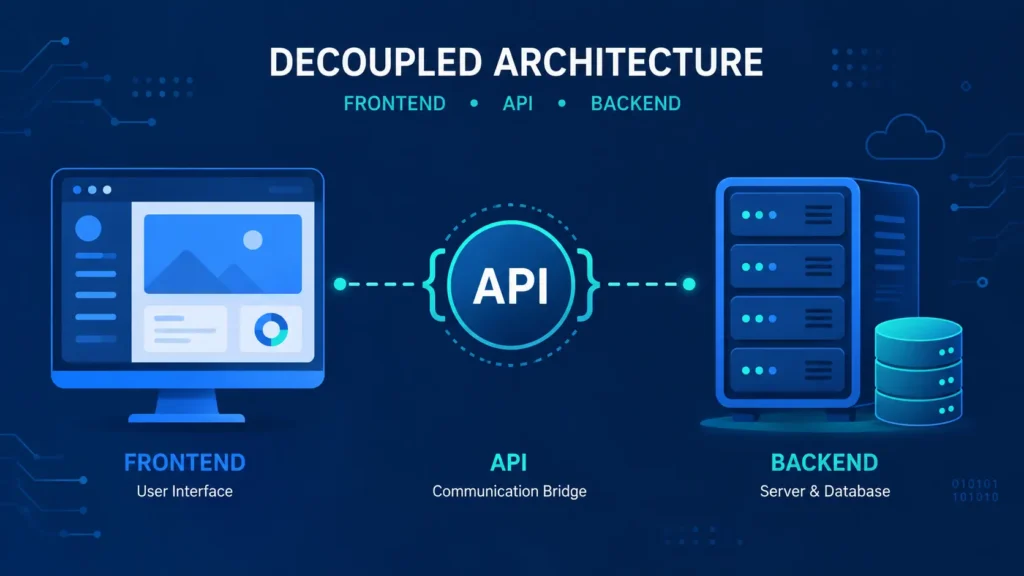
Headless commerce separates the customer-facing storefront from the ecommerce backend. This architecture allows businesses to develop customized shopping experiences while managing products, orders, and payments through connected systems.
Headless ecommerce development can help businesses improve frontend flexibility, support multiple sales channels, and create tailored customer experiences. However, it may require additional development, API integrations, hosting, and maintenance.
Before adopting this approach, assess your technical resources, performance requirements, and long-term business goals. Learn more about our headless commerce development services.
How to Choose the Right Ecommerce Platform Based on Business Size
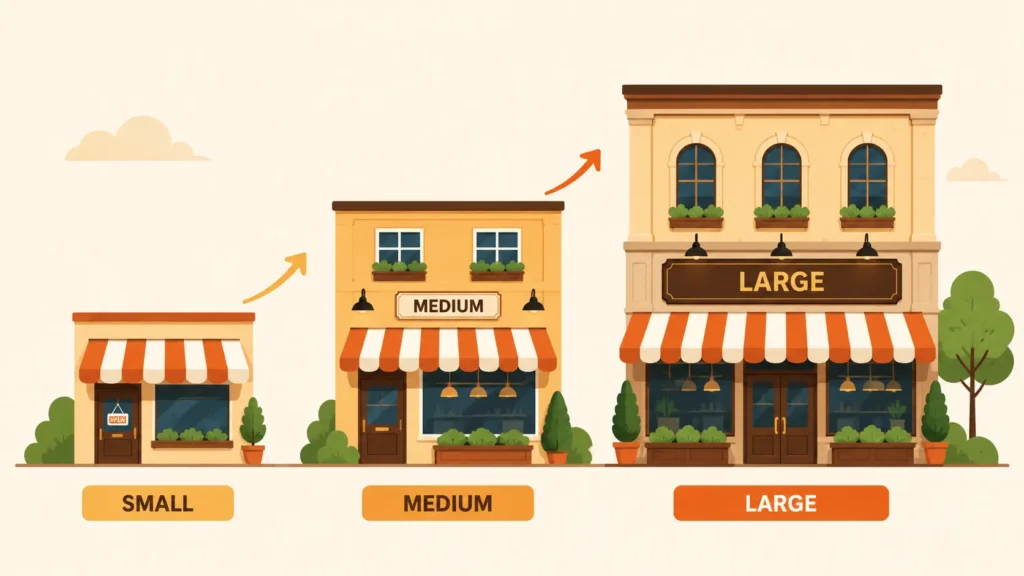
The right ecommerce platform depends on your business size, product catalog, budget, technical requirements, and growth plans.
Small businesses: Shopify or WooCommerce may be suitable for businesses that want to launch quickly with manageable setup requirements. Explore Shopify development or WooCommerce development.
Growing businesses: Shopify, WooCommerce, and BigCommerce can support businesses that need more integrations, flexible store management, and additional sales channels.
Enterprise businesses: Magento Open Source and Adobe Commerce may suit businesses with complex pricing rules, large product catalogs, multiple storefronts, or B2B purchasing workflows. Explore our Magento and Adobe Commerce development services.
Businesses with specialized customer experiences: Headless commerce may be suitable when a traditional storefront cannot meet specific design, performance, or omnichannel requirements.
Before choosing a platform, review your ecommerce backend, integration requirements, maintenance costs, and internal technical capabilities. Your platform should meet current needs while supporting future expansion.
Emerging Trends Shaping Ecommerce Platforms in 2026
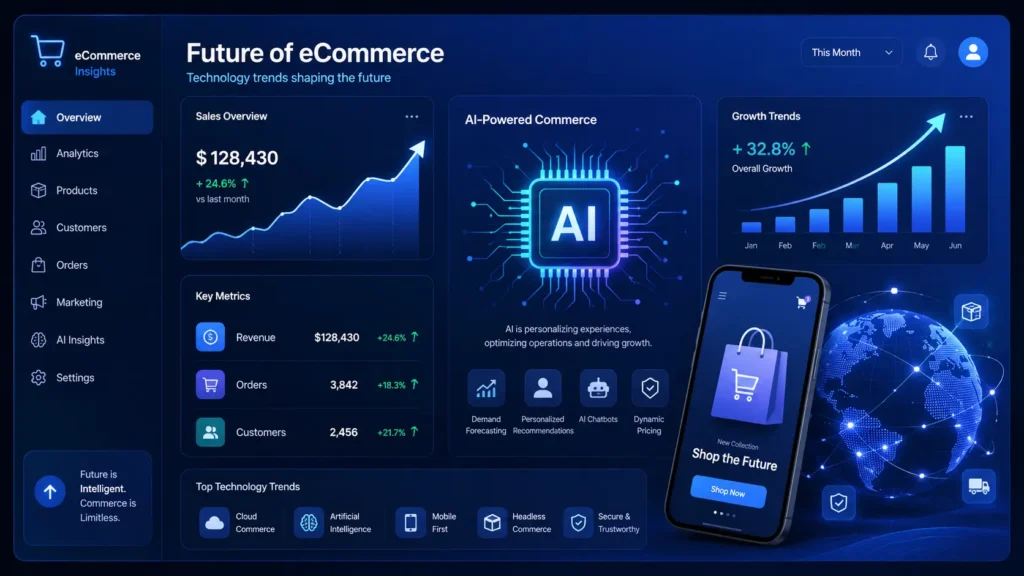
Ecommerce platforms continue to evolve as businesses respond to changing customer expectations and new technologies. Understanding these trends can help businesses make informed platform decisions.
AI-powered shopping experiences: Businesses are exploring personalized product recommendations, automated customer support, and AI-assisted product discovery.
Headless and composable commerce: Businesses can connect storefronts, commerce platforms, content systems, and other services through modular architecture and APIs. Learn about headless commerce development.
Performance optimization: Fast-loading product pages and efficient backend processing help create better shopping experiences. Businesses using Magento can explore Magento 2 performance optimization to understand common performance issues.
API-driven integrations: APIs connect ecommerce platforms with payment providers, inventory systems, CRMs, and ERPs. Businesses with complex integration requirements should evaluate their integration architecture before choosing a platform.
Cloud-based commerce: Cloud infrastructure can support scalability and operational flexibility. Businesses evaluating Magento or Adobe Commerce should compare infrastructure requirements, available features, and total ownership costs.
These trends should support specific business goals rather than become reasons to adopt new technology without a clear need.
Errors That May Affect Your Choice of E-Commerce Platform
Choosing an ecommerce platform based only on its initial price or popularity can create problems later. Consider these common mistakes before making your decision.
Focusing only on upfront costs: Include development, hosting, integrations, maintenance, security, and future upgrades when calculating total ownership costs.
Ignoring performance requirements: Evaluate expected traffic, catalog size, and checkout activity. Businesses using Magento can review Magento 2 performance optimization to identify common technical issues.
Overlooking integrations: Confirm that the platform connects with your payment gateways, inventory systems, CRM, ERP, and marketing tools.
Underestimating technical debt: Excessive customizations, outdated extensions, and poorly maintained code can increase future development costs. Review your existing architecture before planning a migration or major upgrade.
Ignoring future growth: Evaluate expected order volume, international expansion, B2B requirements, and the need for additional storefronts.
Migrating without a clear strategy: Businesses considering a move from Magento to Shopify should assess functionality, data migration, integrations, SEO redirects, and ongoing costs. Compare Magento and Adobe Commerce development with Shopify development services before deciding whether migration is necessary.
A careful evaluation helps businesses choose a platform that supports long-term growth without unnecessary costs or complexity.
Frequently Asked Questions About the Right Ecommerce Platform
What is the right ecommerce platform for a small business starting out?
Because of their hosted infrastructure, speedy setup, and lesser technological overhead when compared to open-source or headless alternatives, Shopify and BigCommerce are frequently suggested for small businesses.
Is WooCommerce better than Shopify for SEO?
WooCommerce, built on WordPress, offers deeper content and SEO customization since it integrates directly with WordPress blogging and SEO plugin ecosystems, while Shopify provides solid built-in SEO features with less granular control.
When does headless commerce make sense?
Headless commerce becomes valuable when a business needs highly customized frontend experiences across multiple channels, such as mobile apps or IoT devices, and has development resources to manage API-based architecture.
Is Magento still relevant in 2026?
Magento, now commercially available as Adobe Commerce, remains relevant for enterprise businesses requiring advanced B2B functionality, multi-store management, and deep customization capabilities.
Conclusion
Choosing the right ecommerce platform in 2026 requires more than comparing features and subscription prices. Businesses should consider scalability, customization, security, performance, integrations, technical resources, and long-term operating costs.
Shopify, WooCommerce, BigCommerce, Magento Open Source, Adobe Commerce, and headless commerce each serve different business needs. The best option is the one that supports your current requirements while providing a practical path for future growth.
Before making a final decision, evaluate your existing systems, identify technical limitations, and compare the total cost of ownership.
Need help choosing the right ecommerce platform?
Our team can help you evaluate your requirements and identify a suitable development approach. Explore our Magento and Adobe Commerce development services, Shopify development services, WooCommerce development services, or headless commerce development services to learn more.