

A strong Black Friday SEO strategy decides which stores capture shoppers before paid ads become expensive. Black Friday 2026 lands on November 27, with Cyber Monday following on November 30. Data from the U.S. Census Bureau e-commerce report shows steady growth in digital sales, which raises the value of organic visibility. Rankings for deal searches are built weeks ahead, but fast fixes still move speed and revenue in the final days.
Quick answer: A winning Black Friday SEO plan combines early deal pages, fast templates, clean product data, and structured markup. Content that AI search engines can quote completes the plan.
Key Takeaways
- Publish one permanent Black Friday page and update the page yearly.
- Fix speed and checkout stability before adding new content.
- Keep price, stock, and shipping facts identical across the store, feeds, and markup.
- Open each section with a short, direct answer.
- Earn links from relevant sites rather than chasing volume.
What Is Black Friday SEO?
Quick answer: Black Friday SEO is a plan for ranking sale pages, category pages, and product pages in organic results during the highest-demand shopping weekend of the year.
The plan covers four layers: technical health, content, product data, and authority. Each layer feeds the next. Slow templates waste good content, and weak product data wastes fast templates.
Why Organic Search Beats Paid Ads During Black Friday
Ad costs climb sharply as retailers bid against each other. Organic listings keep delivering after budgets run dry. Seasonal benchmarks in NRF holiday data and trends show how much spending concentrates around the Black Friday weekend.
Evergreen deal pages are the biggest advantage. A page that holds the same URL every year collects links, history, and trust. Each season starts from a stronger position instead of zero.
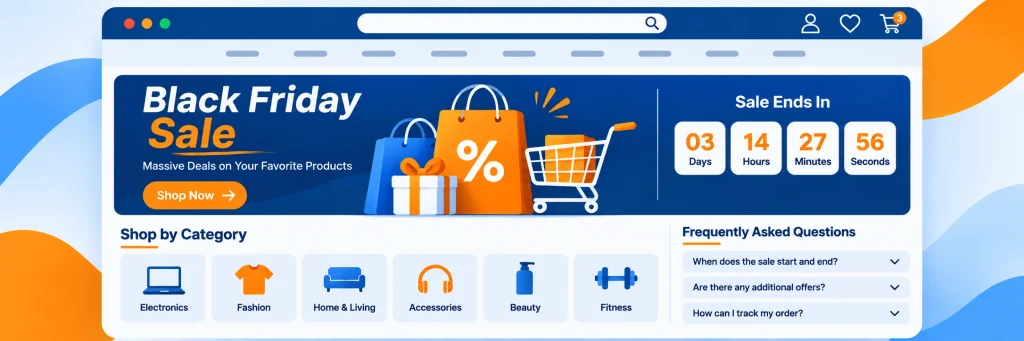
Build Permanent Black Friday Landing Pages Early
Quick answer: One permanent URL, such as /black-friday/, updated every year, outranks a new page created each November.
Structure of a High-Ranking Deal Page
- A short introduction naming the sale dates and the strongest offers
- Category blocks linking to discounted collections
- A visible “how deals work” section covering shipping cutoffs and return rules
- A countdown element that does not hide indexable text
- An FAQ block with concise answers
Early publishing matters. Search engines need time to crawl, index, and test new pages. Teasers such as “early access” and “deal preview” capture demand before the main event.
Handle Expired Deals Without Losing Equity
After the sale, keep the URL live and swap the content to “Black Friday returns next year” with links to current offers. Deleting the page wastes accumulated authority. Retired product URLs should follow Google’s redirect guidance.
Speed Decides Rankings and Revenue on Peak Days
Traffic spikes expose weak infrastructure. Google’s Core Web Vitals guidance defines the loading, interactivity, and stability targets that matter most. Interaction to Next Paint measures how fast a page reacts after a tap, which matters on busy product and cart pages. Research on response time limits from Nielsen Norman Group explains why delays break a shopper’s flow.
Quick answer: Ecommerce performance optimization before Black Friday means compressing images, deferring non-critical scripts, caching aggressively, and load testing the checkout.
Magento 2 Performance Optimization
Magento 2 performance optimization starts with full-page caching through Varnish Cache, a CDN for static assets, and a review of third-party extensions. Extensions are a common cause of slow category pages. Database indexing, Redis for sessions, and optimized image formats come next. The Adobe Commerce developer documentation covers extension and architecture standards. Stores needing deeper tuning often hire specialists in Magento ecommerce development for a pre-season audit.
Black Friday SEO for Shopify, Magento, and Headless Stores
Shopify stores benefit from trimming installed apps, since every app can add scripts. WooCommerce sites need object caching, a lightweight theme, and a hosting plan sized for spikes, with guidance in the WooCommerce developer docs. BigCommerce stores should confirm that theme scripts are minified and that the CDN is configured for product images, as outlined in the BigCommerce developer center.
Right eCommerce Platform 2026: How Platform Choice Shapes SEO
Quick answer: The right eCommerce platform 2026 is the one that supports fast templates, flexible URLs, structured data, and clean integrations without heavy workarounds.
Shopify offers speed of launch. WooCommerce offers content flexibility inside WordPress. BigCommerce offers strong built-in SEO controls and open APIs. Adobe Commerce and Magento suit large catalogs with complex pricing and custom logic.
Magento 2 vs Adobe Commerce Cloud
Magento 2 vs Adobe Commerce Cloud is a common question for mid-market and enterprise retailers. Open source Magento gives full code control but places hosting, security, and scaling on the merchant. Magento 2 Commerce Cloud adds managed infrastructure, a built-in CDN, and auto-scaling that suits traffic spikes. Teams planning large catalogs often rely on Adobe Commerce development services for migration and cloud configuration. Official documentation is available in the Adobe Commerce documentation hub.
Magento Enterprise Development for Peak Season
Magento enterprise development focuses on stability under pressure: queue-based order processing, staging environments that mirror production, and release freezes before Black Friday. Code changes in the final week carry more risk than reward.
Headless vs Traditional Commerce for Seasonal SEO
Quick answer: Headless vs traditional commerce comes down to flexibility versus simplicity. With headless commerce, businesses gain greater control over front-end design and customer experiences. Traditional platforms, on the other hand, offer built-in features, including established SEO capabilities, which can simplify website management.
Headless eCommerce Architecture Explained
Headless eCommerce architecture separates the storefront from the commerce engine. The front end, built with frameworks such as Next.js or Nuxt, talks to the backend through APIs. Shopify documents the approach in its headless storefront guide, and Shopify Hydrogen shows a framework built around server rendering.
Headless ecommerce development can produce excellent speed scores, but SEO risks appear when rendering is handled carelessly. Google’s JavaScript SEO basics explain how rendering choices affect indexing. Server-side rendering or static generation keeps content visible to crawlers. Metadata, canonical tags, and sitemaps must be rebuilt in code, and the Next.js metadata guide documents one way to do that.

When Traditional Commerce Still Wins
Smaller catalogs and lean teams often perform better on a traditional platform. Fewer moving parts mean fewer failure points during peak traffic.
Fix the Ecommerce Backend Before Traffic Arrives
A dependable ecommerce backend protects rankings indirectly. Server errors, slow responses, and out-of-stock pages that return errors all send negative signals.
Priority checks include:
- Inventory sync accuracy, so ranked pages never promote sold-out items
- Correct HTTP status codes for discontinued products
- Stable URL structures that survive catalog updates
- Order and payment queues tested under load
Ecommerce API Integration Services That Protect SEO
Ecommerce API integration services connect the store to ERPs, PIM tools, shipping carriers, and marketing platforms. Failed or delayed syncs create price mismatches between search listings and product pages, which can trigger Merchant Center disapprovals. Feed accuracy is defined in the Merchant Center product data specification. Reliable integrations keep price, availability, and shipping data aligned everywhere.
Product Data Quality and AI Product Data Enrichment
Quick answer: AI product data enrichment uses machine learning to fill missing attributes, standardize titles, and generate unique descriptions at scale, improving relevance for search engines and AI assistants.
Thin or copied manufacturer descriptions rarely rank. Enrichment adds materials, dimensions, use cases, compatibility, and comparison details. Human review remains essential, since automated text can introduce errors.
Structured Data That Earns Rich Results
Product, Offer, and Review markup helps search engines display price, availability, and ratings. Google explains the requirements in its product structured data documentation. Schema.org Offer and Schema.org Product define the underlying vocabulary. Accurate markup also gives AI systems clean, machine-readable facts to cite.
Optimize Black Friday SEO for AI Search Visibility
Quick answer: AI search tools favor pages that answer questions directly, show clear authorship, and present verifiable facts.
Google documents how generative results use site content in AI features and websites. Practical steps:
- Open sections with a one- or two-sentence answer, then expand
- Use question-style subheadings that mirror real shopper queries
- Keep facts consistent across the site, Merchant Center, and structured data
- Add specifics such as dates, return windows, and shipping thresholds
- Follow Google’s helpful content guidance for experience, expertise, and trust signals
Consistency builds trust with language models. When pricing, policies, and product facts match everywhere, citation likelihood rises.
Black Friday SEO Timeline
- 8 to 12 weeks out: Audit speed, crawl health, and product data.
- 4 to 6 weeks out: Publish teaser pages and refresh the deal hub.
- 2 weeks out: Freeze code, test load, and submit the sitemap.
- Event week: Monitor Search Console, logs, and stock accuracy daily.
- After the sale: Update the page, record results, and plan the next season.
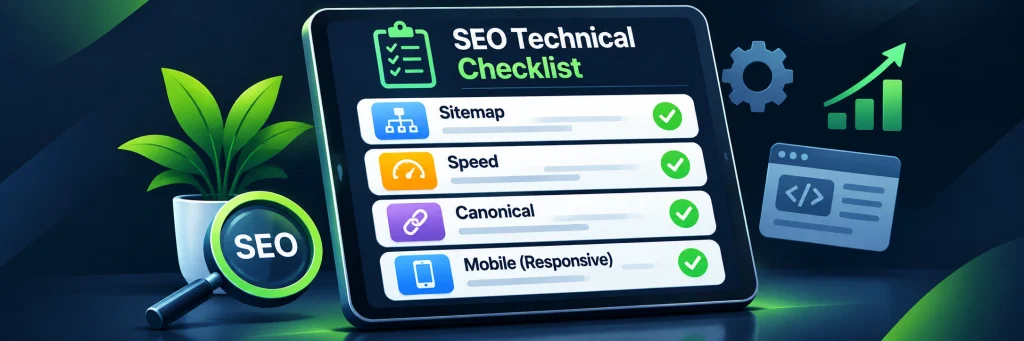
Technical Black Friday SEO Checklist for the Final Week
- Confirm the sale page is indexed in Search Console
- Submit an updated XML sitemap, following the sitemaps overview
- Resolve duplicate parameter URLs with canonical tags
- Audit internal links so category pages point to the deal hub
- Check that faceted navigation does not create crawl traps, as covered in Google’s faceted navigation guide
- Verify mobile layouts, since most holiday browsing happens on phones, and review checkout usability against the WCAG 2.2 quick reference
- Monitor Core Web Vitals and server logs daily during the event
Build Authority with Links That Carry Weight
Quick answer: Authority grows from relevant, editorially earned links, not from link volume.
A large backlink count with a low authority score usually signals that most links come from a small set of domains or from low-quality sources. Referring domain diversity and topical relevance matter far more than totals.
Effective link sources for retailers include:
- Original data, such as annual shopping behavior studies
- Gift guides pitched to niche editors and bloggers
- Supplier and manufacturer resource pages
- Local and industry press coverage for sales and charity campaigns
- Expert commentary offered to journalists
Each earned link should come from a site whose audience overlaps with the store’s shoppers.
Measure Results and Refine for Next Season
Track organic sessions, revenue per session, ranking movement for deal queries, and indexed page counts. Compare against the previous year, then document what worked. Early notes become the foundation for next season’s evergreen page.
Frequently Asked Questions About Black Friday SEO
When should Black Friday SEO work begin?
Ideally eight to twelve weeks before the event. Late starters should prioritize speed fixes, the deal landing page, and structured data.
What is the fastest way to rank for Black Friday searches?
Update an existing sale URL rather than publishing a new one, then strengthen the page with internal links and a clear FAQ.
Does headless commerce help Black Friday SEO?
Headless can improve speed and flexibility, but rendering and metadata need careful engineering. Without that, rankings can drop.
Which platform is best for Black Friday traffic?
Platforms with managed scaling, such as Shopify and Adobe Commerce Cloud, handle spikes with less manual work. Self-hosted options need planned capacity.
How does AI product data enrichment affect rankings?
Richer, unique product details improve relevance and give AI search tools more accurate facts to reference.
How can an eCommerce site appear in AI-generated answers?
Direct answers, consistent facts, structured data, and visible expertise raise the chance of citation.
Should Black Friday pages be deleted after the sale?
No. Keeping the URL live preserves links and authority for the next season.
Conclusion
A dependable Black Friday SEO plan rewards early preparation, fast infrastructure, accurate product data, and answer-first content. Platform decisions, from Shopify to Magento to headless builds, shape how much of the work is easy or hard. Stores that treat the sale page as a permanent asset compound gains every year.