

Every year, the amount of online shopping traffic increases, but a significant portion of that traffic never completes a transaction. In 2026, there is still a strong correlation between e-commerce site performance and conversions, and slow-loading storefronts remain one of the largest silent revenue killers in digital retail. A store that takes more than a few seconds to load is often abandoned before a product page even appears, regardless of how good the pricing or the product catalog looks, highlighting the direct impact of ecommerce site speed and conversions on online retail performance.
This article breaks down the technical, structural, and platform-related reasons ecommerce sites slow down in 2026, and outlines practical fixes across major platforms including Magento, WooCommerce, BigCommerce, Adobe Commerce, and headless commerce architectures, with a focus on improving ecommerce site speed and conversions.
The Real Cost of Slow Loading Times in 2026
Page speed has moved from a technical afterthought to a core revenue metric. Data from Google’s own performance research has repeatedly shown that conversion rates drop sharply as load time increases past two to three seconds. Chrome UX Report data, collected from real Chrome users around the world, forms the basis for measuring how fast a site actually feels to visitors, rather than relying only on lab-based speed tests.
By 2026, mobile commerce accounts for the majority of retail sessions, and mobile networks amplify every millisecond of delay caused by unoptimized scripts, oversized images, and heavy third-party tags. A store losing even half a second in load time can see measurable drops in add-to-cart rates and checkout completion.
Common Reasons Ecommerce Sites Load Slowly
1. Bloated Themes and Unoptimized Code Affecting Ecommerce Site Speed and Conversions
Many ecommerce themes, particularly on Magento and WooCommerce, ship with unused CSS, redundant JavaScript libraries, and render-blocking scripts. Layered customizations added over several years often stack on top of each other without cleanup, creating code bloat that slows every page request. These performance issues directly affect ecommerce site speed and conversions, reducing overall website efficiency and customer engagement.
2. Unoptimized Images and Media
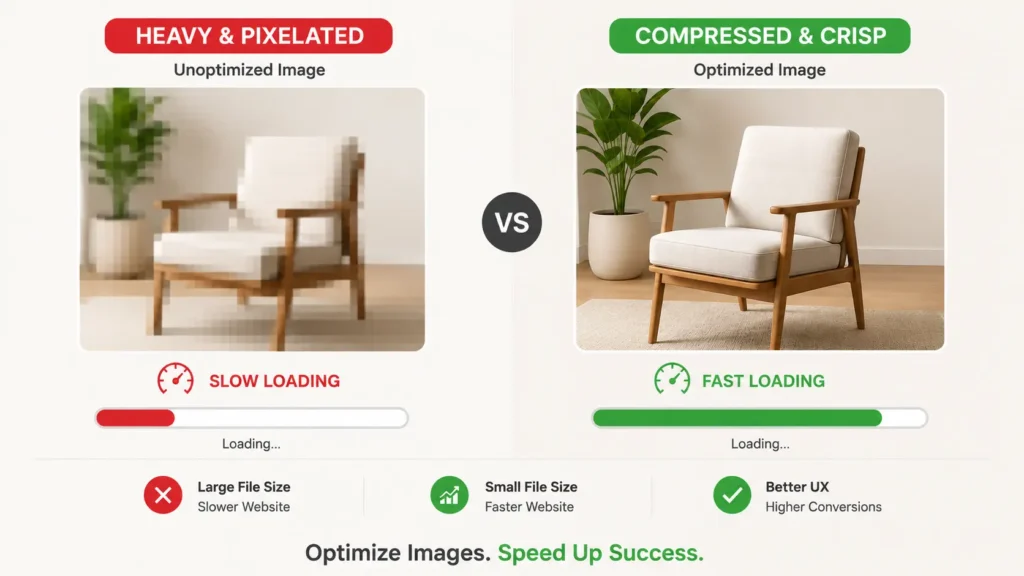
Product galleries with dozens of high-resolution images, without proper compression or modern formats such as WebP or AVIF, remain one of the most common speed killers across every platform.
3. Excessive Third-Party Scripts Affecting Ecommerce Site Speed and Conversions
Analytics tags, chat widgets, marketing pixels, and review plugins each add their own loading time. Stores running ten or more third-party scripts simultaneously frequently see main-thread blocking, which delays interactivity even after visible content appears.
4. Poor Hosting and Server Response Time
Shared hosting environments and outdated server configurations increase Time to First Byte significantly. Platforms like Adobe Commerce and BigCommerce offer cloud-optimized hosting, but self-hosted Magento and WooCommerce installations depend heavily on server-side tuning, caching layers, and CDN configuration. These infrastructure decisions play a critical role in ecommerce site speed and conversions, directly affecting page performance and customer experience.
5. Lack of Caching and CDN Usage Affecting Ecommerce Site Speed and Conversions
Full-page caching, browser caching, and content delivery networks reduce the distance data travels to reach a visitor. Stores with inadequate CDN coverage frequently exhibit uneven load times in various geographical areas.
6. Database Query Overload Affecting Ecommerce Site Speed and Conversions
Large product catalogs with poorly indexed databases slow down category pages and search results. Older Magento installations with years’ worth of unoptimized data are particularly prone to this.
Platform Specific Challenges in Ecommerce Site Speed and Conversions
Magento
Magento offers deep customization but carries a reputation for heavier resource usage. Poorly optimized extensions, outdated indexers, and unoptimized Elasticsearch configurations are common culprits behind slow Magento storefronts in 2026.
WooCommerce
Running on WordPress, WooCommerce performance depends heavily on hosting quality, plugin count, and database size. Stores stacking multiple marketing and SEO plugins alongside WooCommerce frequently experience slowdowns without dedicated caching plugins and query optimization.
BigCommerce
As a hosted SaaS platform, BigCommerce manages much of the backend infrastructure, but front end theme customizations, oversized apps, and unoptimized custom scripts can still create noticeable delays.
Adobe Commerce
Although cloud infrastructure choices are advantageous for Adobe Commerce, which is based on the Magento codebase with additional corporate features, large-scale catalogs and complex B2B settings still need careful performance tuning to prevent poor site loads.
Headless Commerce
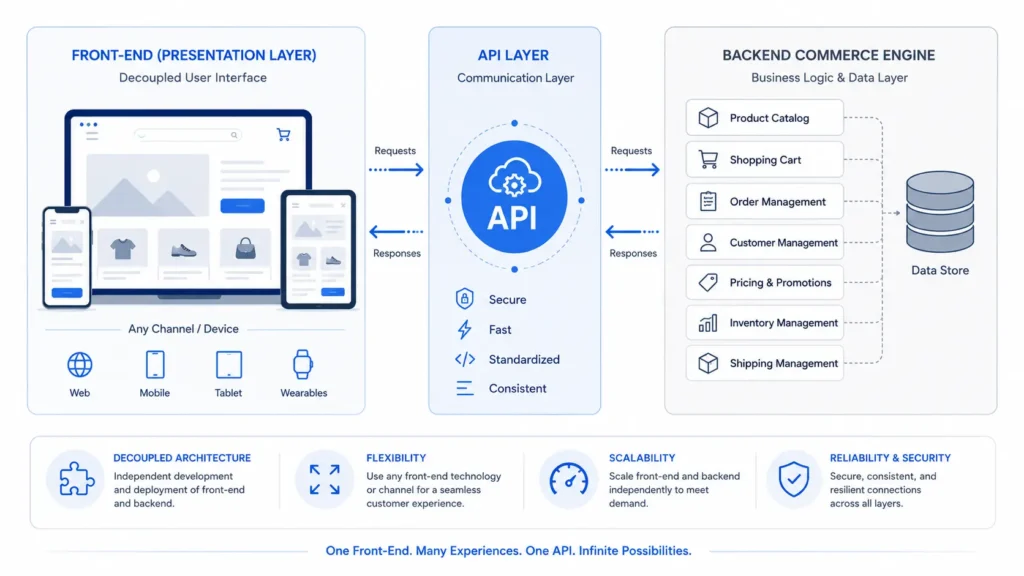
Headless commerce architecture separates the front end from the backend, allowing faster, more flexible storefronts built with modern frameworks. This approach has gained significant traction in 2026 as brands look to reduce load times while maintaining rich, app-like shopping experiences.
How Slow Load Times Directly Reduce Ecommerce Site Speed and Conversions
At a point when customers are already choosing whether to stay or go, every extra second of load time creates friction. Cart abandonment rates climb as checkout pages stall, and mobile shoppers in particular show lower tolerance for delays compared to desktop users.
Slow product pages also affect search visibility, since page experience signals factor into how search engines rank ecommerce pages. A slow store therefore loses conversions twice: once through visitor abandonment, and again through weaker organic rankings.
Practical Fixes for Faster Ecommerce Sites in 2026
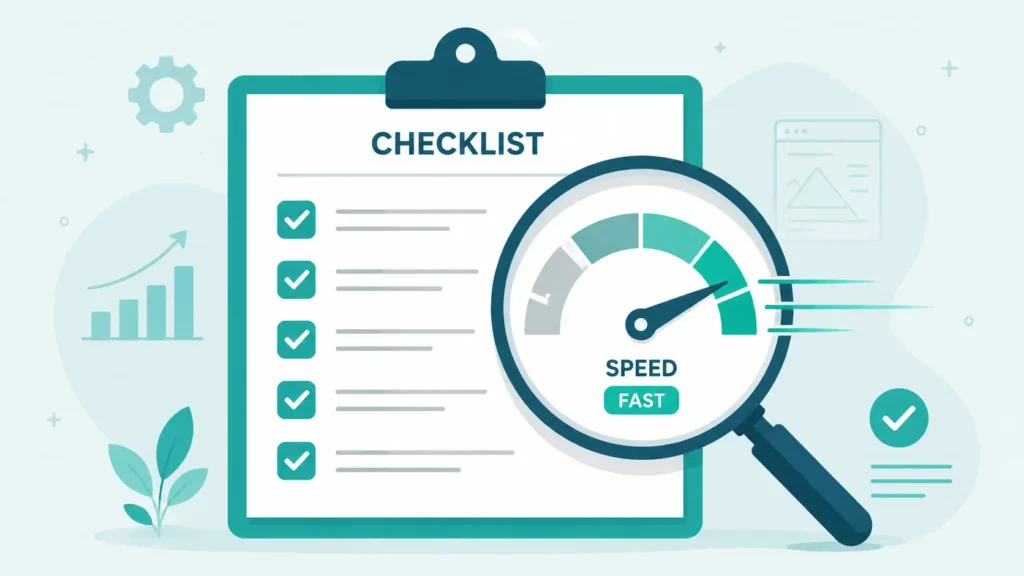
- Compress and serve images in modern formats with proper lazy loading.
- Reduce third-party scripts to only those delivering measurable business value.
- Implement full-page caching and a reliable CDN across all regions.
- Audit and remove unused theme code, plugins, and extensions.
- Upgrade hosting infrastructure to match catalog size and traffic volume.
- Optimize database indexing for large product catalogs.
- Consider headless commerce architecture for storefronts needing both speed and flexibility.
- Monitor Core Web Vitals regularly rather than relying on one-time audits.
Choosing the Right Platform for Long-Term Speed
Platform choice plays a significant role in how much ongoing effort speed optimization requires. Magento and Adobe Commerce suit large, complex catalogs needing deep customization, provided proper technical resources are available. WooCommerce fits smaller to mid-sized stores already invested in the WordPress ecosystem. BigCommerce offers a more hands-off hosted experience with fewer infrastructure concerns. Headless commerce increasingly appeals to brands prioritizing speed, flexibility, and modern front-end experiences over traditional monolithic setups.
Frequently Asked Questions About Ecommerce Site Speed and Conversions
How fast should an ecommerce page load in 2026?
Most performance benchmarks point to under two to three seconds for a product or category page to load, with anything beyond that showing a noticeable drop in conversions and a rise in bounce rate, especially on mobile devices.
Does Magento need a CDN to run fast?
A content delivery network is considered close to essential for Magento stores with international traffic, since it reduces the physical distance data has to travel and offsets the platform’s heavier server load compared to lighter-weight platforms.
Can WooCommerce handle a large product catalog without slowing down?
WooCommerce can support large catalogs, but it depends heavily on hosting quality, database optimization, and keeping plugin count low, since each additional plugin adds its own processing overhead on top of WordPress itself.
Is headless commerce always faster than a traditional platform?
Headless commerce often loads faster because the front end is decoupled from the backend, but the speed gain depends on how well the API layer and front-end framework are optimized, so a poorly built headless setup can still be slow.
What is the single biggest speed fix for most ecommerce sites?
Image optimization tends to deliver the fastest, most noticeable improvement for the least effort, since oversized, uncompressed product images are one of the most common causes of ecommerce site speed and conversions loss.
Final Thoughts on Ecommerce Site Speed and Conversions
Ecommerce site speed and conversions will remain closely linked through 2026 and beyond, as shopper patience continues to shrink and competition for attention grows. Addressing image weight, script overload, hosting quality, database performance, and platform-specific bottlenecks offers a direct path toward recovering lost conversions and building a faster, more profitable storefront.