
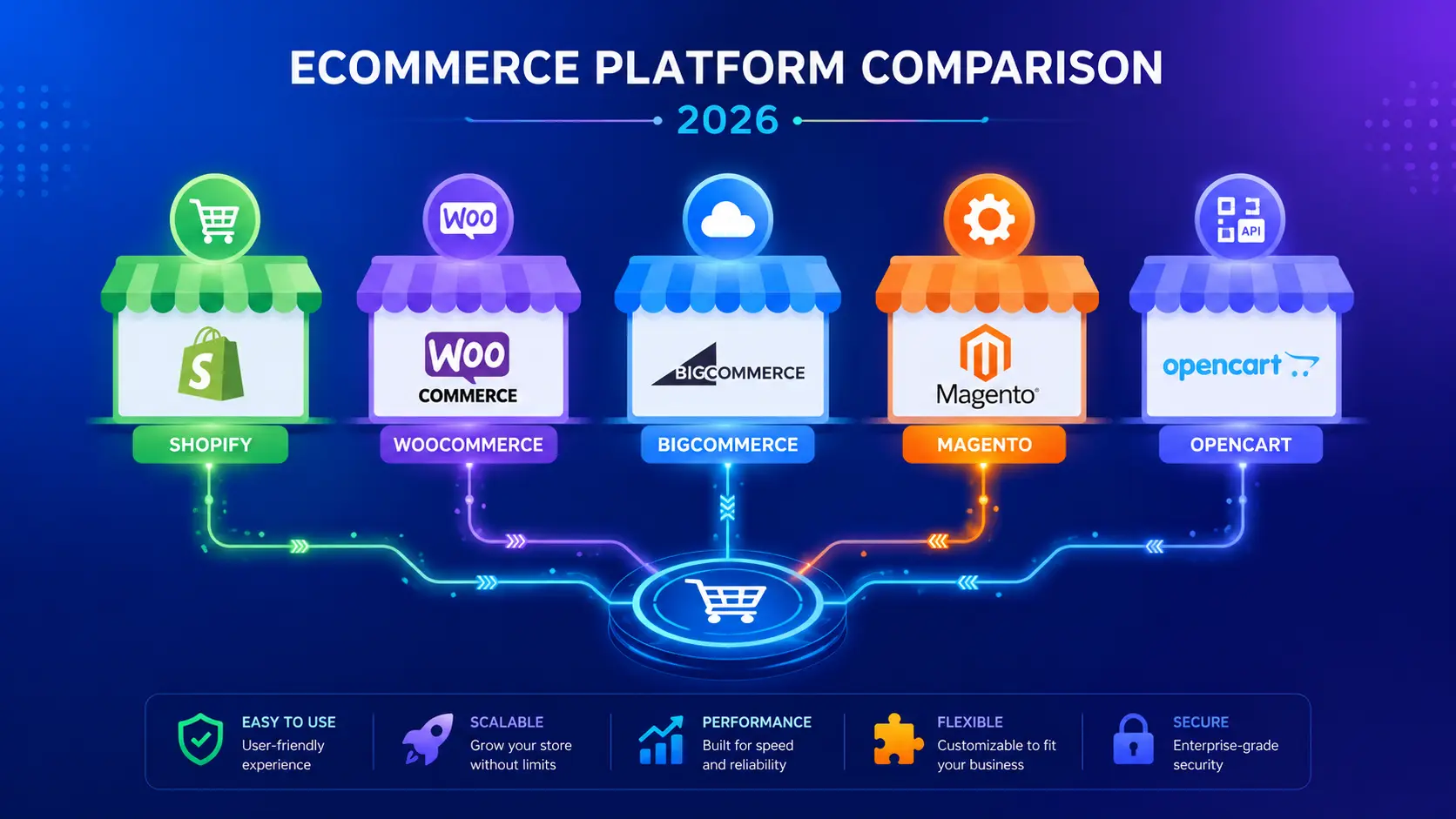
Selecting the right ecommerce platform has become one of the most important decisions a growing online business can make heading into 2026. With customer expectations rising, mobile commerce dominating traffic, and artificial intelligence reshaping how products are discovered and purchased, the platform powering an online store directly affects revenue, customer retention, and long-term scalability. This guide breaks down everything that matters when evaluating options such as Shopify, WooCommerce, Magento, Adobe Commerce, BigCommerce, and headless commerce solutions, so that the decision-making process becomes clear and structured rather than overwhelming.
The Growing Importance of the Right Ecommerce Platform in 2026
Ecommerce has moved far beyond simple online catalogs. Modern shoppers expect fast page loads, personalized recommendations, seamless checkout across devices, and consistent experiences across web, mobile apps, and social commerce channels. A platform that cannot support these expectations creates friction that leads to abandoned carts and lost revenue. Choosing the right ecommerce platform in 2026 is no longer just a technical decision handled by a development team; it is a strategic business decision that touches marketing, operations, and customer experience simultaneously.
Key Factors to Consider Before Choosing the Right Ecommerce Platform
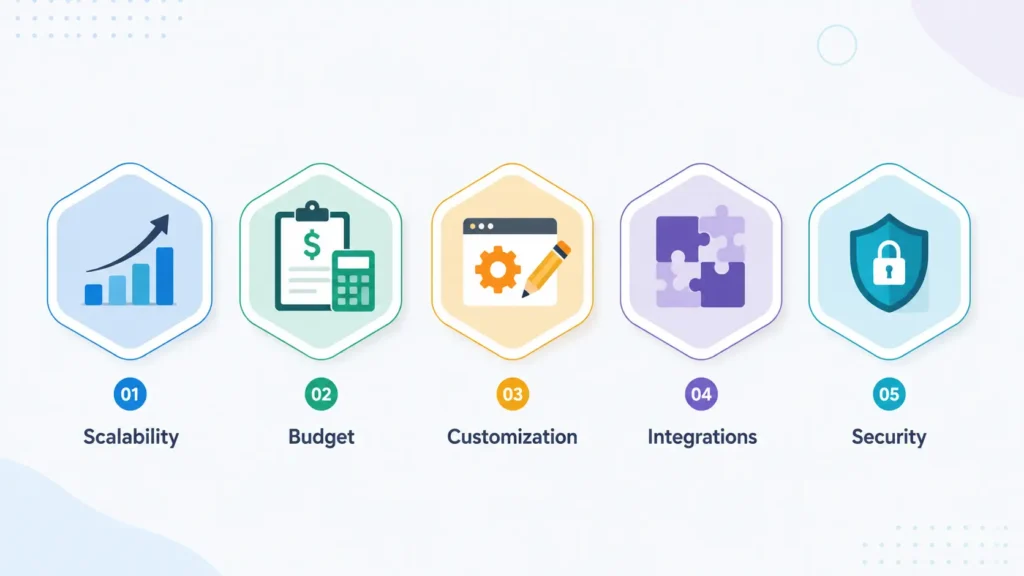
Before comparing individual platforms, it helps to establish the criteria that actually matter for long-term success. The following factors should guide any evaluation.
Scalability
A platform must handle growth in traffic, product catalog size, and order volume without performance degradation. Businesses expecting seasonal spikes or rapid expansion need infrastructure that scales automatically rather than requiring constant manual intervention.
Budget Planning and Long-Term Platform Costs
Only a portion of the expenses are covered by licensing fees. Hosting, transaction fees, apps or extensions, development resources, and ongoing maintenance all contribute to the total cost of ownership. A platform that appears inexpensive at first can become costly once customization needs grow.
Customization and Flexibility of the Right Ecommerce Platform
Some businesses need highly tailored checkout flows, unique product configurators, or complex B2B pricing rules. Platforms differ significantly in how much customization is possible without heavy custom development.
Third-Party Integrations
Payment gateways, shipping carriers, ERP systems, CRM tools, and marketing platforms all need to connect smoothly. A strong integration ecosystem reduces development time and avoids vendor lock-in.
Security and Compliance
PCI compliance, data protection regulations, and fraud prevention tools are non-negotiable requirements, particularly for businesses handling sensitive payment data at scale.
Top Right Ecommerce Platform Options Compared for 2026
Shopify
Shopify remains one of the most widely adopted platforms for small to mid-sized businesses due to its ease of setup, hosted infrastructure, and extensive app marketplace. Shopify Plus extends these capabilities for larger merchants needing higher checkout customization and API access. The platform suits businesses prioritizing speed to launch and low technical overhead, though highly complex customizations sometimes require app dependency or additional development costs. Shopify and Shopify Plus development services can help evaluate whether this platform fits a specific business model.
WooCommerce
WooCommerce, which is based on WordPress, offers a very flexible and reasonably priced open-source solution. Because it runs on WordPress, content-driven brands benefit from combining blogging, SEO tools, and product catalogs within a single ecosystem. Compared to fully hosted platforms, WooCommerce necessitates more active control of hosting, security, and plugin updates, which makes it an excellent choice for companies with development resources or agency help. WooCommerce development expertise supports businesses managing this hands-on setup efficiently.
Magento (Adobe Commerce)
Magento, now offered commercially as Adobe Commerce, remains a preferred choice for enterprise-level businesses with complex catalog structures, multi-store requirements, or advanced B2B functionality. Adobe Commerce adds AI-driven merchandising, advanced analytics, and enterprise-grade support. The platform demands significant development expertise and infrastructure investment, positioning it best for larger organizations rather than early-stage stores. Magento and Adobe Commerce development services address these enterprise-level infrastructure needs directly.
BigCommerce
BigCommerce positions itself as a middle ground between simplicity and enterprise capability. It offers strong native features without heavy reliance on third-party apps, competitive transaction fee structures, and solid multi-channel selling support. BigCommerce appeals to growing mid-market businesses that need more built-in functionality than Shopify offers without the full complexity of Adobe Commerce. BigCommerce development support is available for businesses evaluating this middle-ground option.
Headless Commerce
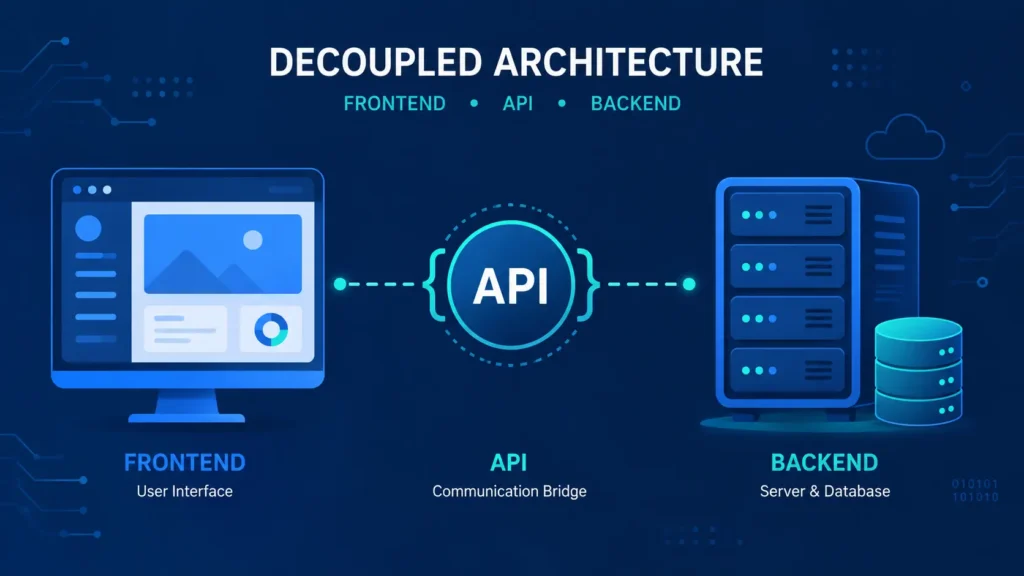
In headless commerce, APIs link the front-end presentation layer to the back-end commerce engine. This architecture allows development teams to build fully custom storefronts, deliver content across multiple channels such as mobile apps, kiosks, and voice assistants, and update the frontend independently from backend logic. Headless approaches suit businesses with strong technical teams and a need for maximum design freedom, though they generally require higher development investment and longer implementation timelines compared to traditional platforms. Headless commerce development using React, Next.js, or Vue supports this type of custom architecture.
How to Choose the Right Ecommerce Platform Based on Business Size
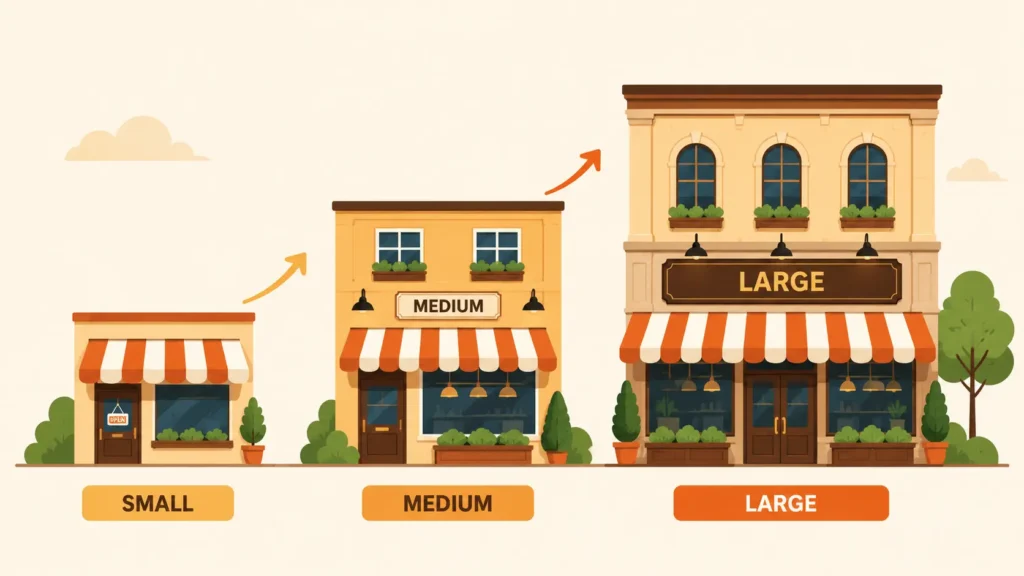
Startups and small businesses typically benefit from hosted platforms like Shopify or BigCommerce, where infrastructure management is handled externally and setup time is minimal. Mid-sized businesses with content marketing strategies or specific customization needs often find WooCommerce a strong balance of flexibility and cost control. Adobe Commerce or a headless architecture, where long-term development effort pays off through more control and scalability, are typically preferred by enterprise enterprises with complicated catalogs, many shops, or significant B2B requirements.
Emerging Trends Shaping Ecommerce Platforms in 2026
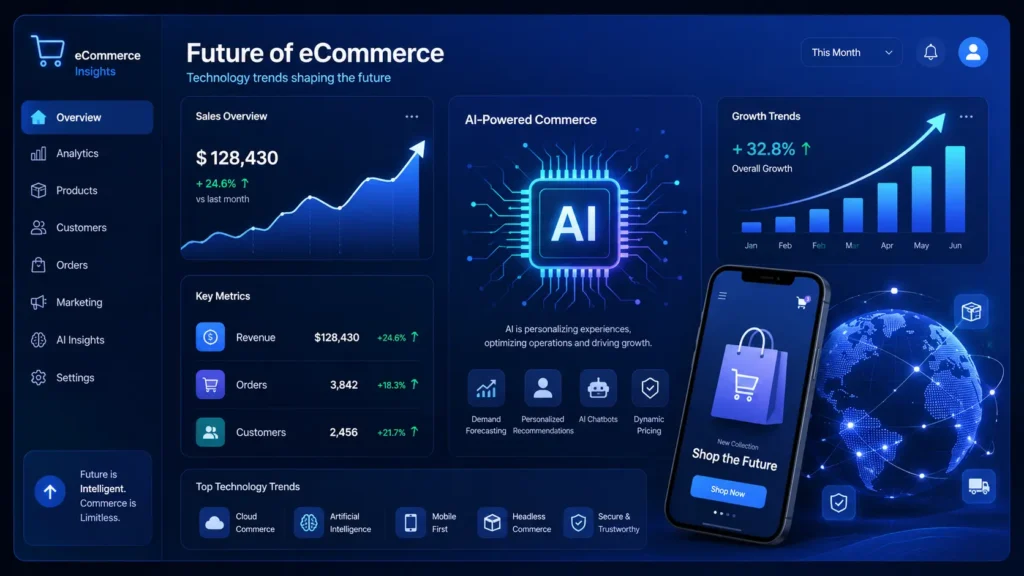
Artificial intelligence continues to influence product recommendations, dynamic pricing, and customer service through advanced chat-based assistants. Composable commerce, where individual services such as search, checkout, and content management are assembled independently, is gaining traction among mid-market and enterprise brands seeking flexibility without full custom builds. Mobile-first design remains critical as mobile commerce continues capturing a growing share of online transactions. Social commerce integrations, allowing checkout directly within social media platforms, are also becoming standard expectations rather than optional add-ons.
Errors That May Affect Your Choice of E-Commerce Platform
A frequent mistake involves choosing a platform based solely on upfront cost without accounting for scaling expenses as order volume grows. Another common error is underestimating the technical resources required for customization, leading to delayed launches or incomplete features. Ignoring integration needs with existing tools such as accounting software or CRM systems often results in costly workarounds later. Finally, overlooking mobile performance and page speed during platform selection can undermine conversion rates regardless of how strong the design appears on desktop.
Frequently Asked Questions About the Right Ecommerce Platform
What is the right ecommerce platform for a small business starting out?
Because of their hosted infrastructure, speedy setup, and lesser technological overhead when compared to open-source or headless alternatives, Shopify and BigCommerce are frequently suggested for small businesses.
Is WooCommerce better than Shopify for SEO?
WooCommerce, built on WordPress, offers deeper content and SEO customization since it integrates directly with WordPress blogging and SEO plugin ecosystems, while Shopify provides solid built-in SEO features with less granular control.
When does headless commerce make sense?
Headless commerce becomes valuable when a business needs highly customized frontend experiences across multiple channels, such as mobile apps or IoT devices, and has development resources to manage API-based architecture.
Is Magento still relevant in 2026?
Magento, now commercially available as Adobe Commerce, remains relevant for enterprise businesses requiring advanced B2B functionality, multi-store management, and deep customization capabilities.
Conclusion
Choosing the right ecommerce platform in 2026 requires balancing budget, technical resources, scalability needs, and long-term business goals rather than following trends alone. Shopify and BigCommerce suit businesses seeking fast, managed setups. WooCommerce offers flexibility for content-focused brands. Adobe Commerce and headless architectures serve enterprises needing deep customization and multi-channel reach. Evaluating business priorities against these platform strengths creates a foundation for sustainable ecommerce growth.
Professional guidance can simplify this decision further. Explore Ecommerce Development Services to compare platform options based on specific business requirements, or Contact the Team for a tailored platform recommendation.