
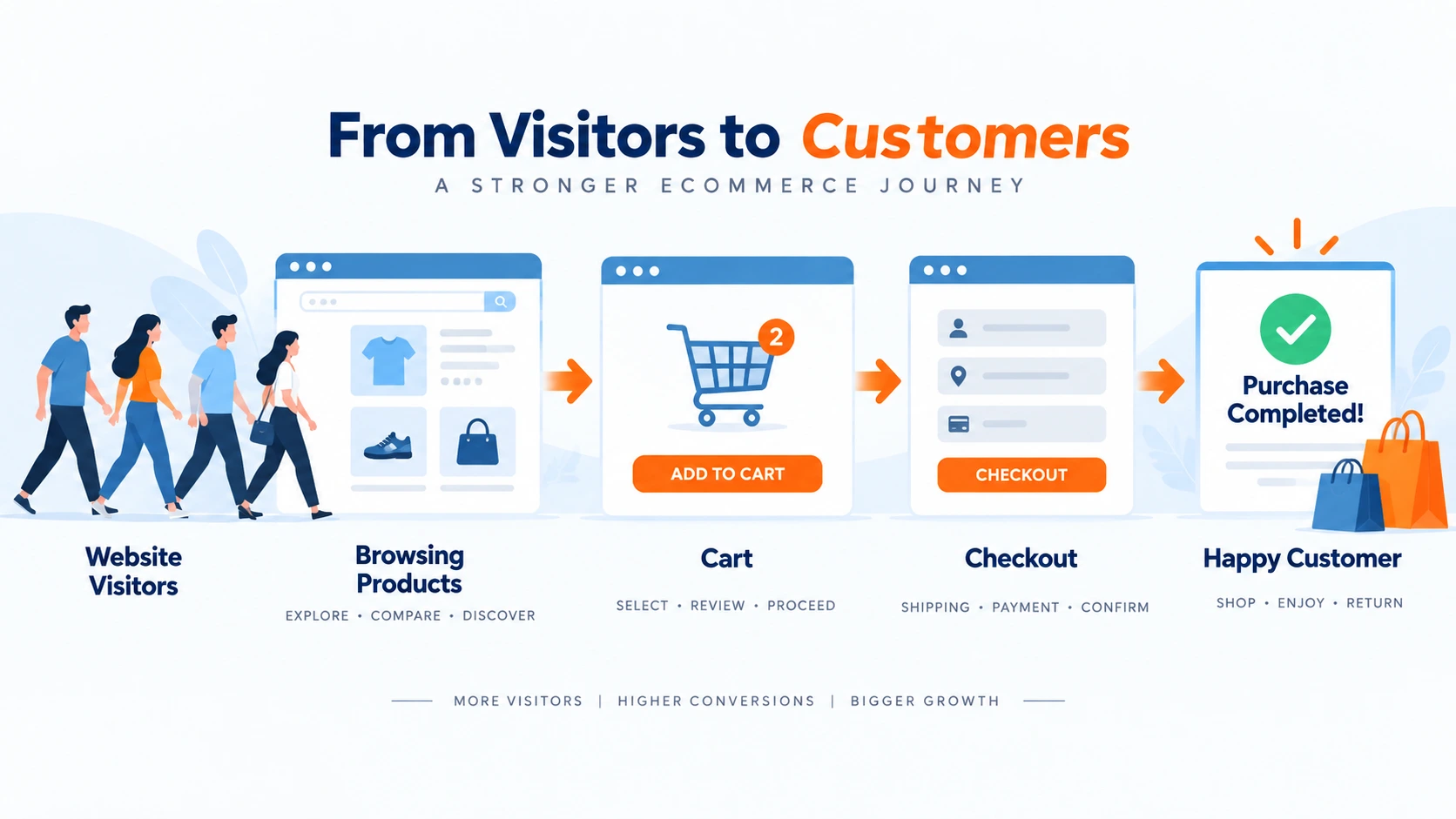
Online stores spend significant budgets driving traffic through ads, social content, and search rankings, yet traffic alone rarely pays the bills. The real challenge for most online retailers is learning how to turn visitors into customers once those visitors actually arrive. A store with thousands of monthly sessions but a low purchase rate is leaving revenue on the table, and small, targeted changes across the shopping journey often produce far better results than simply spending more on acquisition.
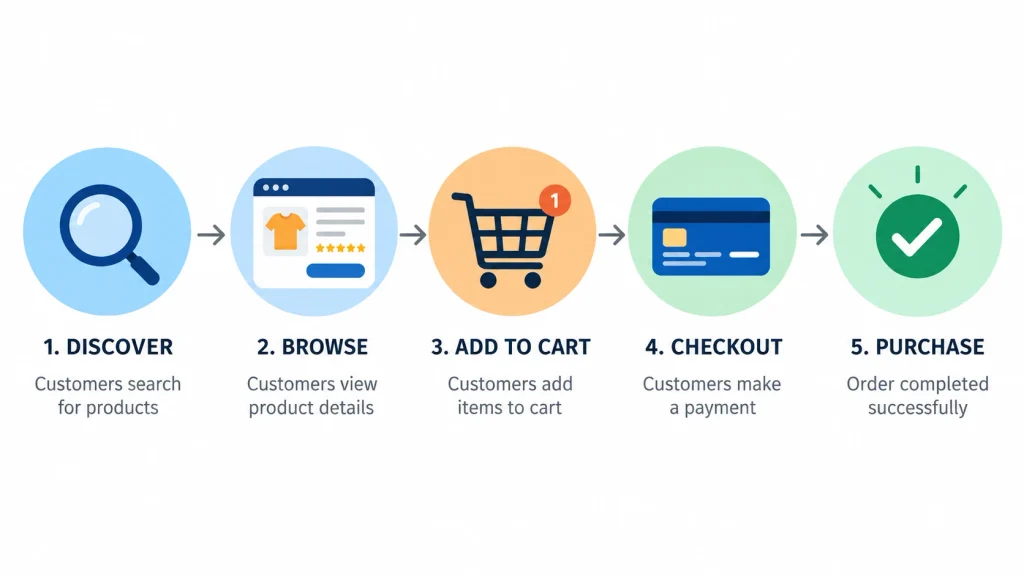
Why It Is Important to Turn Visitors into Customers
A typical online store converts only a small percentage of total visitors into paying customers. That means the majority of traffic leaves without buying anything, often due to friction that could be fixed. Improving the rate at which browsers become buyers is one of the most cost-effective growth levers available, because it makes existing traffic more valuable instead of requiring a larger ad budget.
Retailers focused on conversion typically see improvements in:
- Average order value
- Customer lifetime value
- Return on ad spend, a metric explained clearly by Google’s advertising resources
- Overall revenue without additional marketing cost
Industry benchmark data from Statista’s eCommerce reports shows conversion rates vary significantly by sector, reinforcing why continual optimization matters more than one-time fixes.
Building a Fast, Trustworthy Store to Turn Visitors Into Customers
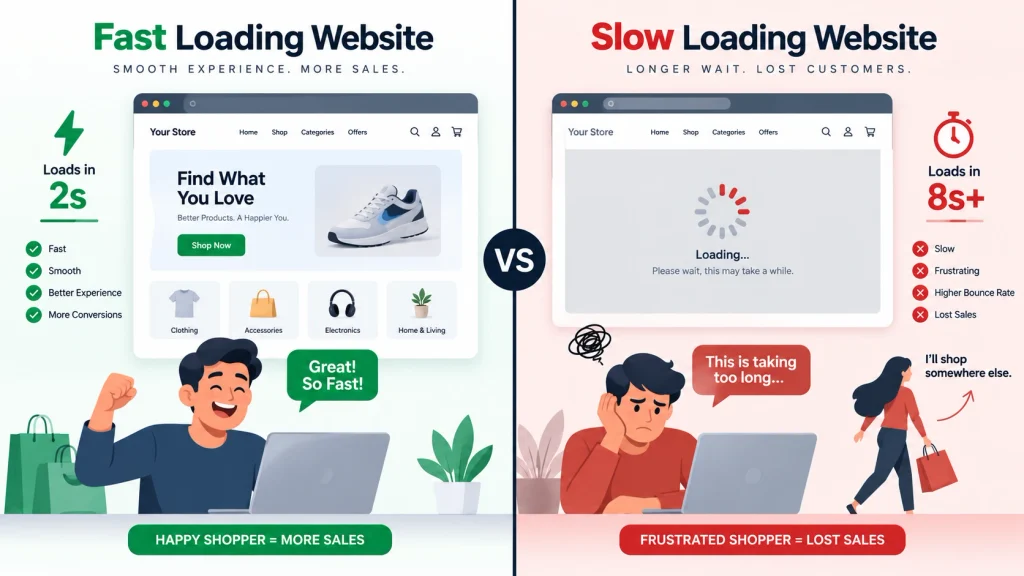
Speed and trust form the foundation of any strategy designed to turn visitors into customers. Shoppers judge a store within seconds, and a slow-loading or unpolished website creates doubt before a product is even seen.
Page Speed Helps Turn Visitors into Customers
Slow-loading pages are one of the fastest ways to lose a sale. Compressing images, minimizing unnecessary scripts, and using reliable hosting all contribute to a smoother browsing experience. Tools such as Google PageSpeed Insights and GTmetrix help identify exactly which elements slow a page down. Page speed has a direct relationship with bounce rate the longer a page takes to load, the more likely a visitor leaves before viewing a single product.
Trust Signals That Turn Visitors into Customers
Security badges, clear return policies, verified customer reviews, and transparent contact information all reduce hesitation. Resources like the Better Business Bureau and Trustpilot are commonly referenced by shoppers checking legitimacy before buying. New visitors are far more likely to complete a purchase when a store looks established and safe, so trust elements should appear near the top of the homepage and on every product page.
Optimizing Product Pages for Faster Buying Decisions
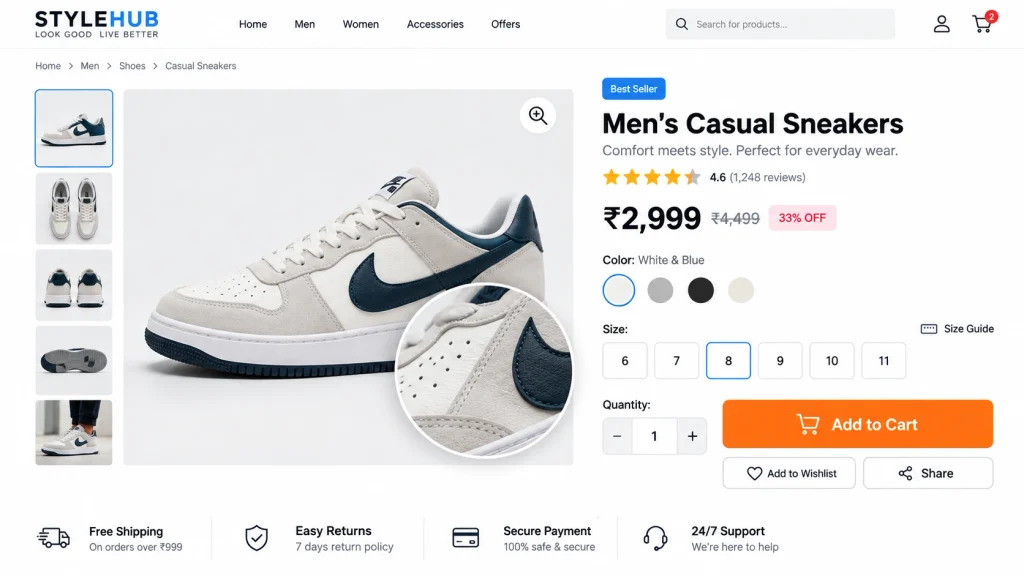
Product pages carry the heaviest responsibility in the buying journey. A page that answers questions clearly and removes doubt moves a browser toward checkout much faster.
Strong product pages typically include:
- High-quality images from multiple angles, including zoom functionality
- Clear, benefit-focused descriptions rather than generic specifications
- Verified customer reviews and ratings
- Transparent pricing, shipping timelines, and stock availability
- A prominent, easy-to-find add-to-cart button
Well-structured product page layout, as outlined by research from the Baymard Institute, often produces one of the largest measurable lifts in conversion rate, since it directly influences the decision-making moment. Refer to the related guide on internal product page best practices for a deeper checklist.
Streamlining Checkout for a Smoother Buying Process
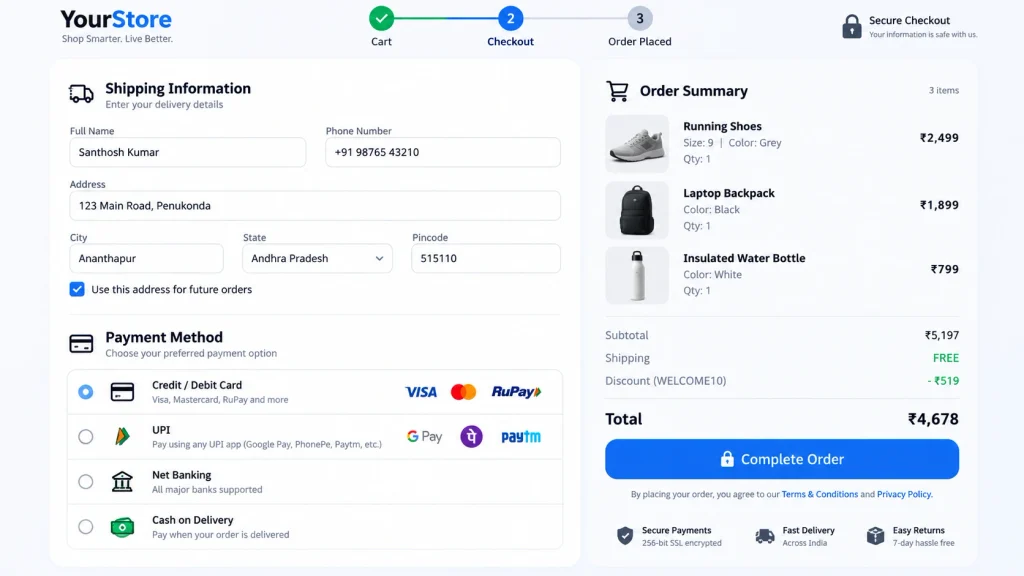
Even a well-optimized product page cannot save a sale if the checkout process is complicated. A long or confusing checkout is one of the leading causes of abandoned carts, and shortening it is one of the fastest ways to turn visitors into customers.
Effective checkout improvements include:
- Offering guest checkout instead of forcing account creation
- Reducing the number of form fields to only what is essential
- Displaying a progress indicator during multi-step checkout
- Showing shipping costs early rather than at the final step
- Supporting multiple payment methods, including digital wallets such as PayPal and Apple Pay
Cart abandonment research published by the Baymard Institute’s checkout usability studies consistently ranks a complicated checkout among the top reasons shoppers leave without buying. Refer to the related internal guide on reducing cart abandonment for a step-by-step checklist.
Personalization Tactics That Turn Visitors Into Customers
Not every visitor converts on the first visit, and a strong strategy accounts for that reality. Personalization and retargeting help bring interested shoppers back and guide them toward a completed purchase.
Effective tactics include:
- Personalized product recommendations based on browsing history
- Abandoned cart emails sent within a few hours of leaving the site, a tactic detailed in Klaviyo’s eCommerce marketing guides
- Retargeting ads through platforms like Meta Ads Manager and Google Ads
- Limited-time offers or free shipping thresholds shown at the right moment
These strategies keep a brand visible during the consideration phase, which is often where a sale is won or lost.
Content Marketing Strategies for Long-Term Growth
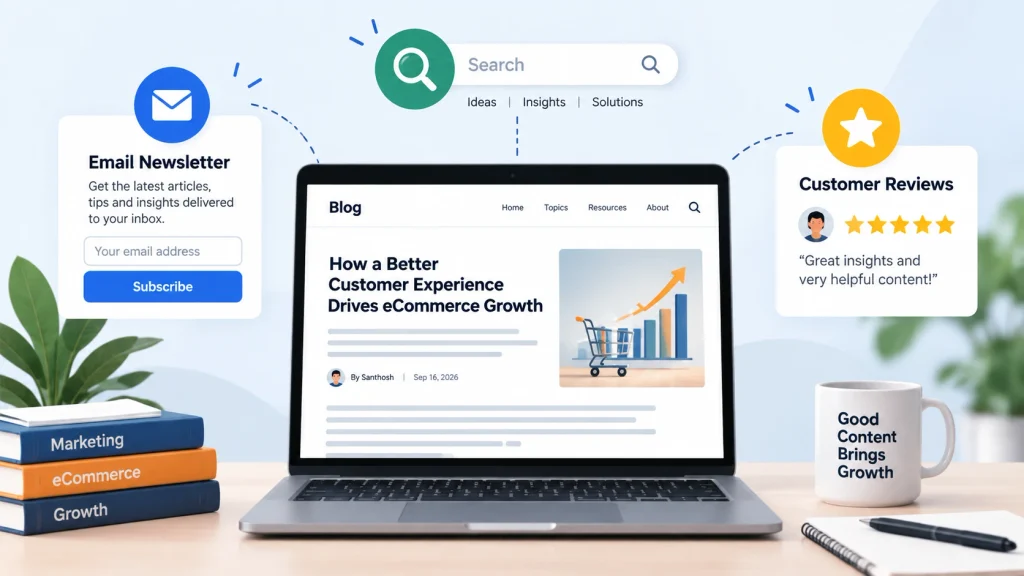
Educational and inspirational content builds trust long before a purchase decision happens, making it a valuable layer in any plan to turn visitors into customers. Buying guides, comparison articles, and how-to content answer questions shoppers search for, positioning a brand as knowledgeable rather than purely transactional.
Effective content marketing tactics include:
- Publishing detailed buying guides that address common objections
- Creating comparison content between product categories or use cases
- Answering frequently searched questions directly on category pages
- Building an email newsletter that nurtures repeat visits, following practices shared by HubSpot’s marketing resources
- Using customer success stories to reinforce credibility, similar to formats highlighted by Neil Patel’s content marketing blog
Mobile Experience Strategies to Turn Visitors Into Customers
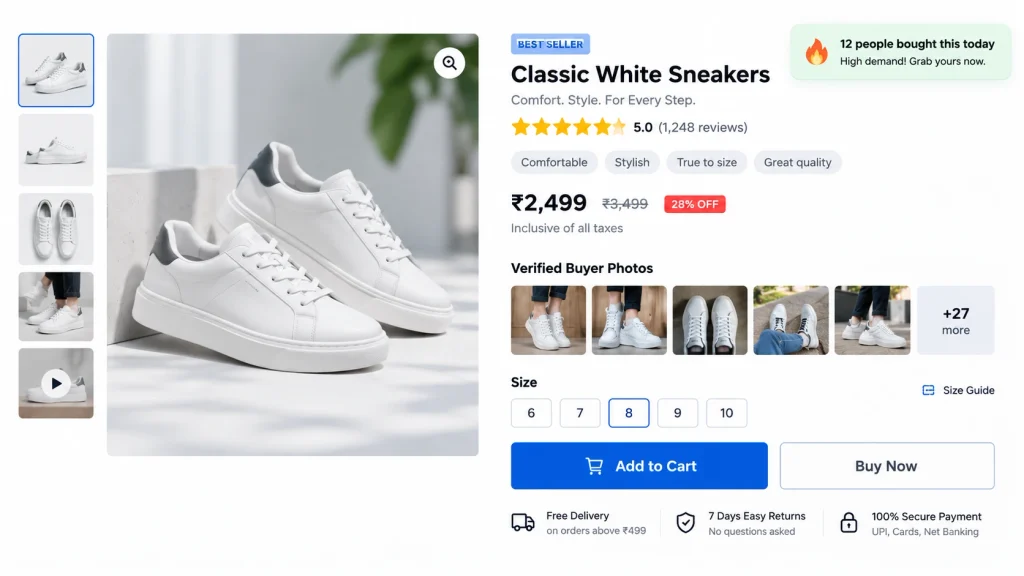
A significant share of online shopping traffic now arrives from mobile devices, making a smooth mobile experience essential for any strategy built to turn visitors into customers. A desktop-first design that translates poorly to smaller screens creates unnecessary friction exactly when purchase intent is often highest.
Mobile-focused improvements include:
- Using large, easy-to-tap buttons throughout the shopping journey
- Compressing images specifically for mobile load times, following guidance from Google’s Web.dev mobile performance resources
- Simplifying navigation menus for smaller screens
- Enabling one-tap payment options like Google Pay and Apple Pay
- Testing checkout flows directly on multiple real devices rather than relying only on desktop previews
Data from Think with Google’s mobile shopping insights consistently shows that mobile shoppers abandon slow or clunky experiences faster than desktop shoppers, making this an area worth prioritizing early.
Social Proof Strategies for Building Trust
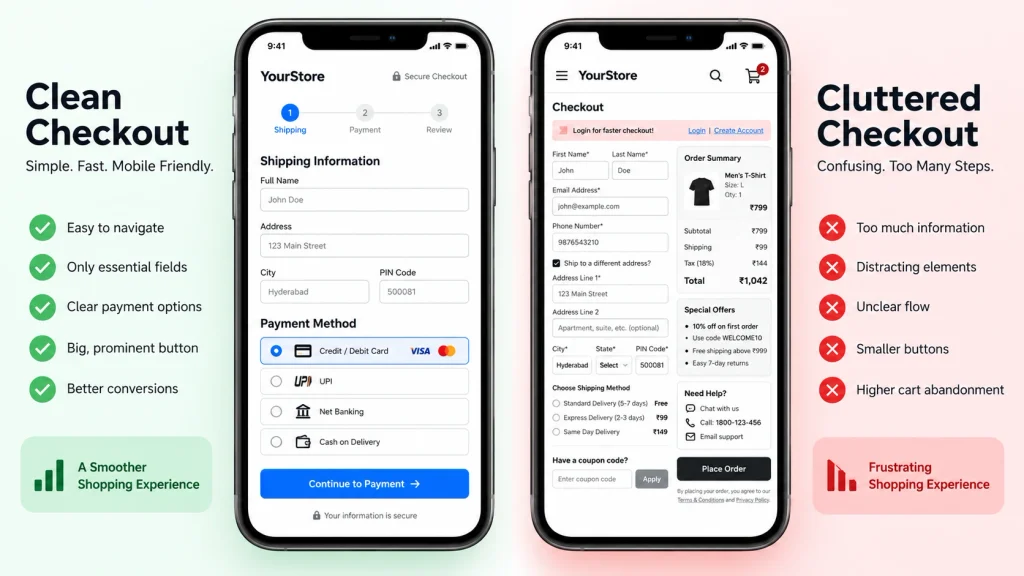
Shoppers trust other shoppers more than they trust marketing copy. Reviews, ratings, and real customer photos remove doubt fast. This makes social proof one of the simplest, lowest-cost ways to turn visitors into customers.
Effective social proof tactics include:
- Displaying star ratings directly on product listings, not just individual product pages
- Featuring verified buyer photos alongside written reviews
- Showing recent purchase notifications, such as “12 people bought this today”
- Highlighting user-generated content from social platforms
- Publishing case studies or testimonials from repeat customers, a format detailed by Trustpilot’s business resources
Short paragraphs and visible proof points work together. A page packed with dense text and no reviews reads as less credible, even if the product itself is strong.
Platform Tools That Help Turn Visitors Into Customers
The underlying commerce platform plays a major role in how easily a store can implement conversion improvements. Each major platform offers distinct strengths.
Magento Strategies for Conversion Growth
Magento suits larger catalogs and businesses needing deep customization. Its flexibility allows extensive control over checkout flow, promotions, and product page layout, making it a strong choice for merchants with development resources available. Documentation is available through Adobe’s Magento resource center.
Shopify Strategies for Conversion Growth
Shopify is known for ease of setup and a large app ecosystem. Built-in themes, one-click app installations, and streamlined checkout options make it straightforward for growing stores to apply conversion best practices without heavy technical investment. The Shopify blog offers ongoing conversion-focused guidance.
WooCommerce Strategies for Conversion Growth
WooCommerce, built on WordPress, offers strong flexibility for content-driven stores. Its plugin ecosystem supports everything from advanced product filtering to checkout optimization, and it integrates naturally with content marketing efforts. Official plugin documentation is available through WooCommerce.com.
Headless Commerce Strategies for Conversion Growth
A headless commerce setup separates the front-end experience from the back-end platform, allowing faster page load times and highly customized shopping experiences. This approach benefits brands prioritizing site speed and unique design that standard themes cannot achieve.
BigCommerce Strategies for Conversion Growth
BigCommerce provides strong built-in features without requiring as many third-party apps, which can reduce site bloat and improve load times. Its native tools for SEO and checkout customization support conversion-focused strategies out of the box, as outlined on the BigCommerce blog.
Adobe Commerce Strategies for Conversion Growth
Adobe Commerce, built on Magento’s core, targets enterprise-level retailers needing advanced personalization, B2B functionality, and large-scale catalog management. Its built-in analytics and segmentation tools support highly tailored conversion strategies, detailed further on Adobe’s Commerce business page.
Measuring Success After Efforts to Turn Visitors into Customers
Conversion optimization is not a one-time project. Continuous testing, including A/B testing on headlines, images, button colors, and checkout steps, reveals what resonates with a specific audience. Regularly reviewing analytics through tools such as Google Analytics bounce rate, cart abandonment rate, and average time on page helps identify where visitors lose interest, allowing targeted fixes rather than guesswork.
Frequently Asked Questions
What is the average conversion rate for an online store?
Average conversion rates vary widely by industry, but most online stores fall within a low single-digit percentage range. Businesses in highly competitive niches often see lower averages, making optimization efforts even more valuable.
What is the fastest way to reduce cart abandonment?
Simplifying the checkout process, offering guest checkout, and displaying shipping costs early are among the fastest, lowest-cost improvements available.
Does site speed really affect sales?
Yes. Slower load times are strongly linked to higher bounce rates, meaning visitors leave before ever reaching a product page or checkout.
Which commerce platform is best for conversion optimization?
No single platform is universally best. Shopify and BigCommerce suit stores wanting built-in tools with minimal setup, WooCommerce suits content-driven brands, Magento and Adobe Commerce suit larger enterprises needing deep customization, and headless commerce suits brands prioritizing speed and unique design.
How often should a store test its checkout and product pages?
Ongoing testing works best. Reviewing performance data monthly and running structured A/B tests on key pages helps catch friction points before they cause long-term revenue loss.
Conclusion
Sustainable eCommerce growth depends less on constantly increasing traffic and more on making the most of the traffic already arriving. A faster website, clearer product pages, a simplified checkout, thoughtful personalization, strong content, and a mobile-friendly experience all work together toward one outcome: turning casual browsers into paying customers. Platform choice whether Magento, Shopify, WooCommerce, BigCommerce, Adobe Commerce, or a headless commerce setup provides the technical foundation, but consistent testing and refinement determine how well that foundation performs over time.