
Choosing between Magento 2 and Adobe Commerce Cloud remains one of the most debated decisions in the ecommerce world. Both platforms share the same underlying architecture, yet the differences in hosting, cost, scalability, and built-in tools shape which businesses succeed on each. Magento 2 vs Adobe Commerce Cloud comparisons often confuse store owners because both products come from Adobe and look similar on the surface, but the gap between the free, self-hosted version and the paid, cloud-managed version is significant enough to affect budget, security, and long-term growth.
Understanding Magento 2
Magento 2, now officially called Adobe Commerce Open Source, is a free, self-hosted ecommerce platform built on PHP. Store owners download the codebase, install it on a server or hosting provider of choice, and manage everything from server configuration to security patches independently. The full Magento Open Source documentation covers installation requirements and system architecture in detail.
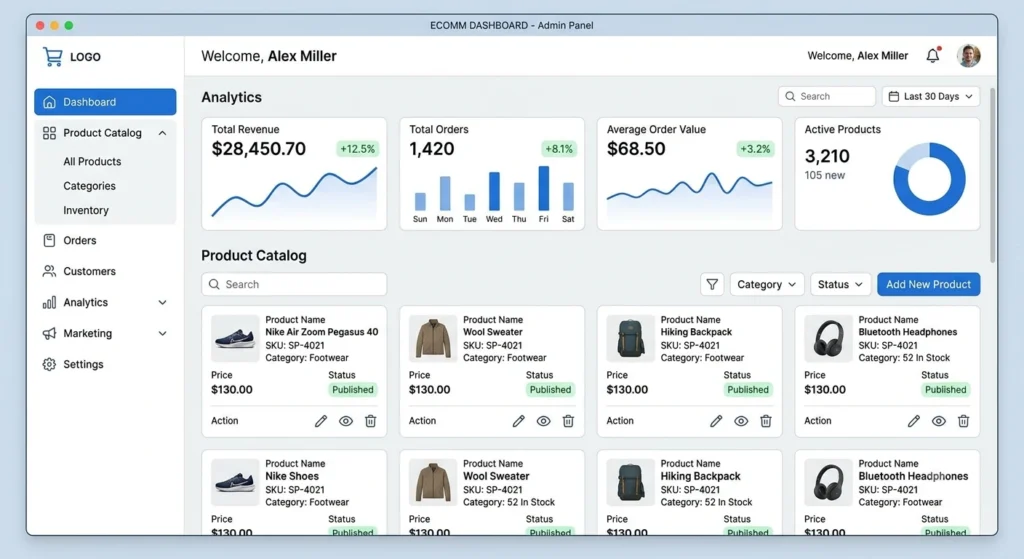
Key Characteristics of Magento 2
- Open-source and free to download, though hosting, developers, and extensions carry separate costs
- Full code-level access, allowing deep customization of checkout flows, catalog structures, and admin workflows
- Community-driven extension marketplace with thousands of free and paid modules
- Self-managed security and scaling, meaning server hardening, PCI compliance, and traffic spikes require manual planning or a hosting partner
Magento 2 suits development teams comfortable managing infrastructure or businesses working with an agency that handles hosting and maintenance in-house. Magento extension development services can fill gaps where the core platform lacks a needed feature.
Understanding Adobe Commerce Cloud
Adobe Commerce Cloud is the enterprise, cloud-hosted edition of the same Magento codebase. Instead of self-hosting, Adobe manages infrastructure, scaling, and a portion of security through a managed cloud environment built on AWS. Full plan details and pricing tiers are outlined on the Adobe Commerce official product page.
Key Characteristics of Adobe Commerce Cloud
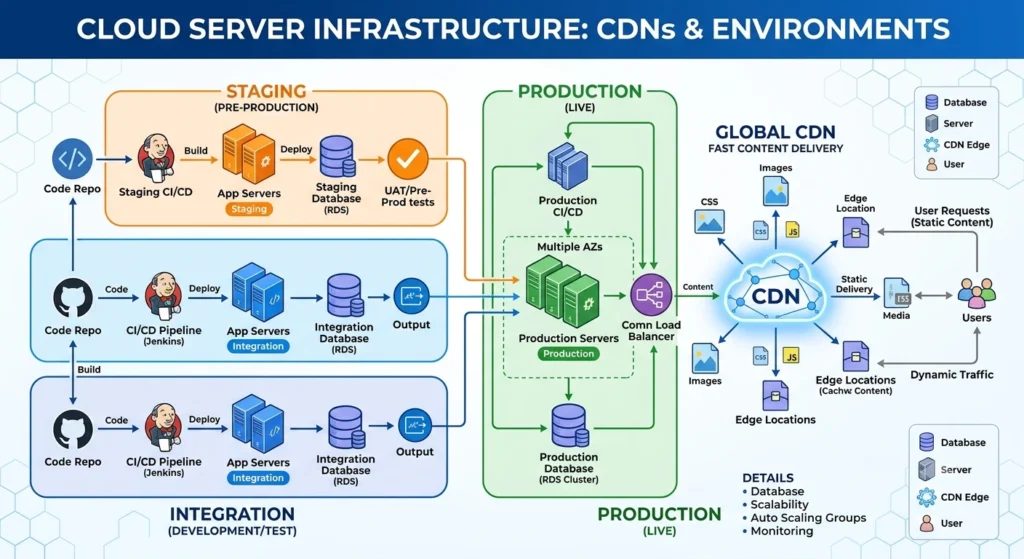
- Fully managed hosting with built-in staging, production, and integration environments
- Auto-scaling infrastructure designed to absorb traffic surges during sales events
- Built-in B2B functionality, including company accounts, shared catalogs, quoting tools, and requisition lists
- Adobe Sensei AI features, such as product recommendations and merchandising automation
- Premium support and SLAs backed directly by Adobe
Adobe Commerce Cloud fits mid-size to large enterprises that need guaranteed uptime, dedicated support, and advanced B2B tools without managing servers directly.
Feature-by-Feature Comparison
Hosting and Infrastructure
Magento 2 requires selecting and configuring a hosting environment VPS, dedicated server, or a Magento-specialized hosting provider. Server-level decisions, caching layers (Varnish, Redis), and CDN setup all fall on the store owner or the development team.
Adobe Commerce Cloud eliminates most infrastructure decisions. Hosting runs on AWS with pre-configured caching, CDN (Fastly), and a Git-based deployment workflow across development, staging, and production environments.
Magento 2 vs Adobe Commerce Cloud: Cost Structure
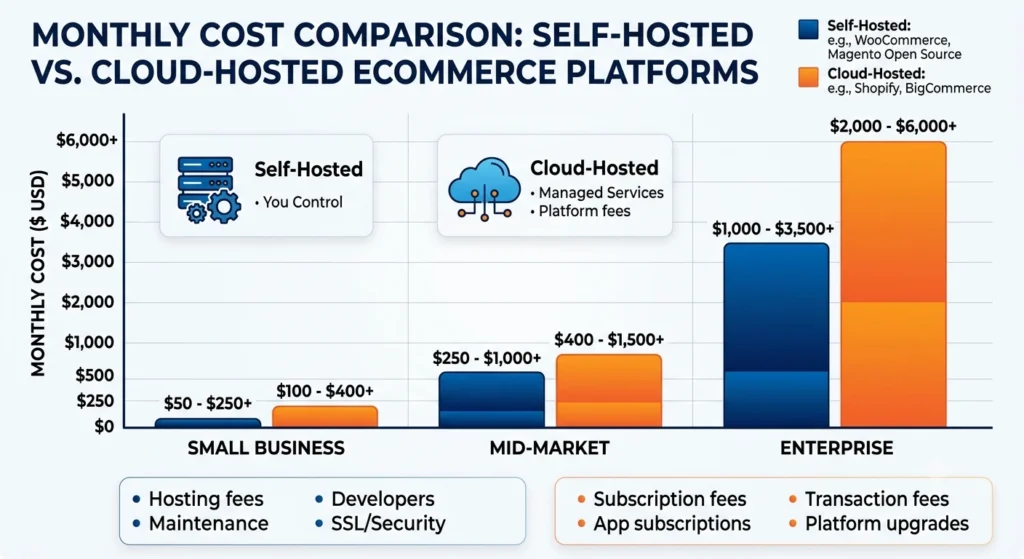
Magento 2 carries no licensing fee, but total cost of ownership includes hosting (often $50–$500+ per month depending on traffic), extension licenses, developer time, and security maintenance.
Adobe Commerce Cloud pricing starts in the tens of thousands of dollars annually, scaling with Gross Merchandise Value (GMV). Licensing bundles in hosting, support, and several premium features, which can offset some of the third-party costs a self-hosted Magento 2 store would otherwise carry.
Magento 2 vs Adobe Commerce Cloud: Scalability
Magento 2 can scale to handle large catalogs and high traffic, but scaling requires manual server upgrades, load balancing, and performance tuning typically handled by a DevOps specialist or hosting partner.
Adobe Commerce Cloud includes auto-scaling by default, making it a stronger fit for stores with unpredictable traffic spikes, such as flash sales or seasonal peaks like Black Friday.
Security and Compliance
Magento 2 places security responsibility on the store owner: applying patches, monitoring for vulnerabilities, and maintaining PCI compliance independently, in line with the PCI Security Standards Council guidelines. Missed patches remain one of the most common causes of Magento store breaches industry-wide. An ecommerce website security best practices guide covers the core hardening steps every store owner should follow.
Adobe Commerce Cloud includes managed security patching, a web application firewall, and DDoS protection as part of the cloud infrastructure, reducing though not eliminating the compliance burden.
Magento 2 vs Adobe Commerce Cloud: B2B and Enterprise Features
Native B2B functionality company accounts, custom catalogs, negotiated quotes, and requisition lists ships out of the box with Adobe Commerce Cloud. Achieving the same functionality on Magento 2 typically requires third-party extensions or custom development.
Customization and Extensions
Both platforms share the same core codebase, so extension compatibility, theme development, and API structures remain largely identical. Custom module development, PWA Studio implementation, and headless commerce setups work the same way across both versions, since the difference lies primarily in hosting and licensing rather than the application layer itself. A headless commerce architecture explained resource breaks down how a decoupled frontend connects to either backend.
Support and SLAs
Magento 2 relies on community forums, documentation, and paid developer support arrangements. No official SLA exists for the open-source edition.
Adobe Commerce Cloud includes dedicated technical account managers, guaranteed uptime SLAs, and direct Adobe support a meaningful factor for enterprises where downtime translates directly into lost revenue.
Magento 2 and Adobe Commerce Cloud Compared to Other Platforms
A full market view helps position both products against other popular ecommerce solutions.
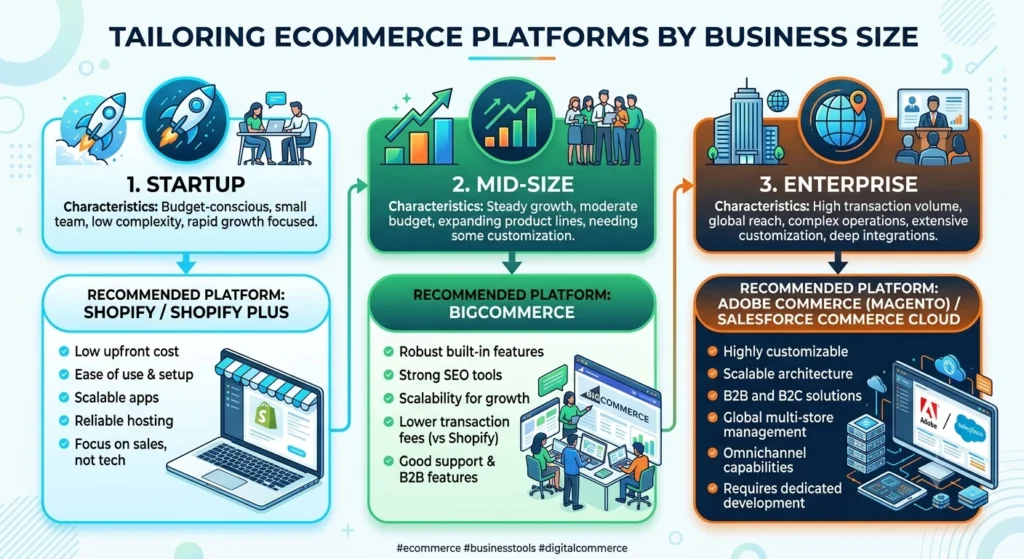
Shopify offers a fully hosted, low-maintenance experience ideal for small to mid-size stores that prioritize speed of setup over deep customization. Shopify Plus competes more directly with Adobe Commerce Cloud at the enterprise level, though customization remains more limited than an open Magento codebase allows.
WooCommerce runs as a WordPress plugin, making it accessible for content-driven brands already using WordPress. Hosting, scaling, and security responsibilities mirror Magento 2’s self-managed model, though WooCommerce generally suits smaller catalogs better than large B2B operations.
BigCommerce provides a hosted SaaS model similar to Shopify but with more built-in B2B and multi-channel features out of the box, positioning it between Shopify and Adobe Commerce Cloud in terms of enterprise readiness.
Headless commerce setups pairing a decoupled frontend (built with React, Vue, or a framework like Next.js) with either Magento 2 or Adobe Commerce Cloud as the backend appeal to brands wanting maximum frontend flexibility and faster page-load performance, particularly through Adobe’s PWA Studio or third-party frontend frameworks.
Which Platform Fits Which Business
- Startups and small catalogs: Shopify or WooCommerce typically offer faster time-to-launch with lower upfront cost
- Mid-size brands needing customization: Magento 2 (self-hosted) delivers flexibility at a lower licensing cost, provided development resources exist
- Enterprises with complex B2B needs or high traffic volume: Adobe Commerce Cloud provides managed infrastructure, built-in B2B tools, and enterprise-grade support
- Brands prioritizing frontend performance and omnichannel delivery: A headless commerce architecture on either Magento 2 or Adobe Commerce Cloud supports custom storefronts across web, mobile, and IoT touchpoints
Building or Migrating an Ecommerce Website
Launching a new store or migrating from an existing platform to Magento 2 or Adobe Commerce Cloud generally follows several stages: requirements gathering, platform selection, theme and extension planning, data migration (products, customers, order history), payment gateway and shipping integration, quality assurance testing, and a phased go-live plan. Enterprises adding B2B functionality should map account hierarchies and catalog permissions early, since retrofitting those structures after launch adds significant rework.
Magento 2 vs Adobe Commerce Cloud: Performance and Speed Benchmarks
Page speed directly affects conversion rates and search rankings, making performance one of the most practical points of comparison between the two platforms.
Page Load and Core Web Vitals
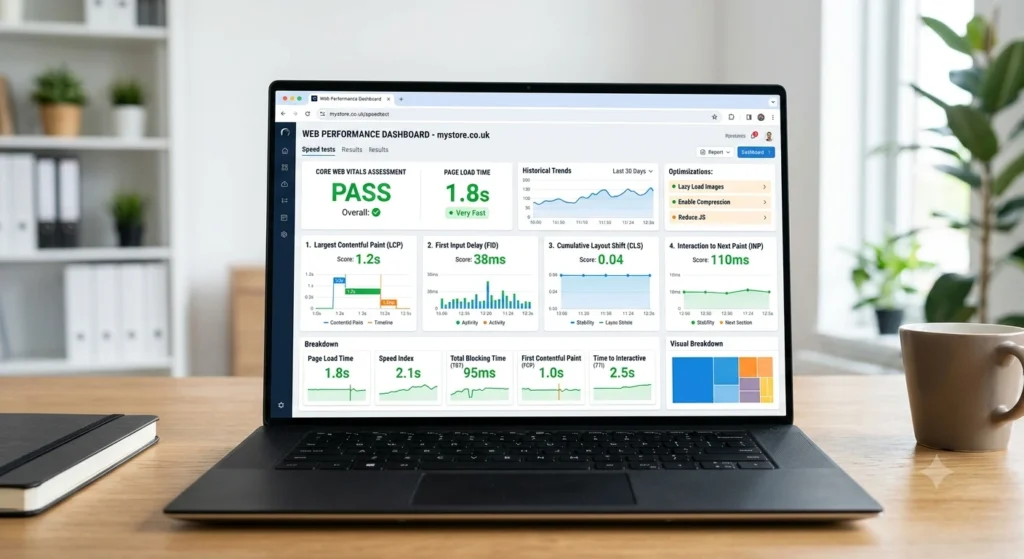
Magento 2 requires manual performance tuning enabling Varnish caching, configuring a CDN, optimizing images, and minimizing JavaScript to reach strong Core Web Vitals scores on tools such as Lighthouse or GTmetrix. Poorly optimized extensions remain a common cause of slow load times on self-hosted stores.
Adobe Commerce Cloud ships with Fastly CDN integration and pre-configured caching layers by default, generally producing faster baseline load times out of the box. Stores built with a headless frontend through PWA Studio tend to score even higher on Core Web Vitals, since the decoupled architecture reduces server-rendered payload size.
Magento 2 vs Adobe Commerce Cloud: Checkout and Server Response Times
Checkout speed depends greatly on server resources and database optimization on both platforms. Magento 2 stores hosted on shared or under-provisioned servers frequently experience checkout lag during high-traffic periods. Adobe Commerce Cloud’s auto-scaling infrastructure absorbs traffic spikes automatically, keeping checkout response times more consistent during sales events without manual server intervention.
Choosing the Right Implementation Partner
Platform selection matters less than the quality of the team building and maintaining the store, since both Magento 2 and Adobe Commerce Cloud depend on skilled development and ongoing support to perform well.

Questions to Ask Before Signing a Contract
- How many completed Magento or Adobe Commerce projects exist in the portfolio, and are references available?
- Does the team offer fixed-bid pricing or time-and-materials billing, and which fits the project scope better?
- What ongoing maintenance, security patching, and support packages come after launch?
- Is prior experience available with the specific integrations required ERP, CRM, payment gateways, or shipping carriers?
Red Flags During the Evaluation Process
Vague timelines, reluctance to share past client references, and unusually low bids compared to the rest of the market often signal inexperience or hidden costs later in the project. A qualified partner typically asks detailed discovery questions about catalog size, traffic expectations, and B2B requirements before quoting a final price, since those details directly affect both hosting requirements and development scope.
Frequently Asked Questions About Magento 2 vs Adobe Commerce Cloud
Is Magento 2 the same as Adobe Commerce?
Magento 2 refers to the open-source, self-hosted version of the platform, officially renamed Adobe Commerce Open Source. Adobe Commerce Cloud is the paid, cloud-hosted enterprise edition built on the same core codebase.
Which platform costs less to run?
Magento 2 carries no licensing fee but requires separate hosting, security, and maintenance spending. Adobe Commerce Cloud bundles hosting, security, and support into a single licensing fee that scales with revenue, often making direct cost comparisons dependent on store size and traffic volume.
Can a Magento 2 store migrate to Adobe Commerce Cloud later?
Migration between the two is possible since both share the same core codebase, though the process still requires infrastructure setup, data migration planning, and testing across staging environments before go-live.
Does Adobe Commerce Cloud support headless commerce?
Adobe Commerce Cloud supports headless architecture through PWA Studio and standard GraphQL APIs, allowing a decoupled frontend to connect to the commerce backend.
Is Adobe Commerce Cloud appropriate for small enterprises?
Pricing and infrastructure scale for enterprise-level GMV, making Adobe Commerce Cloud a stronger fit for mid-size to large businesses rather than early-stage stores with limited budgets.
What is the biggest difference between Magento 2 and Adobe Commerce Cloud?
Hosting responsibility marks the core difference: Magento 2 requires self-managed infrastructure and security, while Adobe Commerce Cloud provides fully managed hosting, auto-scaling, and built-in B2B tools under a single enterprise license.
Conclusion
Both platforms share identical core commerce functionality, so the decision ultimately comes down to infrastructure ownership, budget structure, and the level of built-in enterprise support required. Businesses with in-house development resources and a preference for cost control often find Magento 2 sufficient, while enterprises needing guaranteed uptime, native B2B tools, and dedicated support tend to justify the higher investment in Adobe Commerce Cloud. Evaluating current traffic patterns, catalog complexity, B2B requirements, and available technical resources before committing to either path leads to the most sustainable long-term outcome.