
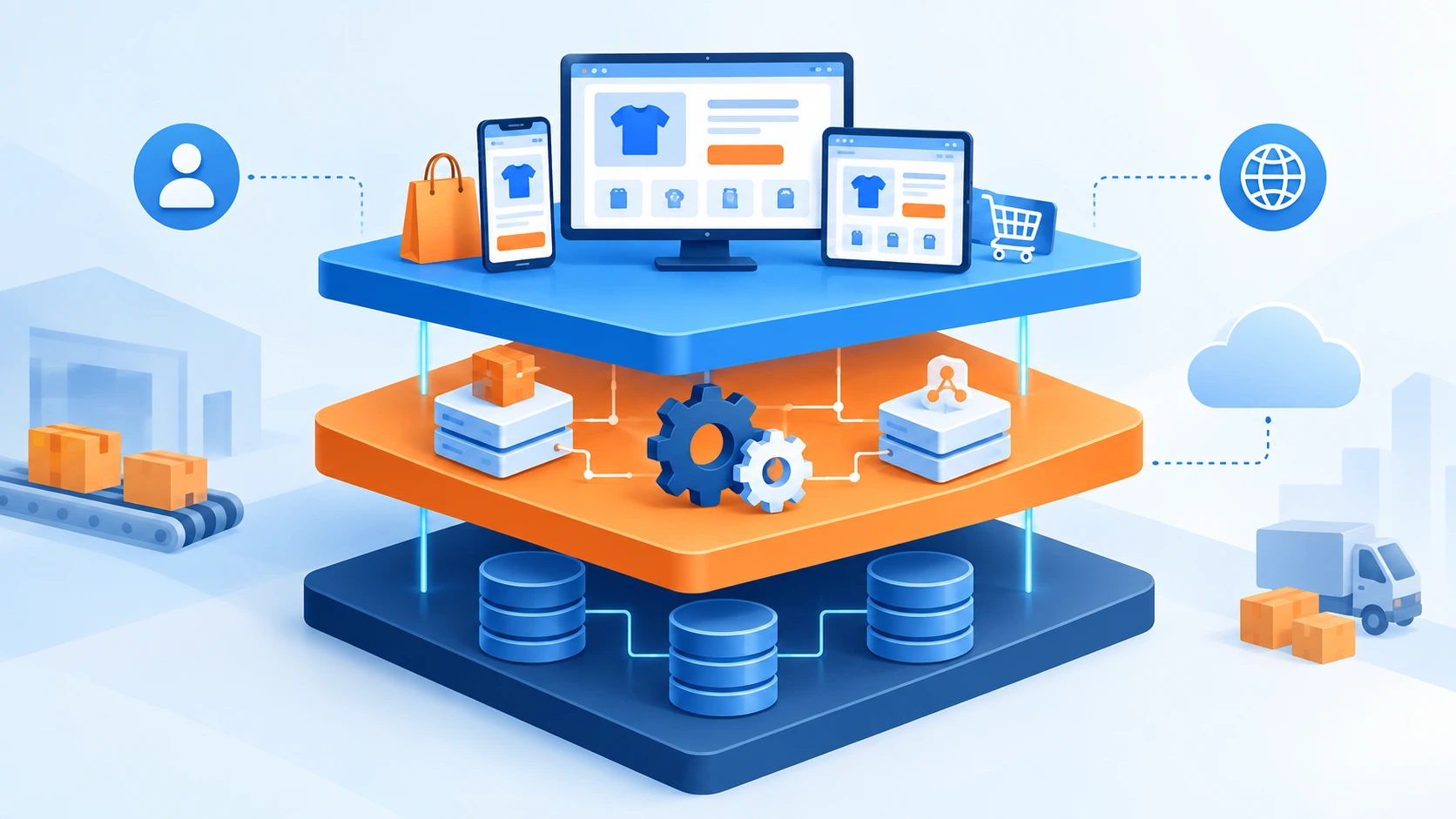
Magento 2 architecture forms the backbone of countless online stores, shaping page load speed, transaction capacity, and long-term growth potential. Performance and scalability trace directly back to the layered framework, database design, and modular structure built into Magento 2 architecture.
Merchants evaluating hosting, extensions, and future expansion benefit from understanding these architectural foundations before committing resources. The sections below break down how each structural layer influences speed, growth capacity, and platform choice across the broader eCommerce landscape.
Understanding Magento 2 Architecture
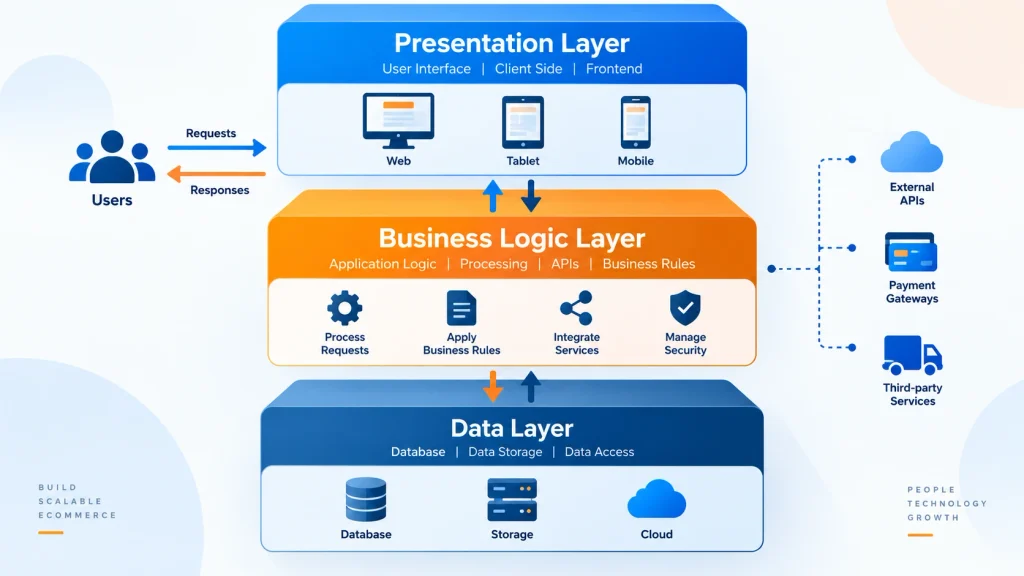
The framework operates as a technical foundation rather than a simple template system, giving development teams room to build complex commerce experiences. Every layer works together to balance flexibility with long-term maintainability.
- Magento 2 architecture is built on a layered, modular framework designed for flexibility and enterprise-grade commerce.
- Presentation, business logic, and data layers remain separated, allowing development teams to modify one layer without disrupting others.
- Modularity stands as the defining trait of the system, with each feature catalog, checkout, customer accounts, payments built as an independent module.
- Independent modules can be customized, disabled, or extended without rewriting the entire platform.
Core Components of Magento 2 Architecture
A handful of technical building blocks sit underneath every storefront feature, from product pages to checkout flows. Familiarity with those building blocks makes it easier to judge what a given extension or customization will cost in development time.
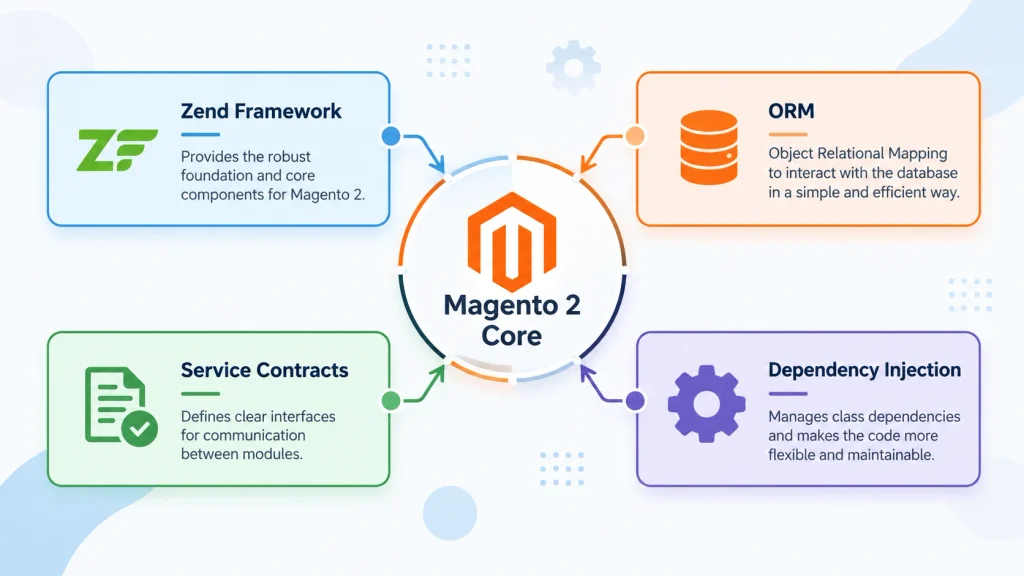
- Zend Framework and Symfony components provide a stable foundation for request handling and dependency management.
- Object-Relational Mapping (ORM) connects PHP objects to database tables in a structured, predictable way.
- Service Contracts, detailed in the Adobe Commerce developer documentation, form a set of PHP interfaces defining stable APIs between modules, reducing conflicts during upgrades.
- Dependency Injection manages object creation and reduces tight coupling between classes.
- Each of these components contributes to a system capable of supporting large product catalogs and complex business rules without performance breakdown.
Performance Factors Rooted in Magento 2 Architecture
Speed on a storefront rarely comes from a single setting multiple technical layers work in concert to deliver fast page loads. Database efficiency and caching strategy sit at the center of that equation.
- Store speed rarely happens by accident performance results directly from architectural choices at the database, caching, and rendering levels.
Database Structure and Indexing
Raw catalog data cannot get served directly to shoppers without heavy processing overhead. Converting that data into optimized, flat structures ahead of time keeps browsing and search fast.
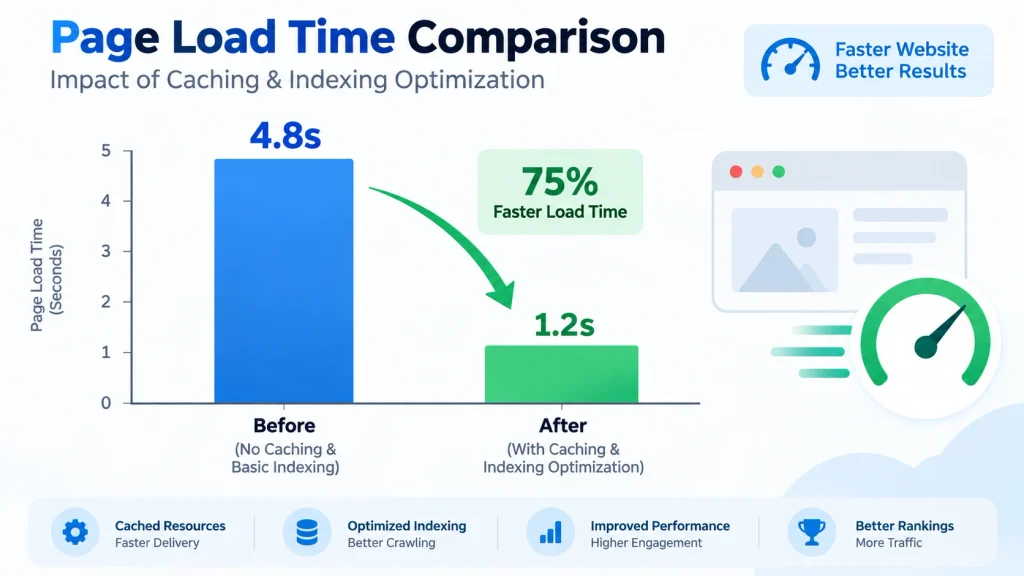
- Indexing within the platform converts complex, relational data into flat, optimized structures that speed up storefront queries.
- Catalog prices, product listings, and category data get pre-processed through indexers, reducing computational load during browsing.
- Proper index management, especially on large catalogs, directly affects page load times and checkout speed, a fact easily confirmed with tools such as Google PageSpeed Insights.
Caching Layers and Content Delivery
Repeated database queries on every page view create unnecessary strain on server resources. Storing pre-built page content and distributing static assets closer to shoppers removes much of that strain.
- A multi-tier caching system, including full-page cache, block-level cache, and Varnish integration, supports advanced deployments.
- Content Delivery Networks (CDNs) such as Cloudflare reduce latency by serving static assets from servers geographically closer to shoppers.
- Indexing and caching together form the performance backbone separating a sluggish storefront from a fast, conversion-ready one.
Scalability Advantages of Magento 2 Architecture
Growth places new demands on a commerce platform, from catalog size to concurrent checkout sessions during peak sales periods. A well-structured foundation absorbs that growth without forcing a costly rebuild.
- Scalability refers to a platform’s ability to handle growth more products, more traffic, more transactions without a drop in performance.
Modular Design and Extensions
Business requirements shift constantly, and a rigid codebase makes every change expensive. A module-based structure keeps new functionality isolated, so updates in one area rarely break another.
- New functionality gets added through extensions without altering core code, thanks to the modular structure.
- The Adobe Commerce Marketplace offers thousands of extensions covering payment gateways, shipping calculators, loyalty programs, and marketing tools.
- Modules can be enabled or disabled independently, giving development teams control over resource allocation on each page.
Cloud and Headless Deployment Options
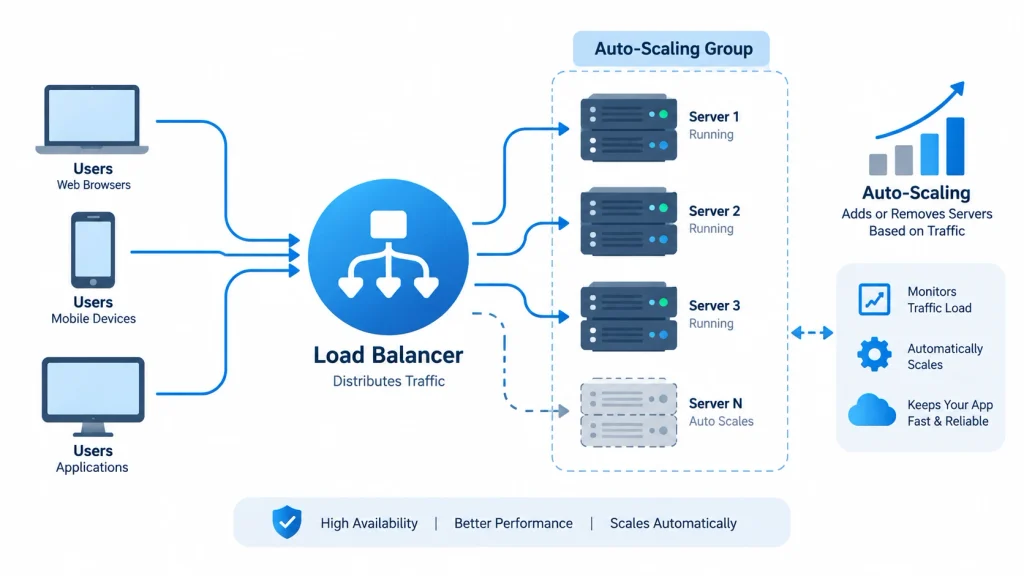
Traffic rarely stays flat across a calendar year, with spikes common around promotions and holiday seasons. Infrastructure built for elastic scaling handles those spikes without manual intervention.
- Enterprise deployments often pair the platform with cloud infrastructure such as AWS or Google Cloud, auto-scaling server resources during traffic spikes such as seasonal sales events.
- Horizontal scaling adding more servers rather than upgrading a single machine becomes possible because of a stateless application design.
- Combined with headless or API-first deployment models, storefronts can scale the front end and back end independently.
Magento 2 Architecture Compared to Other eCommerce Platforms
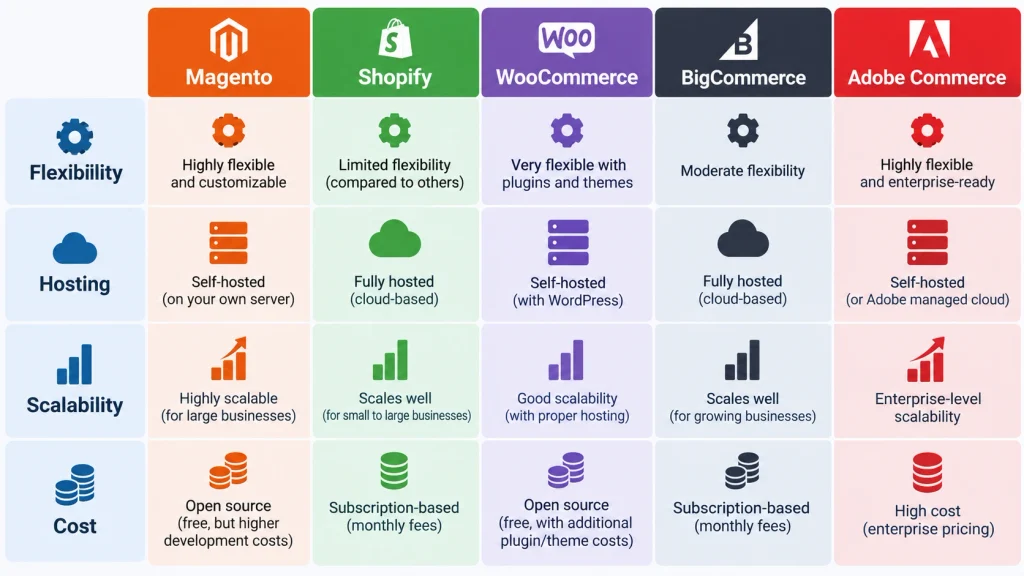
Every commerce platform makes trade-offs between flexibility, cost, and ease of setup. Comparing core technical approaches helps clarify which solution fits a particular business model.
- Choosing a commerce platform often means weighing the framework against alternatives, each with distinct architectural philosophies.
Comparison with Shopify
Setup speed and managed infrastructure often top the list of priorities for smaller catalogs. Larger, more complex storefronts tend to weigh those conveniences against long-term customization limits.
- Shopify operates as a fully hosted, SaaS-based platform, trading deep customization for simplicity and managed infrastructure.
- Granular control over hosting and customization favors businesses with complex catalogs or unique workflows.
Comparison with WooCommerce
Familiarity with WordPress makes an easy entry point for many small businesses. Scaling that same setup to enterprise traffic volumes typically requires significant additional hosting and plugin management.
- WooCommerce runs as a WordPress plugin, inheriting the strengths and limitations of the WordPress ecosystem.
- Performance depends heavily on hosting quality and plugin management, while the platform was engineered specifically for commerce at scale.
Comparison with BigCommerce
A SaaS model removes much of the server management burden from a merchant’s plate. That convenience comes paired with fewer options for deep backend customization.
- BigCommerce follows a SaaS model with built-in scalability but less architectural flexibility.
- Deeper control over data structure, checkout logic, and integrations comes with a greater technical investment requirement.
Comparison with Adobe Commerce
Larger organizations with B2B sales channels or advanced merchandising needs often outgrow the open-source edition over time. Enterprise tooling addresses that growth without a full platform migration.
- Adobe Commerce is the enterprise edition built on the same foundation, adding B2B functionality, advanced page-building tools, and enhanced cloud infrastructure.
- Businesses often start with the open-source foundation and migrate to Adobe Commerce as complexity and traffic grow.
Headless Commerce and Magento 2 Architecture
Modern shopping experiences increasingly demand speed across web, mobile, and app interfaces at once. Decoupling the front end from the commerce engine addresses that demand directly.
- Headless commerce separates the front-end presentation layer from the back-end commerce engine, connecting them through APIs.
- GraphQL and REST APIs enable front-end frameworks such as React, Vue, or PWA Studio to deliver fast, app-like shopping experiences.
- Front-end and back-end teams can deploy updates independently, improving scalability and reducing release bottlenecks.
- Omnichannel experiences across web, mobile, and in-store touchpoints become easier to maintain with a decoupled structure.
Building a High-Performance Commerce Website
Turning architectural theory into a fast, reliable storefront requires consistent execution across several technical areas. The principles below apply broadly, regardless of the specific platform chosen.
- Regardless of platform, certain architectural principles consistently improve performance and scalability:
- Optimize database indexing and reduce unnecessary queries.
- Implement full-page and object caching alongside a CDN.
- Choose hosting infrastructure capable of horizontal scaling.
- Limit the number of active extensions to reduce processing overhead.
- Adopt a headless or hybrid front end for flexibility and speed.
- Conduct regular performance audits using tools such as GTmetrix and load testing before high-traffic events, referencing standards from the W3C Web Performance Working Group.
Security Considerations Within the Platform
Commerce websites handle sensitive payment and customer data, making security a core architectural concern rather than an afterthought. Layered protection reduces exposure to common attack vectors.
- Security protocols embedded in the platform protect payment data in line with PCI Security Standards, customer accounts, and admin access points.
- Regular patch management, guided by OWASP security guidelines, addresses vulnerabilities before exploitation becomes possible.
- Two-factor authentication, encrypted data storage, and Web Application Firewalls (WAF) such as Sucuri add layered protection.

Cost and Resource Planning
Technical decisions carry financial consequences that extend well beyond initial development. Planning for hosting, maintenance, and scaling costs early avoids budget surprises later in a project’s lifecycle.
- Hosting costs vary based on traffic volume, catalog size, and chosen infrastructure such as DigitalOcean cloud, on-premise, or hybrid.
- Development costs depend on customization depth, extension count, and headless front-end complexity.
- Managed hosting providers such as Nexcess handle infrastructure maintenance, freeing internal teams to focus on storefront development.
- Budget planning benefits from separating one-time development costs from ongoing hosting, maintenance, and extension licensing fees.
- Long-term total cost of ownership often favors platforms whose scalability reduces the need for full rebuilds during growth phases.
Frequently Asked Questions
Is the platform suitable for small businesses?
Growing or mid-to-large businesses with complex catalogs tend to benefit most, though smaller merchants sometimes choose it when long-term scalability outweighs initial setup speed.
What makes this framework different from other platforms?
The modular, service-contract-based design allows deep customization and independent scaling of individual components, something SaaS platforms typically restrict.
Does headless commerce improve store performance?
Headless implementations often improve front-end speed since the presentation layer can be built with lightweight, modern frameworks while commerce logic runs separately.
How does caching affect store speed?
Caching reduces server processing by storing pre-generated page content, significantly cutting load times for repeat visits and high-traffic pages.
Can large product catalogs run without performance loss?
With proper indexing, caching, and hosting infrastructure, large catalogs and high transaction volumes get managed efficiently.
Is migration from WooCommerce or Shopify difficult?
Migration complexity depends on catalog size and customization level, though structured data mapping and phased testing typically reduce risk during platform transitions.
Conclusion
Commerce success depends on technical choices made long before a storefront goes live. Magento 2 architecture continues to serve as a scalable foundation for online retail, supporting large catalogs, high traffic, and complex business logic without requiring a full rebuild as demand grows.
Performance depends on indexing, caching, hosting choices, and extension management working together rather than in isolation, while scalability advantages come from modular design, cloud deployment flexibility, and headless commerce compatibility. Businesses comparing platforms Shopify, WooCommerce, BigCommerce, Adobe Commerce, or a headless stack benefit from weighing customization needs against setup simplicity before committing to a long-term commerce foundation.