

Online retail in 2026 uses two main visibility systems. The debate around GEO vs SEO is now part of daily marketing practice. Traditional search engines still send large amounts of shopping traffic. However, AI answer engines now influence more product discovery before shoppers visit a website. Understanding GEO vs SEO is no longer optional for online retailers; it is a core requirement for staying visible across both classic search results and AI-generated answers.
This guide breaks down what separates the two disciplines, why eCommerce brands need both, and how a combined strategy can be built without wasting budget or duplicating effort.
What SEO Means for eCommerce in 2026

Improving a store’s visibility in traditional search results is known as search engine optimization. For an online retail business, this includes optimizing product pages, category pages, and blog content so that Google and other search engines rank the store higher for relevant shopping queries. A well-maintained eCommerce SEO checklist keeps these efforts consistent across large product catalogs.
Core SEO components for eCommerce include:
- Keyword-optimized product titles and descriptions
- Technical performance factors such as page speed and mobile usability
- Backlink acquisition from relevant retail and industry publications
- Structured navigation and clean URL architecture
- On-page elements like meta titles, meta descriptions, and header tags
SEO rewards consistency. Rankings build gradually through technical health, content depth, and authority signals accumulated over months.
What GEO Means and Why It Matters Now

Generative engine optimization improves content so AI systems can cite, summarize, or recommend a brand’s pages and products. GEO is not only about ranking in search results. It focuses on becoming a trusted source that AI models can reference when answering shopper questions. Writing content for straight, extractable responses is essential to developing a successful AI search optimization strategy.
Where SEO earns a click, GEO earns a mention, sometimes without any click at all. A shopper asking an AI assistant “what is the best running shoe for flat feet” may receive a direct brand recommendation pulled from a retailer’s content, without ever visiting a search engine results page in the traditional sense.
GEO vs SEO: Core Differences
Comparing GEO vs SEO side by side reveals distinct mechanics, even though both aim to increase discoverability.
Search Engines vs AI Engines

SEO targets search algorithms that rank indexed pages. GEO targets AI models that create answers from available information. The destination differs: one produces a results page, the other produces a generated response.
Ranking Signals vs Citation Signals
Search engines weigh backlinks, click-through rate, dwell time, and technical SEO health. AI engines look for clear, accurate content, structured data, and information that is easy to extract and cite. A page can rank well in Google but still be ignored by an AI answer engine. This can happen when the content is difficult to extract and cite.
Content Structure Differences
SEO content often optimizes for scannability and keyword density across long-form pages. GEO content uses short, complete answers, clear explanations, and simple claims that AI models can easily understand and cite. This is why FAQ sections, bulleted comparisons, and clearly labeled headings perform well in both systems simultaneously.
Why eCommerce Brands Need Both GEO and SEO
Choosing between GEO and SEO can create a visibility gap. While AI assistants are quickly taking the lead in comparison shopping, gift suggestions, and troubleshooting inquiries, search engines continue to account for a significant portion of product research. Retailers that focus only on classic search may lose shoppers who start their journey inside an AI chat interface. A retailer optimizing only for GEO risks losing the compounding, long-term value that traditional rankings still provide.
Instead of seeing GEO and SEO as competing budgets, the best 2026 approach views them as complementing tiers of the same visibility system.
Practical Steps to Combine GEO and SEO
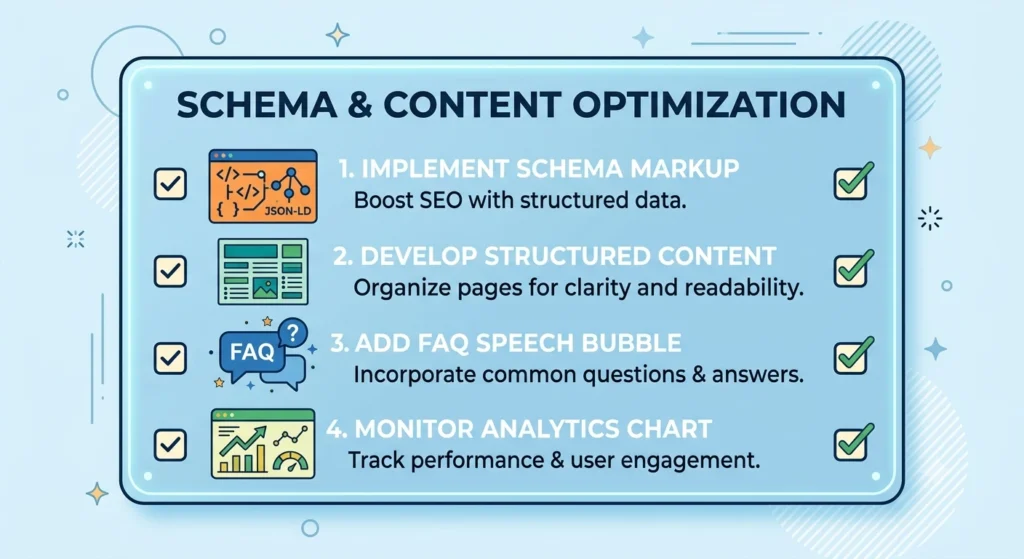
Structured Data and Schema Markup
Product schema, FAQ schema, and review schema help both search engines and AI crawlers understand page content accurately. Following structured data guidelines makes page information easier to understand. This can improve AI citations and support rich results in traditional search.
Content Written for Answers, Not Just Keywords
Effective eCommerce content in 2026 answers a specific customer question in the first few sentences of a section, then expands with supporting detail. This format satisfies AI extraction needs while still reading naturally for a human visitor arriving through organic search.
Building Topical Authority
Publishing comprehensive category guides, comparison pages, and buying guides establishes topical depth. A clear topical authority strategy helps search engines and AI models understand that your website provides accurate and useful information on a subject.
Monitoring AI Citations and Search Rankings
Traditional rank tracking tools measure keyword position. GEO monitoring tools track how often a brand appears in AI-generated responses. They can also show when AI systems quote the brand’s content. Reviewing both data sets together highlights where a GEO vs SEO strategy is working and where content gaps remain.
GEO vs SEO Across Major eCommerce Platforms
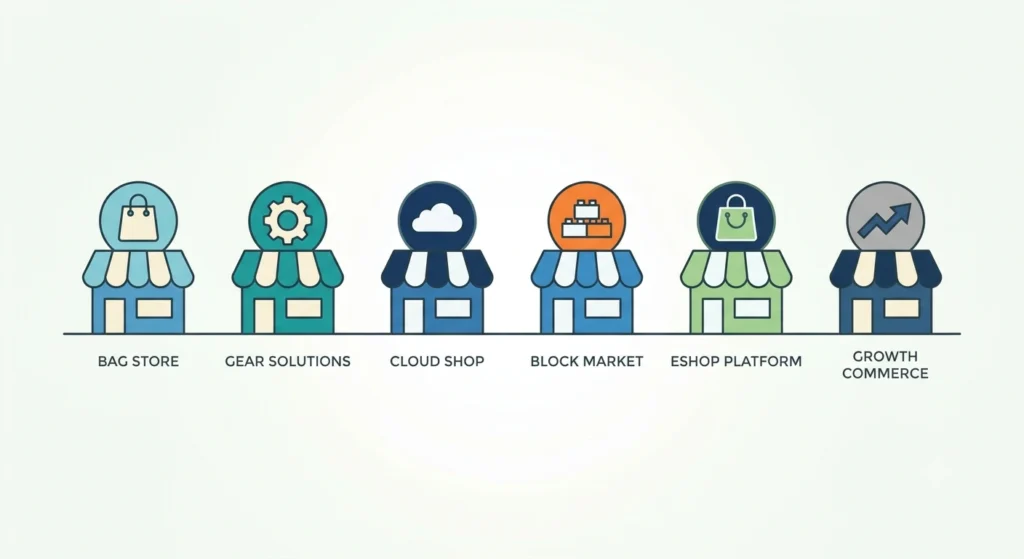
Your eCommerce platform affects how easily you can use a GEO vs SEO strategy. Some platforms offer flexible schema controls and clean code by default. Others need extensions or custom development to provide the same structured information. A brief platform-by-platform comparison highlights where each system stands.
Magento
Magento offers deep control over URL structure, meta fields, and schema markup, making it a strong fit for large catalogs that need granular SEO customization. Strong GEO performance on Magento may require custom template work. Default themes can create heavier markup that AI crawlers may find harder to process.
Adobe Commerce
Adobe Commerce, built on the same core as Magento, adds enterprise-level tools for content management and personalization. Its native support for structured data and page-builder flexibility helps larger retailers maintain both technical SEO health and citation-friendly content at scale, though implementation typically involves a dedicated development team.
Shopify
Shopify provides fast page speeds and built-in schema for products and reviews out of the box, giving smaller and mid-sized stores a solid SEO foundation with minimal setup. For GEO, theme customization or apps are often needed to add FAQ blocks and concise, extractable answer sections that AI engines favor.
WooCommerce
WooCommerce, running on WordPress, benefits from the platform’s extensive plugin ecosystem for both SEO and structured data. This flexibility makes it straightforward to add FAQ schema, breadcrumb markup, and clearly labeled headings, which supports GEO visibility alongside traditional search rankings.
Headless Commerce
Headless commerce architecture separates the front end from the backend catalog, giving full control over page markup, load speed, and content structure. This flexibility can strongly benefit GEO efforts, since developers can build pages specifically optimized for clean, extractable answers, though it requires more engineering resources than a traditional templated platform.
BigCommerce
BigCommerce includes native multi-channel selling tools and solid default SEO settings, including editable meta fields and automatic sitemap generation. BigCommerce stores can compete for AI citations in addition to traditional organic rankings by extending these settings with FAQ structure and succinct answer-style content.
Tools and Metrics for Tracking GEO vs SEO Performance
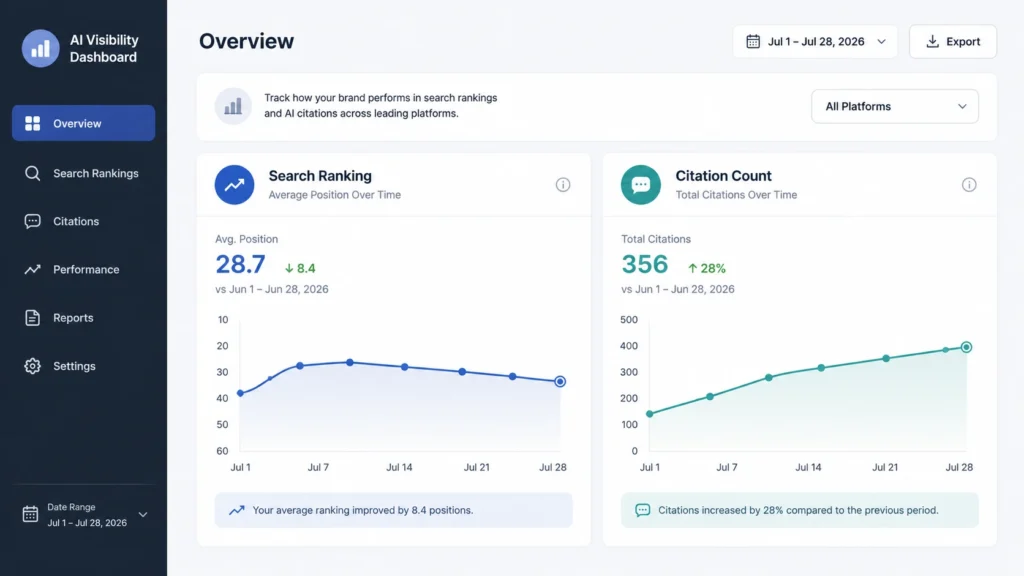
SEO Tracking Tools
Keyword rank position, organic traffic volume, click-through rate, backlink profile growth, and technical health metrics like page speed and crawl error rate are all included in standard SEO tracking. These metrics remain the backbone of measuring traditional search performance.
GEO Monitoring Tools
GEO measurement is newer and centers on citation frequency, meaning how often a brand’s content appears inside AI-generated answers, alongside sentiment accuracy, meaning whether the AI system represents the brand’s products or claims correctly. Tracking both metric sets side by side gives a full picture of visibility across the GEO vs SEO landscape rather than a partial view limited to classic rankings alone.
Common Mistakes Brands Make with GEO vs SEO
- GEO should not replace SEO. Instead, businesses should use GEO alongside SEO
- Ignoring page speed and technical health while chasing AI citations
- Writing content that is too promotional to be cited as a neutral, factual answer
- Skipping structured data implementation across product and FAQ pages
- Failing to update evergreen guides, which reduces trust signals for both systems
Example Scenario: Applying GEO vs SEO in an Online Store
A mid-sized footwear retailer publishes a buying guide comparing running shoes for different foot types. The page includes FAQ schema, clear product comparison tables, and a concise answer at the top of each section. Within a few months, the guide ranks on page one for several long-tail search queries, satisfying the SEO objective. At the same time, an AI shopping assistant begins citing the same guide when a user asks about running shoes for flat feet, satisfying the GEO objective. Neither outcome required a separate piece of content; a single, well-structured page served both discovery systems because it combined traditional on-page optimization with clear, citation-ready answers.
Future Outlook: GEO vs SEO Beyond 2026
The distinction between GEO and SEO will probably continue to blur as AI-powered shopping assistants become more integrated into browsers, applications, and voice interfaces. Search engines are already integrating generative summaries directly into results pages, meaning classic SEO practices increasingly influence GEO outcomes and vice versa. Retailers that build content with clarity, structured data, and genuine topical authority are positioned to benefit regardless of which interface a shopper uses to find them.
GEO vs SEO: Frequently Asked Questions
What is the main difference between GEO and SEO?
SEO focuses on ranking within traditional search engine results, while GEO focuses on being cited or summarized inside AI-generated answers. Both rely on strong content and technical foundations, but the optimization targets differ.
Does GEO replace SEO for eCommerce brands?
No. GEO extends the reach of a content strategy into AI answer engines but does not eliminate the value of traditional search rankings, which continue to drive substantial organic traffic.
How does structured data help with GEO vs SEO?
Structured data such as product, review, and FAQ schema clarifies page content for both search engine crawlers and AI retrieval systems, improving the odds of rich results and accurate AI citations.
Can a small eCommerce store compete in GEO the same way it competes in SEO?
Yes. Clear, well-structured, and accurate content can be cited by AI systems. This means smaller eCommerce stores can also benefit from GEO.
What content format works best for both GEO and SEO?
Content that opens each section with a direct answer, followed by supporting detail, structured headings, and schema markup tends to perform well across both traditional search rankings and AI-generated responses.
Conclusion
GEO vs SEO is no longer about choosing one over the other. Traditional search rankings continue to deliver dependable, long-term organic traffic, while generative engine optimization opens a newer channel where AI assistants recommend products directly inside a conversation. A retail content strategy built around clear answers, structured data, and consistent topical coverage tends to satisfy both systems at once rather than requiring two separate content pipelines. Brands that invest in this combined approach now are better positioned to remain visible as search behavior continues shifting between classic results pages and AI-generated responses through 2026 and beyond.