

A headless commerce platform promises faster pages, flexible design, and higher conversions, but speed is never automatic. Whether a headless commerce platform really makes an eCommerce store faster depends on architecture, hosting, and execution. Page speed shapes rankings, bounce rate, and revenue, so the answer matters for any brand planning a replatform.
Quick Answer: Is a Headless Commerce Platform Faster?
In most cases, yes. A headless commerce platform separates the storefront from the commerce engine, which allows a lightweight, API-driven front end to load faster than a bundled theme. Gains rely on caching, image handling, API design, and hosting. A poorly built store can even run slower than a well-tuned traditional one.
What Decoupled Architecture Changes
Traditional systems bundle the storefront, checkout, and database into one unit. A headless commerce platform removes that tie. The back end manages products, pricing, carts, and orders, while a separate front end built with Next.js, Nuxt, or Remix requests data through APIs.
Because the two layers operate independently, each can be optimized, scaled, and deployed on its own schedule. That independence is the source of nearly every speed advantage.

How a Headless Commerce Platform Improves Store Speed
Lighter Front-End Code
Many themes ship heavy scripts, unused CSS, and plugin bloat. A custom front end loads only what each page requires, which shrinks bundle size and shortens time to interactive.
Static Generation and Edge Caching
Product and category pages can be pre-rendered at build time and served from a CDN node near the shopper. A headless commerce platform gains the most here, since a pre-built page skips server-side database queries entirely. Incremental regeneration keeps prices and stock current without rebuilding the full site.
Selective Data Loading in a Headless Commerce Platform
APIs return only the fields a page needs. A product listing can request name, price, and thumbnail, rather than loading an entire record full of unused attributes.
Stronger Core Web Vitals
Faster rendering improves Largest Contentful Paint, Interaction to Next Paint, and Cumulative Layout Shift, the metrics defined in Google’s Core Web Vitals program. Better scores support both rankings and conversion rates.
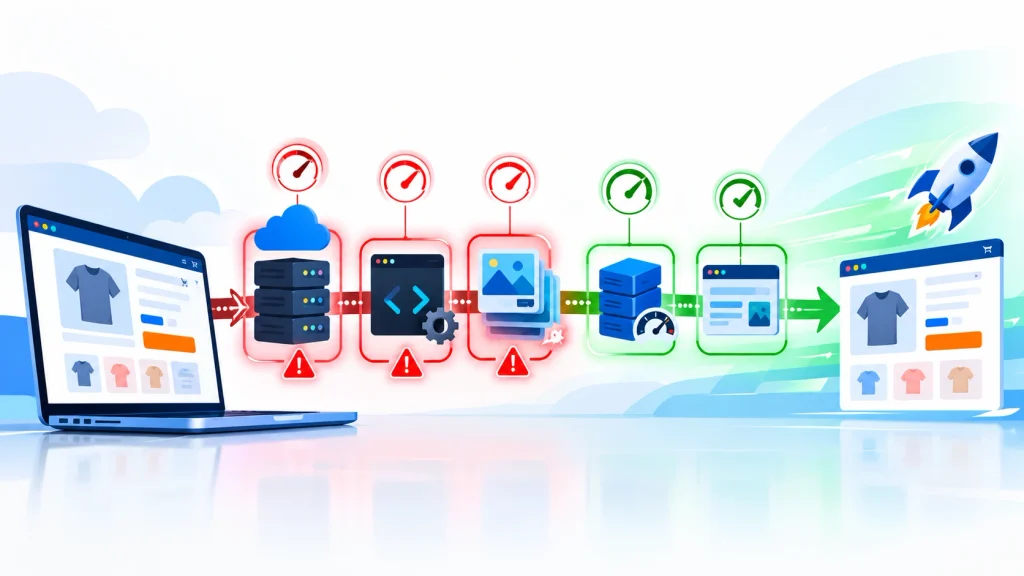
Where a Headless Commerce Platform Can Slow a Store Down
Speed is lost when execution is careless. Common problems include:
- Chained API requests that block rendering
- Missing caching layers between the front end and commerce engine
- Heavy client-side JavaScript hydration
- Third-party scripts for reviews, chat, and tracking loaded without deferral
- Unoptimized images served in outdated formats
- Underpowered hosting for server-side rendering
A build that ignores these issues often scores lower than a clean theme on a fast system. Performance budgets, monitoring, and code reviews prevent that outcome.
Headless Commerce Platform Options Across Major Systems
Each major system supports a headless commerce platform approach in a different way, and the speed outcome varies with the chosen stack.
Shopify
Shopify offers the Storefront API and Hydrogen, a React-based framework paired with Oxygen hosting. Brands gain control over rendering while keeping Shopify’s checkout and infrastructure. Professional Shopify development services help design the storefront, connect APIs, and protect checkout performance.
Adobe Commerce and Magento
Adobe Commerce and Magento Open-Source expose GraphQL and REST endpoints, and PWA Studio supports progressive web app storefronts. Large catalogs benefit from pre-rendered pages and cached queries, since default Magento themes can be heavy. Specialist Magento development services make that upgrade smoother.
BigCommerce
BigCommerce positions open SaaS as a foundation for decoupled storefronts, with APIs, a hosted checkout, and integrations for popular front-end frameworks. The BigCommerce headless guide outlines supported patterns, and experienced BigCommerce development services turn those patterns into a working storefront.
WooCommerce
WooCommerce can run as a back end while a separate front end consumes the WooCommerce REST API. Caching and database tuning matter greatly here, because hosting quality directly affects API response times. Dedicated WooCommerce development services cover tuning, integration, and ongoing support.
Choosing the Best Ecommerce Agency for a Decoupled Build
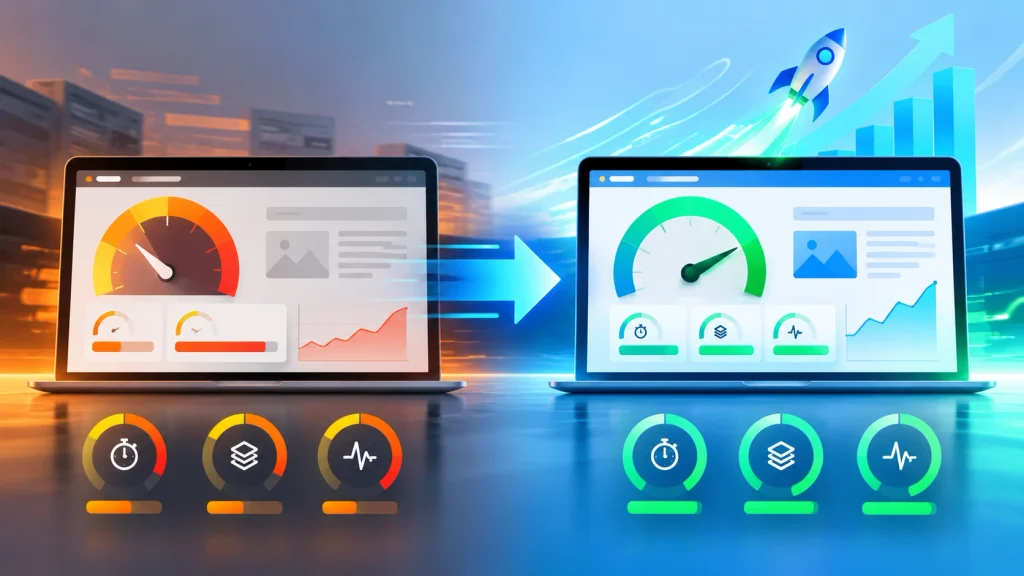
Speed gains depend heavily on the team behind the build. The best ecommerce agency brings proven experience with API design, edge caching, and Core Web Vitals, along with platform-specific skill. A capable partner offers Shopify development services, Magento development services, BigCommerce development services, and WooCommerce development services under one roof, which keeps architecture decisions consistent across channels.
Key points when comparing the best ecommerce agency options:
- Published case studies with measurable speed and conversion results
- Experience with the chosen back end and front-end framework
- A clear performance budget and testing process
- Ongoing monitoring and support after launch
A broader look at the best ecommerce agency criteria can narrow the shortlist further.
How a Headless Commerce Platform Store Builds Authority and Domain Score
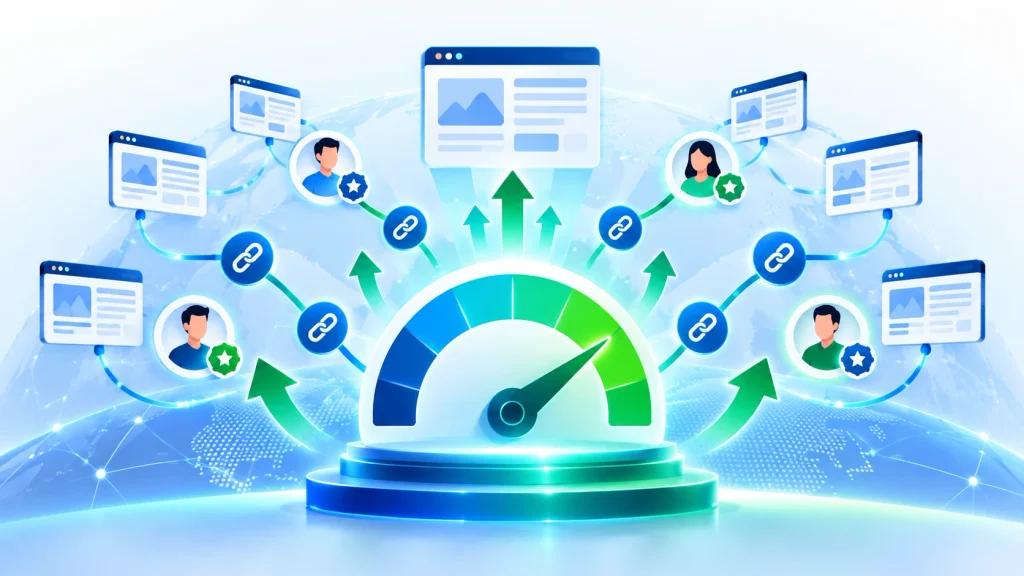
Authority scores such as Domain Authority and Domain Rating are third-party estimates, not direct Google ranking factors. Still, these scores reflect backlink strength, trust, and topical depth, and growth in them usually tracks growth in visibility. A fast, well-structured headless commerce platform provides the technical base. Content and outreach supply the rest.
Earn Quality Backlinks
Links from respected industry sites carry the most weight. Original speed benchmarks, case studies, and performance research give publishers a reason to cite a store or agency. Guest articles on eCommerce publications and partnerships with technology vendors add relevant, trusted references.
Show Real Experience and Expertise
Author bios, project results, and expert commentary signal credibility to readers and search systems. Google’s guidance on helpful, people-first content stresses first-hand experience and clear sourcing, which also makes pages stronger candidates for AI citations.
Strengthen Internal Linking
A pillar guide on the headless commerce platform topic should connect to supporting pages, including Shopify development services, Magento development services, and eCommerce website development. Descriptive anchor text spreads authority across the site and clarifies topic relationships.
Build Brand Mentions and Entity Signals
Consistent business details, Organization schema, and mentions on reputable sites help answer engines recognize a brand as a known entity. Strong entity recognition improves AI visibility in generative responses.
Organic Traffic Growth Plan for a Headless Commerce Platform Store
Speed alone does not guarantee visitors. Organic traffic grows when fast pages also match what searchers want. A steady plan keeps a headless commerce platform visible across classic results and AI answers.
Match Content to Search Intent
Informational guides attract early researchers, comparison pages reach shoppers weighing options, and service pages convert ready buyers. Grouping these into topic clusters around the headless commerce platform theme builds depth that search engines reward.
Refresh and Expand Existing Pages
Outdated content loses ground. Reviewing top pages every quarter, updating statistics, adding new questions, and improving answers often lifts rankings faster than publishing new posts.
Optimize Category and Product Pages
Unique descriptions, clean URLs, compressed images, and Product schema help catalog pages rank. Server-rendered content ensures crawlers and AI bots read every detail on the first request.
Measure and Improve with Data
Google Search Console shows impressions, clicks, and Core Web Vitals trends. Pages with high impressions but low clicks need stronger titles, while slow pages need technical fixes. Pairing this data with expert SEO services turns insights into steady organic traffic growth.
AEO, GEO, and AI Visibility for Decoupled Storefronts
Search now includes answer engines and generative systems such as AI Overviews, ChatGPT, and Perplexity. Answer Engine Optimization (AEO) and Generative Engine Optimization (GEO) reward pages that load fast, present direct answers, and carry clear structured data.
A headless commerce platform makes that work easier. Developers can output clean semantic HTML, add Product, FAQ, and Organization schema following Google’s structured data guidelines, and control crawl paths without theme restrictions. Fast server responses also help crawlers, including AI bots, fetch complete pages reliably.
Practical steps for stronger AI visibility include:
- Placing a concise answer beneath each question-style heading
- Adding FAQ schema to product and category pages
- Keeping product data consistent across feeds, pages, and markup
- Building topical authority through expert guides and comparison content
- Maintaining fast, crawlable pages with server-rendered cont
When a Decoupled Build Pays Off
A headless commerce platform suits brands with large catalogs, multiple sales channels, custom user experiences, or heavy traffic. Mobile apps, kiosks, and marketplaces can all draw from the same commerce engine.
Small catalogs with standard needs may not justify the investment. A well-optimized theme with compressed images and limited apps can reach strong scores at a fraction of the cost. Budget, team skills, and growth plans should drive the decision, not trends.
Steps to Keep a Headless Commerce Platform Fast
- Set a performance budget before development starts.
- Use static generation or incremental regeneration for catalog pages.
- Cache API responses at the edge.
- Serve images in WebP or AVIF with responsive sizes.
- Defer or remove nonessential third-party scripts.
- Monitor real-user metrics after launch, not only lab tests.
- Plan ongoing Core Web Vitals optimization as part of regular maintenance.

FAQs About Headless Commerce Platforms and Speed
Does a headless commerce platform always make a store faster?
No. Speed depends on caching, API efficiency, hosting, and code quality. A poorly planned build can load slower than an optimized traditional store.
Is a headless commerce platform good for SEO?
Yes, when server-side rendering or static generation is used. Fast pages, clean markup, and structured data support rankings, AEO, and GEO. Poor rendering choices can hurt crawlability, so setup matters.
Which systems support decoupled storefronts?
Shopify, Adobe Commerce, Magento, BigCommerce, and WooCommerce all offer APIs for decoupled storefronts, each with different tooling and costs.
Is a decoupled build expensive?
Costs run higher than a standard theme because the front end is custom-built and maintained. Large or fast-growing stores often recover the investment through higher conversion rates and flexibility.
How does page speed affect AI visibility?
Fast, well-structured pages are easier for crawlers and AI systems to read and cite. Clear answers, schema markup, and consistent data increase the chance of appearing in generated responses.
How can authority score and organic traffic be increased?
Quality backlinks, expert content, strong internal linking, and regular page updates raise authority over time. Matching content to search intent and keeping pages fast drives steady organic traffic growth.
How can the best ecommerce agency be identified?
Look for platform-specific experience, measurable case studies, and a clear performance process. Strong providers cover Shopify, Magento, BigCommerce, and WooCommerce work with equal depth.
Conclusion
A headless commerce platform can make an eCommerce store faster, but the gain comes from disciplined engineering rather than architecture alone. Static generation, edge caching, and lean code deliver measurable improvements, while careless API design erases them. Brands that treat the move as a performance project, backed by the best ecommerce agency and strong eCommerce website development expertise, see lasting returns in rankings, authority, organic traffic, and AI visibility.