

Online retail is entering a new phase where AI shopping agents are reshaping how shoppers find, compare, and purchase products. Traditional search bars and category filters are giving way to conversational, intent-driven discovery powered by artificial intelligence. These intelligent shopping assistants analyze behavior, preferences, and real-time context to surface relevant products, turning product discovery into a personalized experience rather than a manual search process.
Retail businesses running on Shopify, WooCommerce, Magento, Adobe Commerce, BigCommerce, and headless commerce architectures are adopting AI-powered discovery solutions to stay competitive in a market where speed and relevance influence conversion rates.
What Are AI Shopping Agents
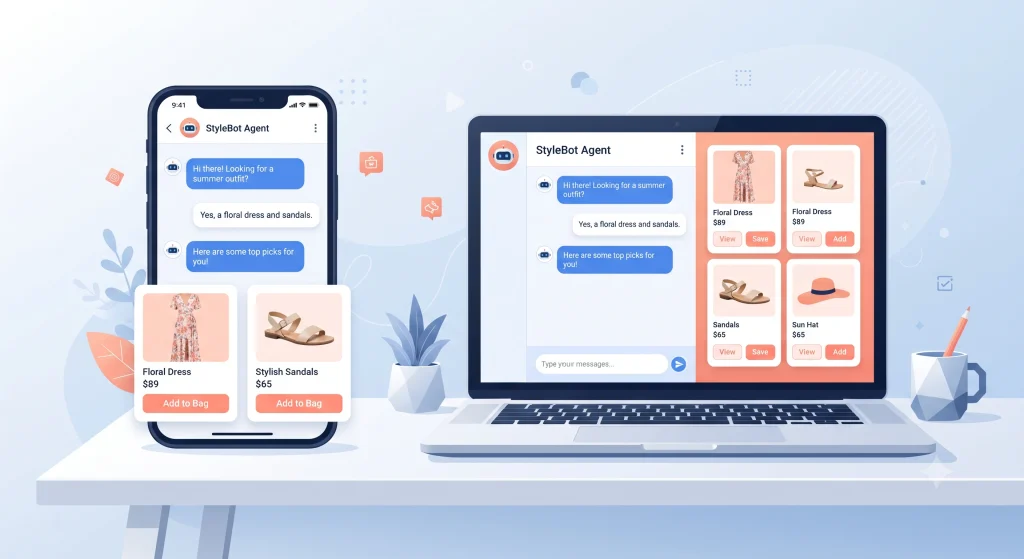
AI shopping agents are intelligent software systems built on machine learning and natural language processing that guide shoppers through the buying journey. Instead of relying on static filters, an AI shopping agent interprets natural language queries, learns from browsing patterns, and recommends products that match intent rather than just keywords.
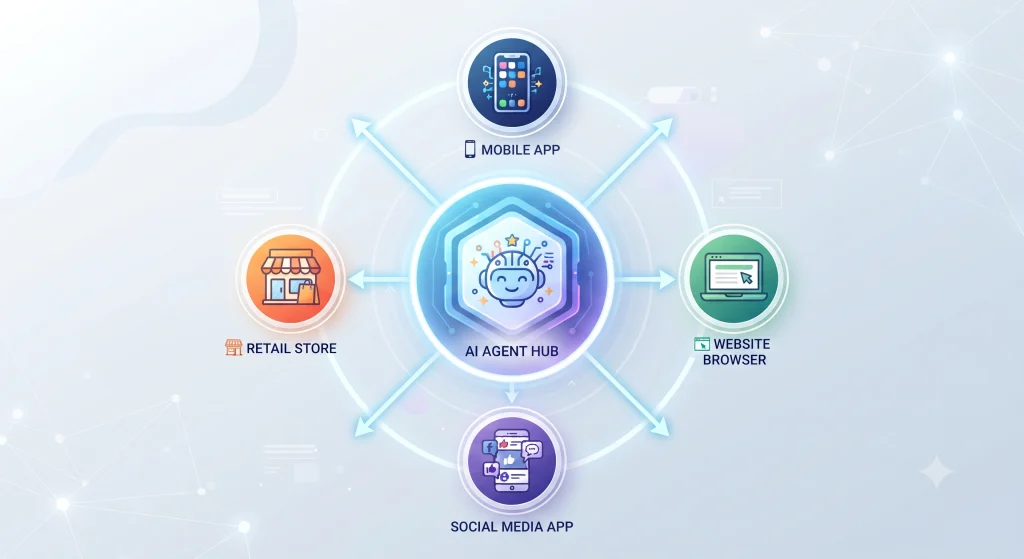
These agents operate across multiple touchpoints website chat widgets, mobile apps, voice assistants, and even messaging platforms creating a unified discovery layer across the entire storefront.
Core Capabilities of AI-Powered Shopping Technology
- Conversational search that understands natural phrases instead of exact-match keywords
- Visual search that identifies products from uploaded images
- Predictive recommendations based on purchase and browsing history
- Dynamic filtering that adjusts results as preferences are expressed
- Voice-enabled shopping for hands-free product discovery
How AI Shopping Agents Are Transforming Product Discovery
Product discovery used to depend on category navigation and manual filtering. AI-powered shopping technology replaces that rigid structure with adaptive discovery paths.
Transitioning from Keyword to Intent Search
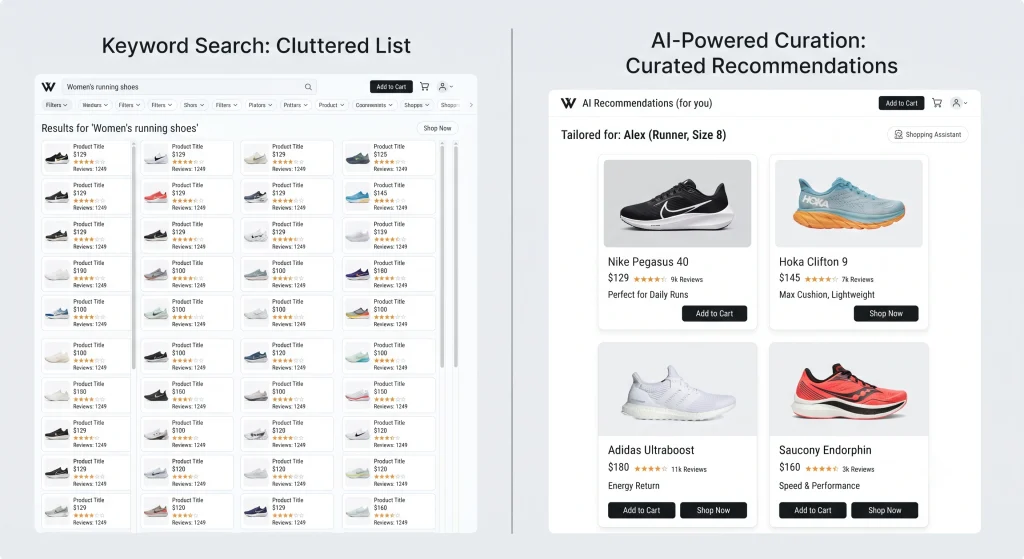
Search engines built into storefronts historically matched exact keywords. Modern AI-powered search systems interpret shopper intent, so a query like “something warm for a winter trip” can return curated results without requiring exact product terminology.
Hyper-Personalized Recommendations
Machine learning models continuously refine recommendations using signals such as click behavior, cart additions, time spent on product pages, and past purchases. This creates a discovery experience that feels tailored to each shopper.
Reduced Decision Fatigue
Large catalogs often overwhelm shoppers. Intelligent shopping assistants narrow choices intelligently, presenting a shortlist instead of thousands of unfiltered results, which shortens the path to purchase.
AI Shopping Agents Across Major eCommerce Platforms
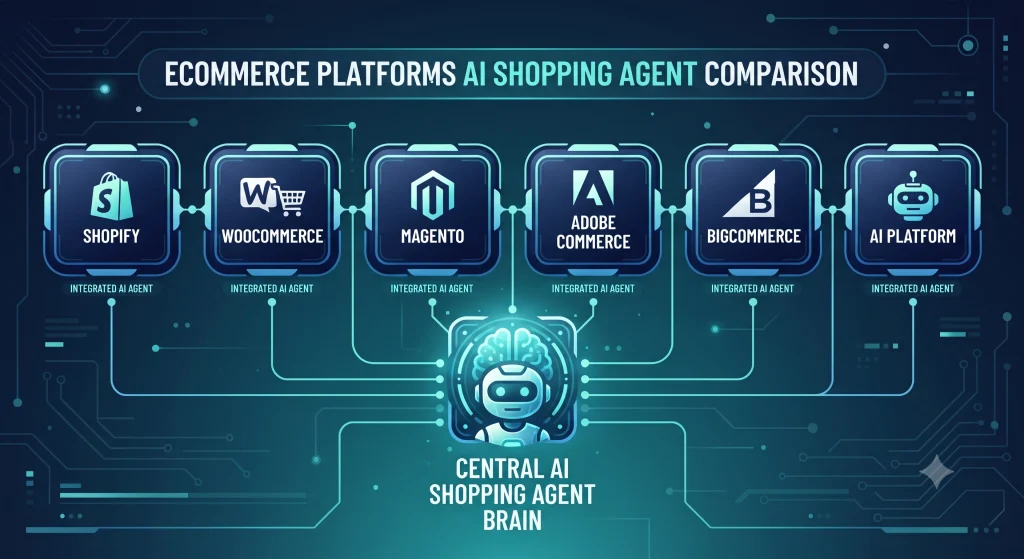
The implementation of AI-powered shopping technology varies depending on the underlying commerce platform. Each ecosystem offers distinct tools, extensions, and architectural approaches.
Shopify
Shopify supports AI-powered shopping experiences through native Shopify Magic tools and third-party apps from the Shopify App Store. Merchants can add conversational search widgets, AI-generated product descriptions, and personalized recommendation blocks without heavy custom development.
WooCommerce
Built on WordPress, WooCommerce integrates AI-powered discovery features through plugins that connect to machine learning APIs. This approach suits merchants who want flexibility to customize discovery logic alongside existing WordPress content and SEO structures.
Magento (Adobe Commerce Open Source)
Magento’s modular architecture allows deep customization of AI-driven search and recommendation engines. Developers can integrate AI shopping agents through custom modules or third-party search platforms tailored to complex catalogs.
Adobe Commerce
Adobe Commerce extends Magento’s foundation with built-in AI capabilities through Adobe Sensei, enabling predictive merchandising, personalized search, Headless Commerceautomated product recommendations at enterprise scale.
BigCommerce
BigCommerce offers API-first flexibility, allowing AI shopping agents to be layered on through headless integrations or app marketplace tools, making it a strong fit for mid-market and enterprise catalogs seeking rapid AI adoption.
Headless Commerce
Headless commerce architectures decouple the frontend from the backend, giving AI shopping agents freedom to operate across multiple channels web, mobile, voice, and IoT devices using a single commerce backend through APIs.
Benefits of AI-Powered Shopping Technology for Online Retailers
- Higher conversion rates through relevant, intent-matched recommendations
- Lower bounce rates since shoppers find products faster
- Increased average order value via smart cross-sell and upsell suggestions
- Enhanced client retention via customized shopping experiences
- Reduced support load as agents answer product-related queries instantly
Challenges and Considerations
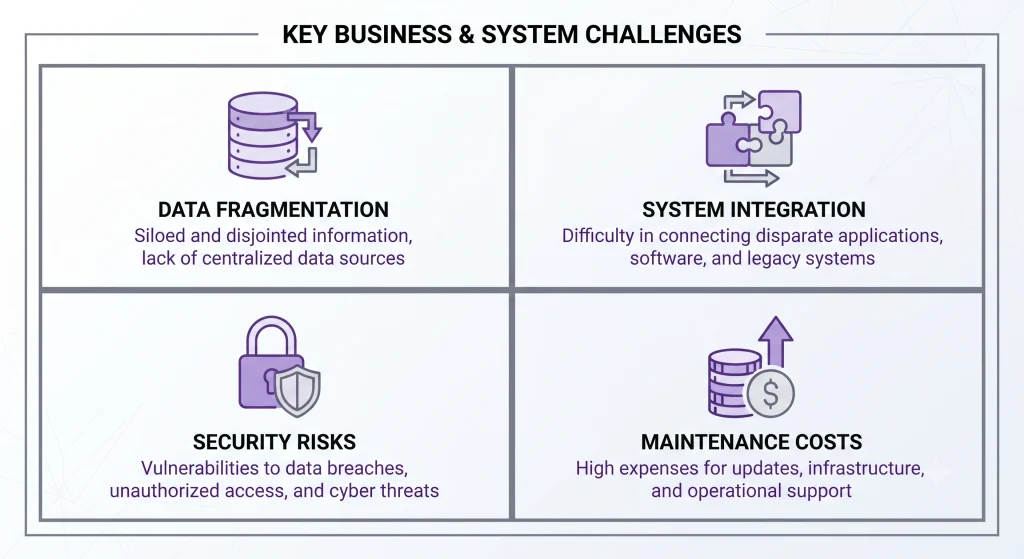
Adopting this technology is not without obstacles.
- Data quality dependency recommendations are only as strong as the underlying product and behavioral data
- Integration complexity connecting AI systems with legacy platforms may require significant development effort
- Privacy compliance personalization must align with data protection regulations
- Cost of implementation enterprise-grade AI tools carry licensing and infrastructure costs
Role of AI Shopping Agents in Omnichannel Retail
Retail is no longer confined to a single storefront. Shoppers move between mobile apps, websites, social platforms, and physical stores, expecting consistent recommendations at every stop. Intelligent shopping assistants unify these touchpoints by using behavioral data across channels, so a product viewed on a mobile app can influence recommendations shown later on desktop or in an in-store kiosk.
This cross-channel continuity strengthens brand loyalty and shortens the buying cycle, since shoppers no longer restart product discovery from scratch on each new channel. Retailers using headless commerce architectures are best positioned to deliver this consistency, since a single AI-driven backend can power discovery across every customer touchpoint simultaneously.
Voice and Conversational Commerce Integration
Voice-activated shopping through smart speakers and mobile assistants is expanding the reach of AI shopping agents beyond visual interfaces. Conversational commerce allows product discovery to happen through spoken queries, further reducing friction in the buying journey.
Best Practices for Implementing AI Shopping Agents
Merchants planning to adopt AI shopping agents benefit from a structured rollout rather than a full-scale launch.
- Start with clean product data accurate titles, descriptions, and attributes improve recommendation accuracy
- Pilot on high-traffic categories before expanding catalog-wide
- Combine AI recommendations with human-curated merchandising during the early rollout phase
- Monitor performance metrics such as click-through rate, conversion rate, and average order value
- Ensure compliance with regional data privacy laws before collecting behavioral data
- Choose platform-native tools first on Shopify, WooCommerce, Magento, Adobe Commerce, or BigCommerce before building custom integrations
Future Outlook for AI Shopping Agents in eCommerce
Product discovery is moving toward fully agentic commerce, where AI shopping agents will not only recommend products but also complete purchases autonomously based on pre-set preferences. Voice commerce, augmented reality try-ons, and cross-platform shopping assistants are expected to become standard features across Shopify, WooCommerce, Magento, Adobe Commerce, and BigCommerce ecosystems.
As headless commerce adoption grows, AI shopping agents will increasingly operate as independent services, capable of powering discovery across websites, apps, smart devices, and emerging retail channels simultaneously.
Frequently Asked Questions
What is an AI shopping agent?
An AI shopping agent is a software system that uses artificial intelligence to guide product discovery, offering personalized recommendations, conversational search, and predictive suggestions based on shopper behavior.
Which eCommerce platforms support AI shopping agents?
Shopify, WooCommerce, Magento, Adobe Commerce, BigCommerce, and headless commerce architectures all support AI shopping agent integration through native tools, plugins, or API-based connections.
How do AI shopping agents improve product discovery?
AI shopping agents interpret shopper intent rather than exact keywords, delivering personalized results that reduce search time and decision fatigue while increasing the likelihood of conversion.
Is headless commerce necessary for AI shopping agents to work?
Headless commerce is not mandatory, but it enables AI shopping agents to operate consistently across multiple channels using a single backend, offering greater flexibility for omnichannel retail strategies.
Do AI shopping agents replace traditional site search?
AI shopping agents typically enhance or replace traditional keyword-based site search by adding natural language understanding, visual search, and personalized filtering capabilities.
Conclusion
AI shopping agents represent a fundamental shift in how eCommerce product discovery operates, moving the industry away from static search toward personalized, intent-driven experiences. Across Shopify, WooCommerce, Magento, Adobe Commerce, BigCommerce, and headless commerce environments, these agents are becoming a core requirement rather than an optional feature for retailers aiming to stay competitive. Businesses that invest early in clean data, platform-native tools, and phased rollouts stand to gain a measurable edge in conversion, retention, and long-term customer loyalty as agentic commerce continues to mature.