
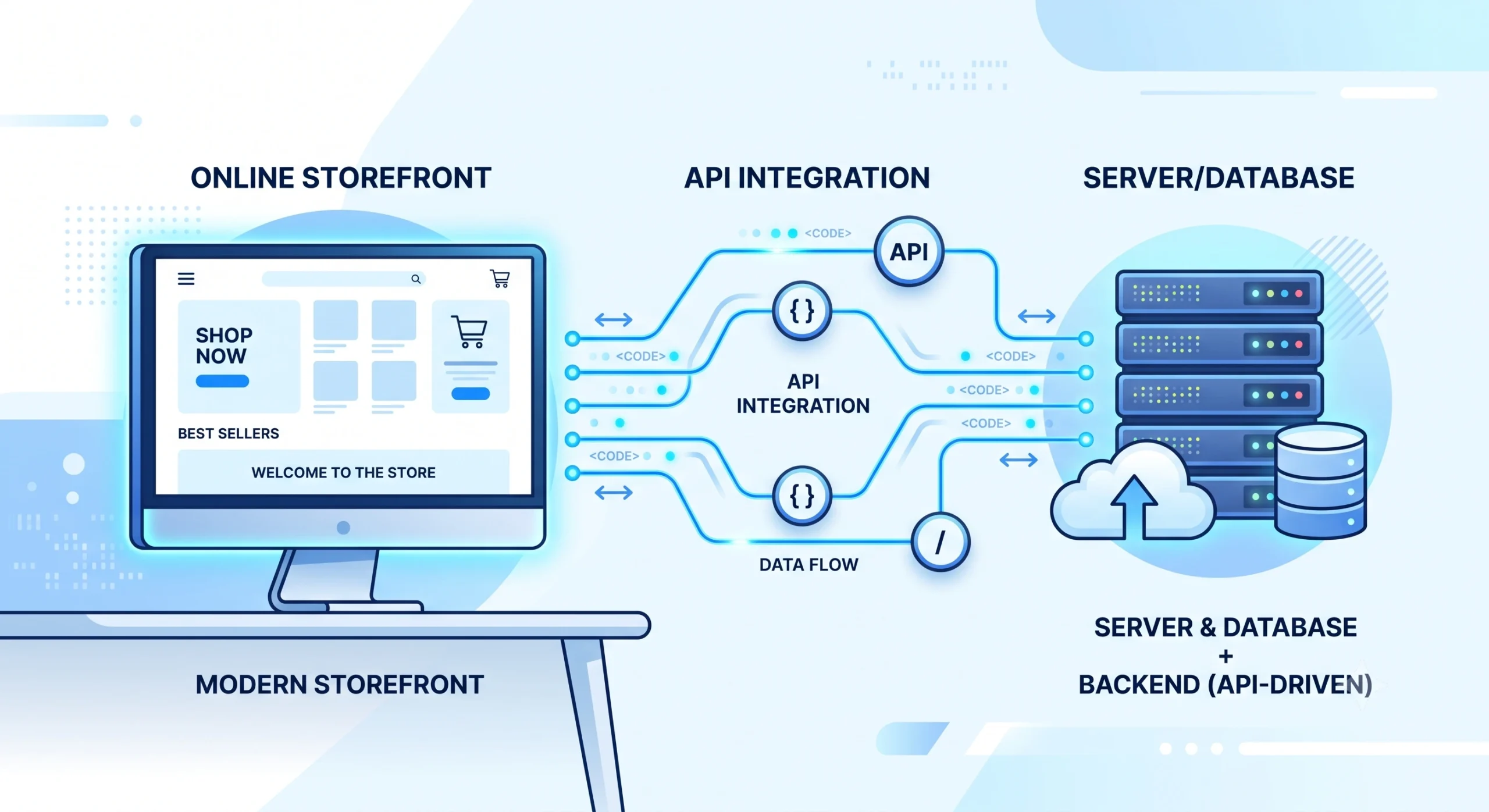
Online retail has moved far beyond simple product listings and checkout pages. Shoppers now expect instant page loads, seamless mobile browsing, personalized recommendations, and consistent experiences across every touchpoint. Traditional, monolithic platforms often struggle to keep pace with these expectations, which is where a headless commerce platform enters the picture.
A headless commerce platform separates the front-end presentation layer from the back-end commerce engine, allowing businesses to build faster, more flexible, and highly customized shopping experiences. This approach has become a central strategy for brands running on Shopify, Magento/Adobe Commerce, WooCommerce, and BigCommerce, removing the limitations of rigid, template-based storefronts.
What a Headless Commerce Platform Actually Means
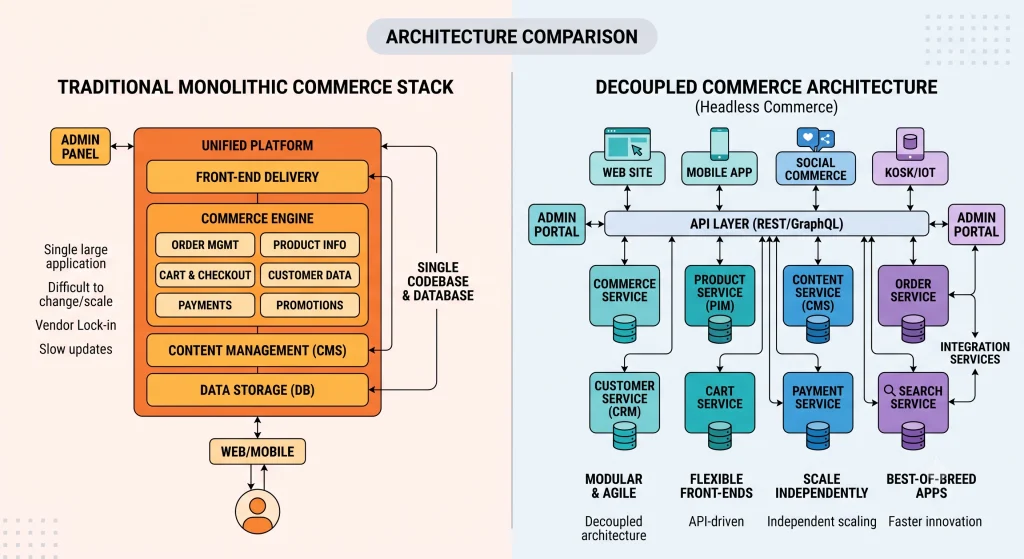
In a conventional eCommerce setup, the front end and back end are closely connected. As a result, changing the storefront often requires changes to the platform code. This can slow development and limit design options.
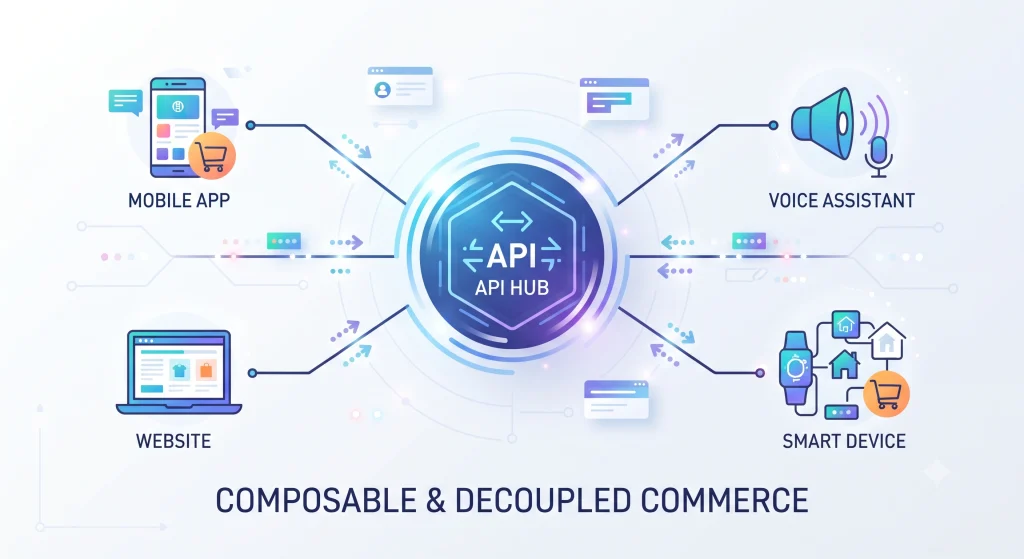
A headless commerce platform decouples these two layers. The back end continues to manage products, orders, and payments, while the front end connects through APIs and can be built using any framework React, Vue, or Next.js. This separation gives development teams the freedom to design unique storefronts without being boxed in by default templates.
Why This Architecture Matters Today
Customers now shop across websites, apps, voice assistants, and connected devices. However, a rigid platform may struggle to deliver content across all these channels. A headless setup can share product and pricing data across websites, apps, kiosks, and IoT devices.
How a Headless Commerce Platform Improves Site Performance
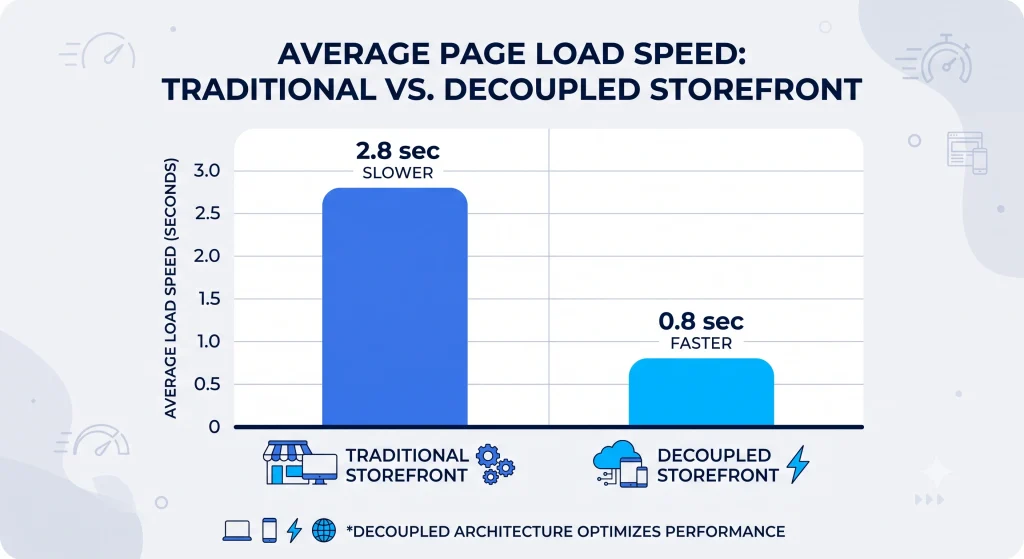
Page speed can affect conversions and search rankings. Therefore, better performance is a key benefit of a headless commerce platform for growing brands.
- Faster load times: the front end can be optimized purely for speed, without carrying the weight of back-end templating systems.
- Better caching and CDN delivery: content can be served through static-site generation or edge-rendering, cutting down server response time, measurable through tools like Google PageSpeed Insights and Core Web Vitals.
- Reduced technical debt: front-end updates no longer require back-end migrations, shortening development cycles significantly.
Elevating Customer Experience Through a Headless Commerce Platform
A major advantage of a headless commerce platform lies in the freedom to design experiences around customer needs rather than platform constraints.
Personalization at Scale
Because the front end uses APIs, personalization tools can change content in real time. For example, they can show different banners, product recommendations, or pricing based on browsing behavior, location, or purchase history.
Consistent Omnichannel Presence
Retailers can use the same catalog, promotions, and checkout process across websites, mobile apps, social commerce, and in-store kiosks. As a result, customers get a more consistent shopping experience. This can build trust and reduce confusion.
Rich, Custom Storefront Design
Design teams are no longer restricted by a theme’s built-in layout options. Interactive product configurators, immersive storytelling pages, and unique navigation structures become far easier to build within a decoupled front-end environment.
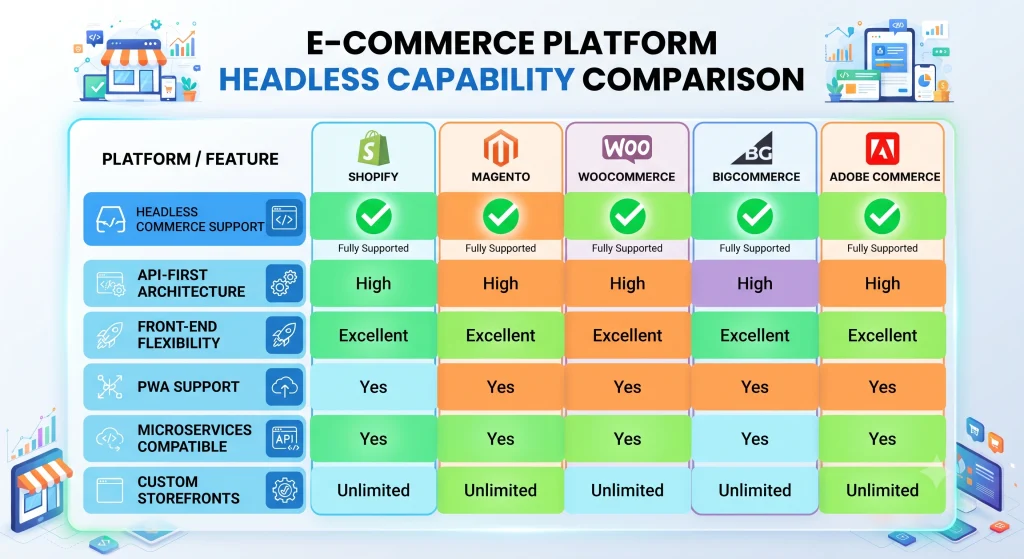
Choosing a Headless Commerce Platform: Shopify, Magento, WooCommerce, and More
Shopify as a Headless Commerce Platform
Shopify offers a robust set of APIs, including the Storefront API, allowing brands to build fully custom front ends while relying on Shopify’s back-end infrastructure for inventory, payments, and order management.
Magento (Adobe Commerce) as a Headless Commerce Platform
Magento, now part of Adobe Commerce, supports this model through GraphQL APIs and PWA Studio. This combination is popular among enterprise retailers needing deep customization and B2B functionality.
WooCommerce as a Headless Commerce Platform
WooCommerce, built on WordPress, can be transformed into a decoupled setup using the WooCommerce REST API or WPGraphQL, appealing to businesses already invested in WordPress content workflows.
BigCommerce as a Headless Commerce Platform
BigCommerce provides a strong decoupled option through its Open API and pre-built front-end frameworks, handling high-traffic scaling well.
Adobe Commerce as an Enterprise-Grade Headless Commerce Platform
Adobe Commerce combines Magento’s flexibility with Adobe’s broader marketing and content tools, making it a strong fit for large enterprises pursuing this architecture at scale, often paired with GraphQL for data delivery.
Building a Headless Commerce Platform: Key Considerations
Launching a headless commerce platform involves more planning than a traditional setup. Core considerations include:
- API strategy: deciding which APIs (REST or GraphQL) will connect the front end and back end.
- Front-end framework selection: choosing a technology such as React or Vue based on team expertise.
- Content management integration: connecting a content management system that feeds marketing pages and blogs into the storefront.
- SEO structure: ensuring server-side rendering so search engines can properly crawl and index pages.
- Team resourcing: this type of setup typically requires more development involvement than a plug-and-play theme.
Common Challenges to Plan For
While the benefits are substantial, a few challenges deserve attention before migrating to a headless commerce platform:
- Higher upfront development cost compared to traditional themes.
- Increased reliance on a skilled development team for ongoing maintenance.
- Careful SEO planning, since front-end frameworks must be configured correctly for search visibility.
- Additional complexity in managing multiple systems (commerce engine, front end, content management, search, personalization tools).
Cost and ROI Considerations
Budgeting for this type of project requires looking beyond the initial build cost. Development typically involves separate investments in front-end engineering, API integration, and ongoing hosting for both the storefront and the commerce back end. However, the return on investment often shows up through faster page speeds, lower cart abandonment, and higher conversion rates. Retailers evaluating a headless commerce platform should weigh long-term maintenance savings fewer plugin conflicts, fewer template limitations against the higher starting price tag compared to an out-of-the-box theme.
Future Trends Shaping This Architecture
Composable commerce, where individual best-of-breed tools (search, personalization, payments, content) are assembled around a decoupled core, is becoming a natural extension of this strategy. Edge computing and server-side rendering frameworks such as Next.js continue to close the SEO gap that early decoupled implementations struggled with. Voice commerce, AI-driven product discovery, and connected-device shopping are also expected to rely heavily on the flexible, API-first foundation that this type of setup provides.
Is This Architecture the Right Fit?
This approach tends to suit businesses that:
- Operate across multiple channels (web, app, marketplaces, social commerce).
- Need highly customized storefront design beyond standard themes.
- Experience high traffic volumes requiring optimized performance.
- Plan to scale rapidly and want a technology foundation that can grow without major rebuilds.
Smaller stores with simpler catalogs and limited technical resources may find that a traditional, all-in-one platform remains more practical, at least until growth demands greater flexibility. For businesses exploring this path, reviewing an internal platform comparison guide and an eCommerce website design services page can help clarify which route fits current needs, alongside a portfolio of completed commerce projects for reference.
Frequently Asked Questions
What is the difference between this approach and a traditional eCommerce platform?
Traditional platforms bundle the front-end design and back-end commerce logic together, while this approach separates them, connecting the two through APIs for greater flexibility.
Does this approach work with Shopify, Magento, WooCommerce, and BigCommerce?
Yes. Each of these platforms, along with Adobe Commerce, offers API frameworks that support this model, including Shopify’s Storefront API, Magento’s GraphQL and PWA Studio, WooCommerce’s REST API, and BigCommerce’s Open API.
Is a headless commerce platform good for SEO?
When configured correctly with server-side rendering, decoupled storefronts can perform very well for search visibility, often outperforming traditional setups due to faster load times.
Is a decoupled commerce website more expensive to build?
Initial development costs are typically higher due to custom front-end work, though many businesses recover that investment through improved conversion rates and reduced long-term platform limitations.
Which businesses benefit most from this architecture?
Retailers managing multiple sales channels, high traffic volumes, or complex personalization needs tend to see the greatest advantage from adopting this approach.
Conclusion
This approach represents a shift toward flexible, performance-driven online retail. By separating the front end from the back end, businesses running on Shopify, Magento, WooCommerce, BigCommerce, or Adobe Commerce gain the freedom to build faster, more personalized, and more consistent shopping experiences across every channel. For growing retailers aiming to stay competitive in a fast-moving digital marketplace, a headless commerce platform offers a strong foundation for long-term scalability.