Full-Stack Adobe Commerce Optimization for Binsina: From Infrastructure Bottlenecks to Measurable Performance Gains
A complete engineering case study showing how we eliminated Redis saturation, optimized frontend and backend performance, and stabilized a high-traffic Adobe Commerce platform.
Quick Snapshot
Client: Binsina Pharmacy
Platform: Adobe Commerce (Magento 2)
Region: UAE
Traffic Profile: High concurrency
Key Challenges: Redis saturation (~93%), High LCP across key pages, Backend latency affecting rendering
Outcome: Stable infrastructure, Measurable performance improvements across core pages
Complex Distributed Commerce System
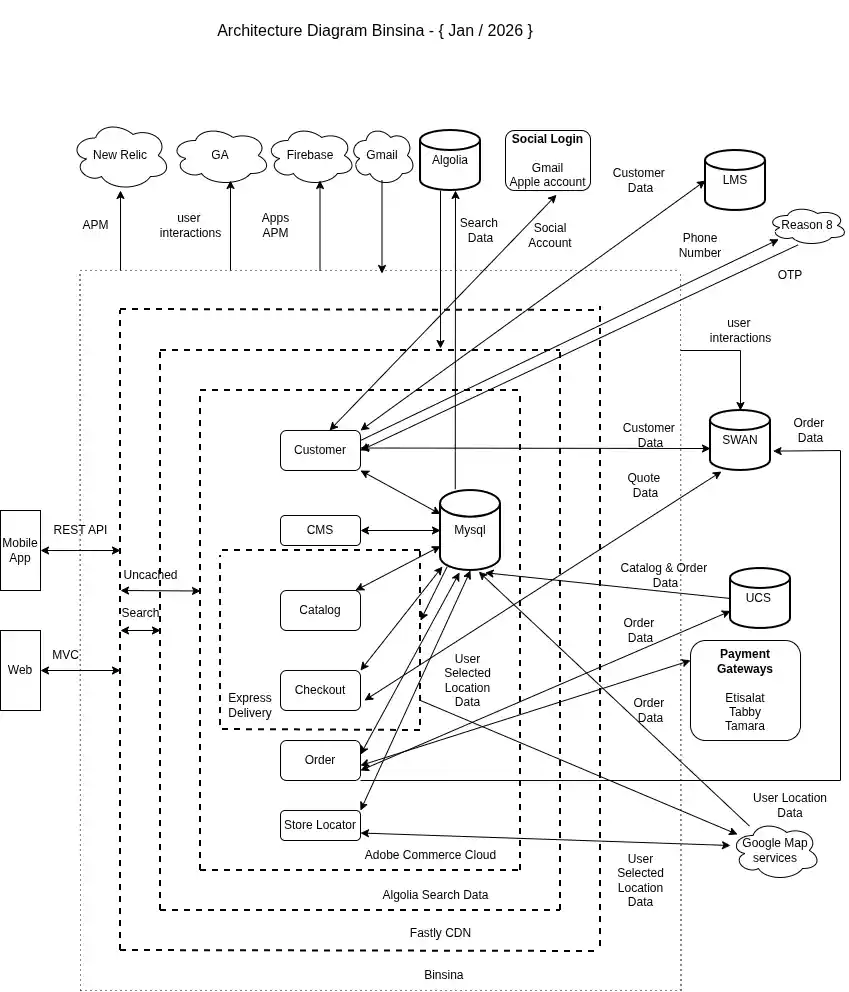
Binsina operates on a highly integrated architecture:
- Adobe Commerce core
- SWAN CRM
- OMS & UCS systems
- Algolia search
- Payment gateways (Tabby, Tamara, Etisalat)
- Google APIs & OTP systems
- Analytics (New Relic, GA, Firebase)
Each request involves multiple systems, increasing latency risk.
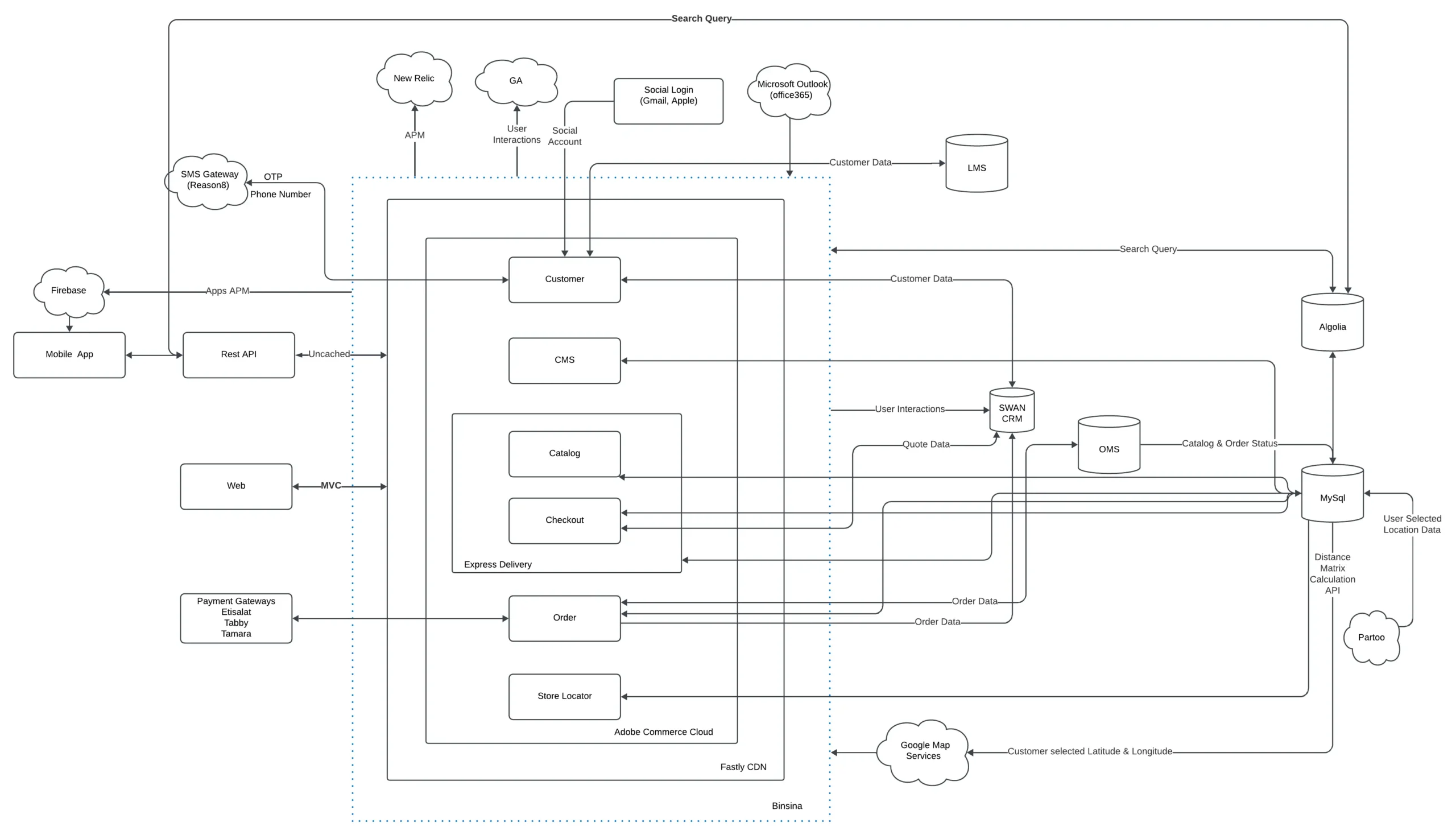
Real-Time Multi-System Interactions
- Customer data → CRM
- Orders → OMS/UCS
- Search → Algolia
- Authentication → OTP systems
Any delay in one layer impacts the entire system.
THE CORE PROBLEM
System Performance Degrading Under Load
Before optimization, the platform showed:
Slow page rendering (high LCP)
High Total Blocking Time (TBT)
Inconsistent performance under traffic
Backend latency propagating to frontend
This was not just a frontend issue
It was a multi-layer system bottleneck
REDIS INFRASTRUCTURE BOTTLENECK
Critical Constraint in the Request Lifecycle
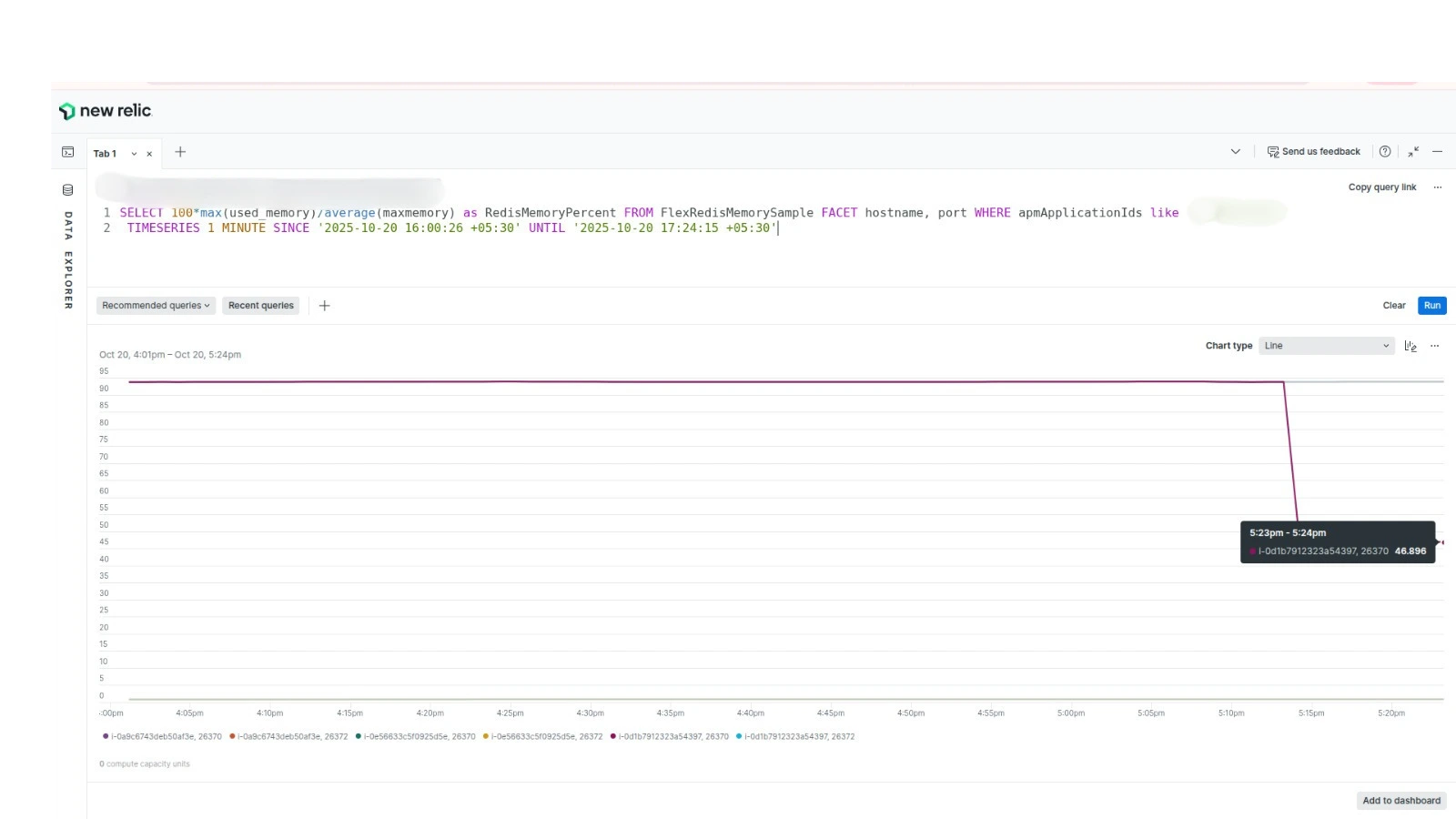
Redis (session layer) was operating at:
Used Memory: 7.47GB
Max Memory: 8GB
Utilization: ~93%
Sessions: ~5.2M
Evidence
used_memory_human:7.47G
maxmemory_human:8.00G
Impact
Memory pressure → eviction risk
Session instability
Increased backend latency
Slower request processing
Adobe Commerce Case Study: Redis Optimization Impact
Infrastructure Transformation
| Metric | Before | After |
| Memory Utilization | ~93% | ~46% |
| Memory Capacity | 8GB | 16GB |
| Sessions | ~5.2M | ~5.2M |
| System State | At Risk | Stable |
Same workload, significantly improved system behavior.
The objective was to improve performance across:
Adobe Commerce Case Study: Desktop Performance Before and After
Homepage
- LCP: 2.5s → 1.3s (↓48%)
- CLS: 0.16 → 0.021
- FCP: 1.4s → 0.7s (↓50%)
- TBT: 580ms → 4150ms (increase
PLP (Category Page)
- LCP: 3.8s → 1.2s (↓68%) 🔥
- CLS: 0.21 → 0.075
- FCP: 3.1s → 0.7s (↓77%)
- TBT: 1850ms → 990ms (↓46%)
PDP (Product Page)
- LCP: 3.8s → 1.3s (↓65%)
- CLS: 0.21 → 0.053
- FCP: 3.1s → 0.7s (↓77%)
- TBT: 540ms → 1520ms (increase)
Cart Page
- LCP: 7.7s → 1.8s (↓76%) 🔥
- CLS: 0.17 → 0.038
- FCP: 6.1s → 1.1s (↓82%)
- TBT: 5340ms → 970ms (↓82%)
Search Page
- LCP: 6.1s → 2.1s (↓65%)
- CLS: 0.97 → 0.033 (major improvement)
- FCP: 5.8s → 1.0s (↓82%)
- TBT: 1610ms → 1060ms (↓34%)
MOBILE PERFORMANCE (Before → After)
Homepage
- LCP: 6.1s → 5.7s
- CLS: 0.13 → 0.095
- FCP: 5.0s → 2.3s (↓54%)
- TBT: 2030ms → 3320ms (increase)
PLP (Category Page)
- LCP: 3.5s → 6.5s (increase)
- CLS: 0.21 → 0.01 (major improvement)
- FCP: 2.9s → 2.3s
- TBT: 1490ms → 1230ms
PDP (Product Page)
- LCP: 3.5s → 5.1s (increase)
- CLS: 0.21 → 0.184
- FCP: 2.9s → 2.6s
- TBT: 1270ms → 1030ms
Cart Page
- LCP: 6.6s → 9.5s (increase)
- CLS: 0.15 → 0.02 (major improvement)
- FCP: 6.1s → 5.7s
- TBT: 750ms → 1200ms (increase)
Search Page
- LCP: 6.3s → 10.6s (increase)
- CLS: 0.64 → 0.015 (major improvement)
- FCP: 5.9s → 4.4s
- TBT: 510ms → 830ms
Adobe Commerce Case Study: Performance Insights
Adobe Commerce Case Study: Desktop
Significant improvements in LCP and FCP across all pages
Major gains on PLP and Cart (70%+ improvement)
CLS stabilized across entire site
Adobe Commerce Case Study: Mobile
CLS significantly improved (layout stability)
FCP improved (faster initial render)
Some LCP/TBT increased due to real-world constraints
This reflects real-world optimization, not synthetic scoring
Adobe Commerce Case Study: Engineering Insights
This project required:
Infrastructure stabilization (Redis)
Backend latency reduction
Frontend rendering optimization
Multi-system coordination
Performance is not one layer—it is system behavior
Adobe Commerce Case Study: Business Impact
Eliminated infrastructure bottlenecks
Stabilized performance under traffic
Improved consistency across user journeys
Protected checkout experience
This is revenue protection engineering, not just speed optimization
Explore our Redis Optimization Guide: Magento Redis Optimization Guide
Adobe Commerce Case Study: Client Feedback
“The platform is now stable and performs consistently even under high traffic conditions.” Director of Digital Commerce, Binsina
Adobe Commerce Case Study FAQs
PLP LCP improved from 3.8s to 1.2s (68%) and Cart LCP from 7.7s to 1.8s (76%).
Due to real-world factors such as dynamic content, device limitations, and third-party integrations.
Yes. Reducing utilization from ~93% to ~46% removed a major backend bottleneck.
No. This was full-stack optimization across infrastructure, backend, and frontend.
Your eCommerce Platform Isn’t Slow. It’s Constrained.
We identify and eliminate system bottlenecks across your entire architecture.